You’ve just moved into a place with a decent-sized patio, and you’re already picturing summer barbecues, lazy Sunday brunches, and those long evenings where nobody wants to go inside. So you open up John Lewis, see 200 patio dining sets, and immediately feel overwhelmed. After helping dozens of readers pick the right set for their space, we’ve found that. The 4-seater looks too small. The 8-seater might not fit. That gorgeous extending table is £1,800 and you’re not even sure it’ll work in your space. Sound familiar? The Which? buying guides are helpful for comparing specific products, but getting the size right comes first.
Picking a patio dining set isn’t complicated, but it does require about 20 minutes of actual measuring and a bit of honest thinking about how you use your outdoor space. Get it right and you’ll use that set every dry evening from April through October. Get it wrong and you’ll spend three summers squeezing past chairs, banging into walls, or — worse — having a lovely set that sits there looking cramped and unloved.
Here’s everything you need to know, with actual product recommendations and real prices. And once you’ve picked your size, our best garden furniture 2026 guide covers our top-rated sets.
Start With Your Space, Not the Furniture
This sounds obvious, but most people browse furniture first and then try to make it fit. Do it the other way around.
How to Measure Your Patio Properly
Grab a tape measure and get the full dimensions of your patio in centimetres. Not feet and inches — you’ll be comparing against furniture specs that are all in metric. Write down the length and width of the usable space.
Now here’s the bit everyone misses: clearance. You need a minimum of 90cm between the edge of a pulled-out chair and any wall, fence, planter, or step. That’s not generous — it’s the bare minimum for someone to walk past without doing that awkward side-shuffle. If you want comfortable movement (especially if you’re carrying plates from the kitchen), aim for 100-120cm.
Here’s a quick way to visualise it. A standard patio chair, when someone’s sitting in it, extends about 50-60cm behind the table edge. Add your 90cm walkway, and you need roughly 150cm of clear space behind each seating position.
Practical example: Your patio is 4m × 3m. A rectangular 6-seater table is typically about 150cm × 90cm. Add 150cm to each side for seated diners plus walkway, and you need 150 + 150 + 150 = 450cm along the length. That’s already 50cm more than you have. A 4-seater at 120cm × 75cm would fit much better, leaving room to actually live around it.
The Tape-on-the-Ground Trick
Before spending a penny, lay masking tape on your patio in the exact dimensions of the table you’re considering. Then add chairs (use existing chairs from inside, or just place cushions where seats would go). Pull a chair back as if someone’s sitting down. Now walk around it. Does it feel spacious or claustrophobic? This five-minute test has saved more furniture returns than any buying guide ever written.
How Many Seats Do You Actually Need?
The answer isn’t “how many people live in your house.” It’s about how you realistically use the space.
4-Seater Sets
Perfect for couples, small families, or anyone with a compact patio. A 4-seater table typically measures 100-120cm across (round) or 120cm × 75cm (rectangular). These fit comfortably on patios as small as 2.5m × 2.5m.
The honest truth: if you’re a family of four and you occasionally have one or two friends over for dinner, a 4-seater is going to feel tight on those occasions. But if those evenings happen three times a year, it’s probably not worth sizing up and making everyday use cramped.
Budget pick: The Argos HOME Ronda 4-Seater Metal Patio Set (about £150-200) is perfectly functional. It’s not going to win design awards, but it folds flat for winter storage and does the job for years.
Mid-range: The Habitat Ipanema 4-Seater Dining Set in acacia wood (around £350-450) looks far more expensive than it is. You’ll need to oil it once a year, but it weathers beautifully.
6-Seater Sets
The sweet spot for most UK families. Big enough for a family dinner with a couple of guests, small enough to fit a standard suburban patio. Table dimensions are usually 150cm × 90cm (rectangular) or 130-140cm diameter (round).
You’ll need a patio that’s at least 3.5m × 3m, though 4m × 3.5m gives you breathing room. Remember that 90cm clearance rule — it matters even more when six chairs are pushed back simultaneously.
Budget pick: The Outsunny 6-Seater Metal Dining Set (about £250-350 from Amazon UK or Robert Dyas) is functional and surprisingly sturdy. The powder-coated steel handles rain well, though the chairs aren’t the most comfortable for long evenings — add cushions.
Mid-range: KETTLER’s Paros 6-Seater Set in aluminium and mesh (around £600-800 from garden centres or John Lewis) is genuinely comfortable and nearly maintenance-free. The mesh seats dry in minutes after rain, which is a bigger deal than you’d think in a British summer.
Premium: The Bramblecrest Monterey 6-Seater in teak (about £1,200-1,500) is the kind of set you keep for 20 years. Teak turns silver-grey over time, which most people grow to love. If you hate it, sand and re-oil it.
8-Seater Sets
For larger patios, regular entertainers, and big families. These tables run 180-220cm long and need a space of at least 5m × 4m to work comfortably. That’s a lot of patio — be honest about whether you have it.
An 8-seater you can’t walk around is worse than a 6-seater with room to move. Nobody enjoys a meal where getting up means asking three people to shuffle their chairs in.
Mid-range: The Rowlinson Tuscan 8-Seater in FSC hardwood (about £500-700) is a solid workhorse. You’ll want to treat it with teak oil at least once a year and cover it in winter.
Premium: The Barlow Tyrie Aura 8-Seater Extending Table with stacking armchairs (about £1,800-2,200) is restaurant-quality outdoor furniture. The extending mechanism lets you go from 6 to 10 places, which is really useful for families who host at Christmas or summer parties.
Round vs Rectangular vs Extending: Which Shape Works Best?
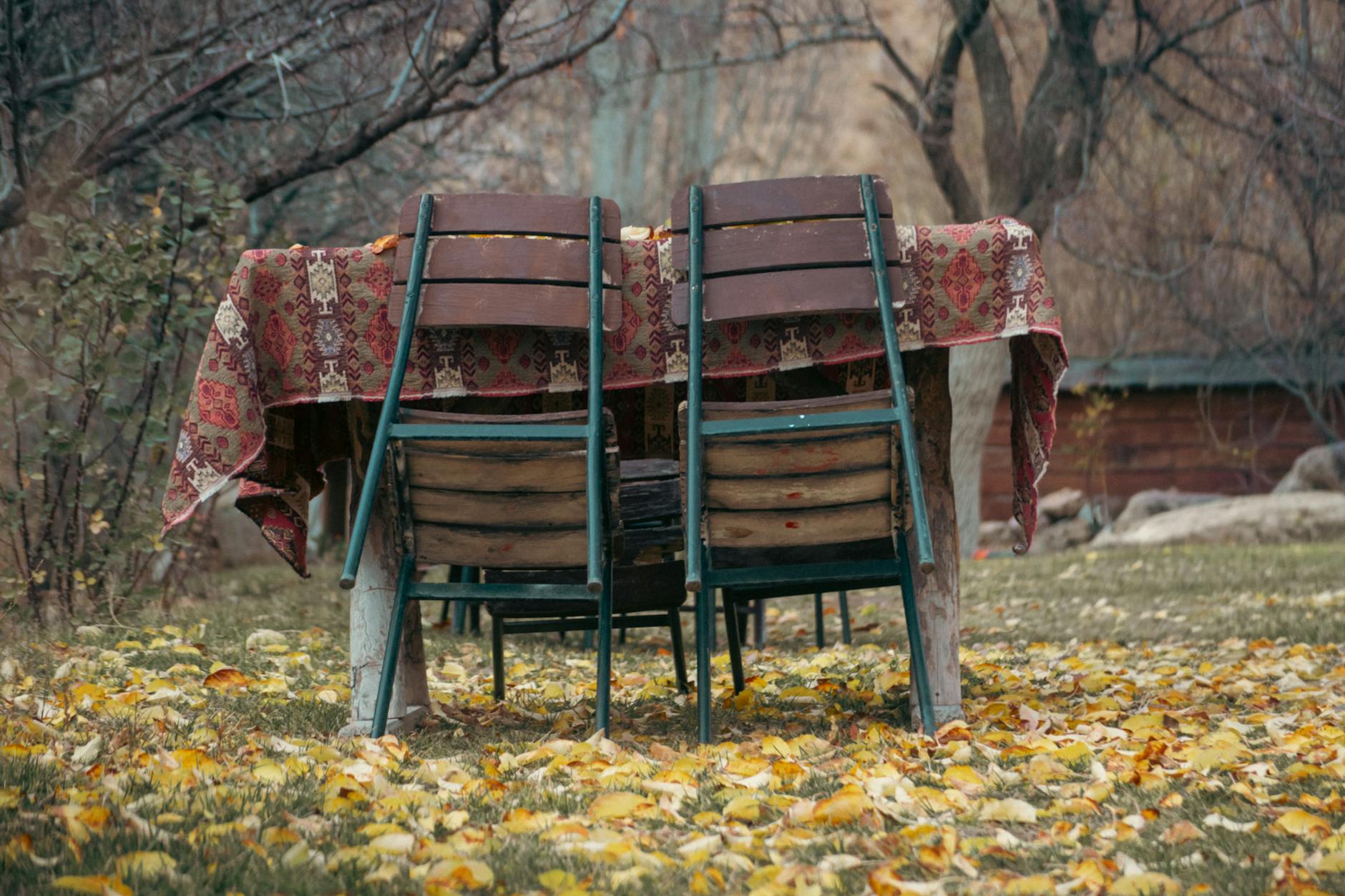
Round Tables
Round tables are brilliant for conversation — everyone can see everyone, and there’s no “head of the table” awkwardness. A 120cm round table seats 4 comfortably. 150cm fits 6, though it starts to feel like a boardroom. Much beyond that and you’re shouting across the table.
The big advantage in small spaces: round tables have no corners to bang into. On a tight patio, that matters more than you’d expect. You can squeeze past a round table in spaces where a rectangular one would block the path.
The drawback? They’re inefficient with space. A 150cm round table seats 6 but takes up roughly the same footprint as a rectangular table that also seats 6 — yet the rectangular one can push against a wall to reclaim space on one side. Round tables need clearance all the way around.
Rectangular Tables
The most common choice, and for good reason — and when it comes time to maintain it, our garden furniture cleaning guide covers every material. Rectangular tables push against walls or fences efficiently, which immediately gives you back 90cm+ of space on that side. If your patio backs onto a fence or wall, a rectangular set almost always makes better use of the area.
They’re also easier to serve food on — there’s a natural flow to passing dishes along a rectangular table that round tables lack.
The downside: people at opposite ends of a long rectangular table (especially 8-seaters) barely interact. If your family dinners involve lots of cross-table chat, a round table keeps everyone closer.
Extending Tables
These are the compromise option, and a good one. A typical extending patio table goes from 150cm (6-seater) to 200cm+ (8-10 seater) with a built-in leaf. You get everyday practicality with the option to expand for parties, bank holidays, and barbecues.
A word of caution: extending mechanisms on outdoor furniture vary wildly in quality. Cheap extending tables wobble when extended and the join collects water. Spend at least £500 on an extending set, or buy a fixed table instead. The KETTLER Elba Extending Table (about £500-600 from John Lewis) is about the entry point where the mechanism feels solid. The extending leaf on cheaper sets tends to warp after two British winters.
Square Tables
Worth mentioning: a square table (about 90cm × 90cm for 4 seats, 120cm × 120cm for 8) works brilliantly in square patios and courtyards. Everyone is equidistant, which feels sociable. They’re surprisingly hard to find in the UK — IKEA’s NÄMMARÖ range sometimes includes square options at about £200-300.
Material Matters: What Survives a British Summer
Your patio dining set is going to face rain, damp, UV, frost, bird droppings, and that green algae that appears on literally everything left outside in the UK between October and March. Material choice matters.
Aluminium
The low-maintenance champion. Aluminium won’t rust, doesn’t need oiling, and handles British weather without complaint. Powder-coated aluminium in black, grey, or white looks smart and wipes clean with a damp cloth. It’s also light enough to move around easily — handy if you rearrange for larger gatherings.
The downside: lightweight means it blows around in wind. If your patio is exposed, you’ll be chasing chairs across the garden after a storm. Some people also find aluminium furniture “cold” looking compared to wood.
Most mid-range sets from KETTLER, Maze, and Hartman use aluminium frames. Expect to pay £400-1,200 for a decent aluminium dining set.
Teak and Hardwood
Nothing looks better than a well-maintained hardwood dining set on a patio. Teak is the gold standard — naturally oily, incredibly durable, and resistant to rot and insects. Left untreated, it develops a silver-grey patina that many people prefer to the original honey colour.
Other hardwoods (acacia, eucalyptus, shorea) are cheaper alternatives but less durable. They need more frequent oiling and tend to crack and split sooner. If you can stretch the budget, teak is worth it for the 15-20 year lifespan.
Price range: acacia sets start around £250-400 (Habitat, IKEA). Decent teak sets start at £800 and run to £2,000+ for premium brands like Barlow Tyrie or Alexander Rose.
Rattan-Effect Resin
Synthetic rattan (woven PE rattan over a steel or aluminium frame) is hugely popular in the UK. It looks warm and inviting, handles rain without rotting, and comes in at a reasonable price. You’ll see it everywhere from Argos to high-end garden centres.
The quality range is enormous. Cheap flat-weave rattan from Amazon (£150-250) frays and fades within 2-3 years. Good quality round-weave rattan from Maze, Bramblecrest, or 4 Seasons Outdoor (£500-1,500) lasts much longer and looks noticeably better.
The main weakness: the rattan weave traps dirt and pollen, so cleaning requires a soft brush or pressure washer on a low setting. Not a big deal, but more effort than wiping down an aluminium table.
Steel
Sturdy and often the cheapest option. Powder-coated steel resists rust initially, but chips and scratches expose bare metal to moisture. In the UK climate, that means rust spots within a season or two if you don’t touch up the damage. Steel sets are heavy — good for stability in wind, less good if you need to move them.
Fine for a budget set you plan to replace every few years. For anything longer-term, aluminium is worth the extra spend.
Protecting Your Investment: Covers, Storage, and British Weather
Here’s the thing about outdoor dining sets in the UK: they spend about 8 months of the year either getting rained on, sitting in damp cold, or both. Even the most weather-resistant materials benefit from protection.
Furniture Covers
A fitted, breathable furniture cover is the single best thing you can buy alongside your dining set. Not the cheap silver tarpaulin from B&Q — those trap moisture underneath and actually accelerate rot and mould.
Look for covers with air vents, elastic hems, and a waterproof but breathable fabric. KETTLER, Maze, and Garland all make covers sized to specific sets. Expect to pay £40-80 for a dining set cover. It’ll add years to your furniture’s life.
Cover it when you’re not using it from October through March. During summer, cover it between uses if you can be bothered, but at minimum cover it overnight or when rain is forecast. The five minutes it takes to throw a cover on saves hours of cleaning and years of wear.
Winter Storage
If you have a garage or large shed, storing lightweight aluminium or folding sets indoors over winter is the gold-standard approach. Cushions should always come inside — no cover protects cushions well enough over a damp British winter.
For sets too heavy or large to move, elevate the furniture on risers or bricks to prevent the legs sitting in puddles. Standing water at the base of furniture legs is the number one cause of rust and rot.
The Cushion Problem
Most patio dining sets look better with cushions, and most UK owners learn the hard way that cushions left outside go mouldy. The solution is simple but annoying: bring cushions inside after every use, or invest in a dry storage box (Keter, Biohort, or Rowlinson make good ones from about £80-200).
Some high-end cushions use Sunbrella or similar outdoor fabrics that resist mould and dry quickly. They cost three to four times more than standard cushion pads but save the hassle. Worth it if you’re spending over £1,000 on a dining set anyway.
Quick Sizing Reference
| Seats | Rectangular Table Size | Round Table Size | Minimum Patio Size |
|---|---|---|---|
| 2 | 70 × 70cm | 80cm diameter | 2m × 2m |
| 4 | 120 × 75cm | 100-120cm diameter | 2.5m × 2.5m |
| 6 | 150 × 90cm | 130-140cm diameter | 3.5m × 3m |
| 8 | 180-200 × 90cm | 160cm+ diameter | 5m × 4m |
| 10+ | 220+ × 100cm | Not practical | 6m × 4.5m |
These patio sizes include the 90cm clearance around all sides. If your patio backs onto a wall and you’ll place the table against it, you can subtract about 90cm from one dimension.
Our Top Picks at Every Budget
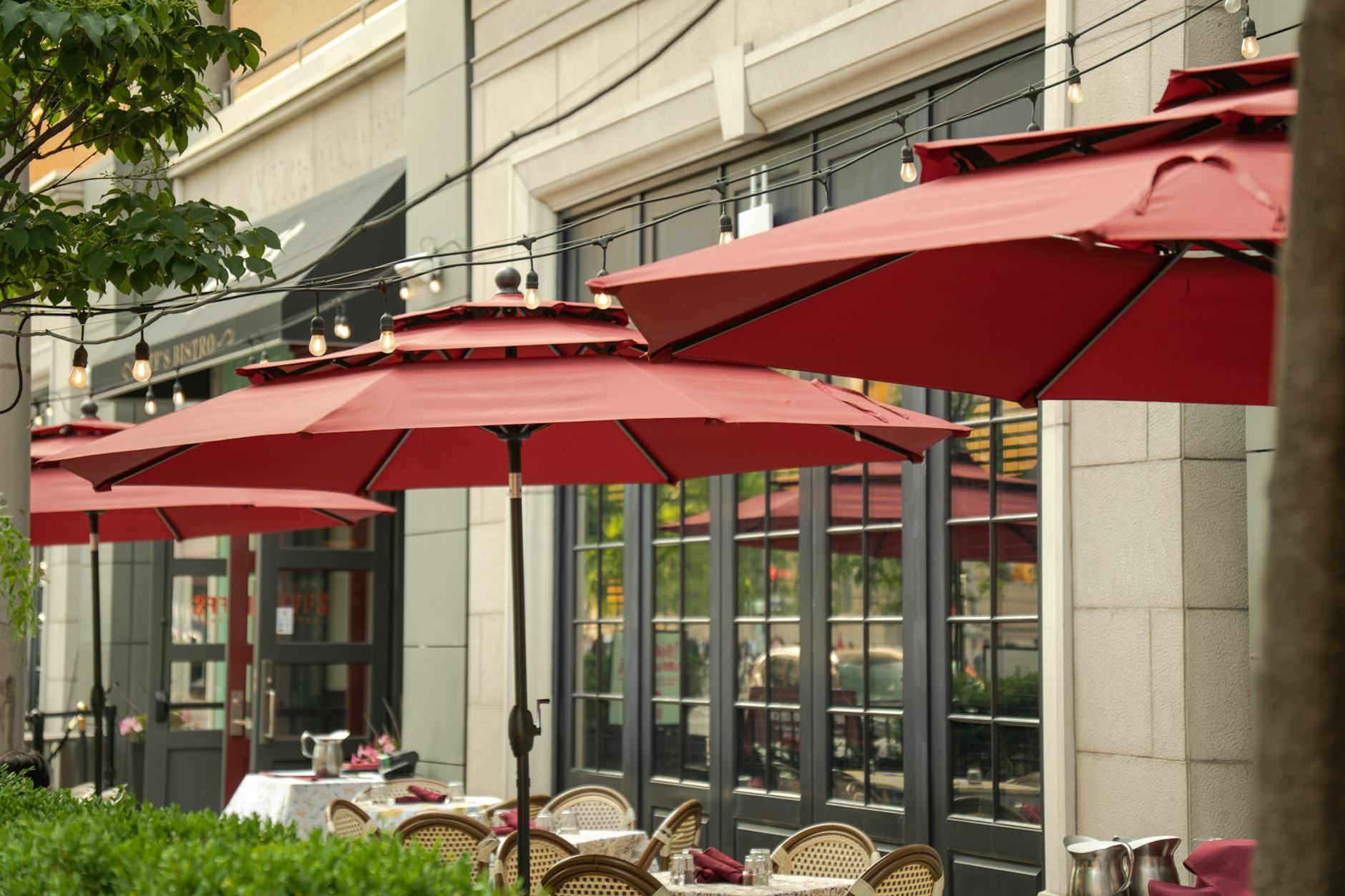
Under £300: Best Value
The Argos HOME Pacific 4-Seater Metal Patio Set (about £150-200) is hard to beat for a small patio. Powder-coated steel, folds for winter storage, comes in a few colours. It won’t last forever, but it’ll do three to five good summers. Add cushions from IKEA (about £8-12 each) and you’re sorted.
£300-700: The Sweet Spot
The KETTLER Paros 6-Seater (about £500-700 from John Lewis or garden centres) is our pick here. Aluminium frame, quick-dry textilene seats, looks smart, weighs almost nothing, survives rain without rusting. You could buy this once and still be using it in a decade. If you prefer a warmer look, the Habitat Zeno 6-Seater in acacia (about £400-500) is lovely but needs annual oiling.
£700-1,200: Serious Outdoor Dining
The Hartman Capri 6-Seater in rattan-effect weave with a ceramic glass tabletop (about £800-1,000) blends dining and style. The ceramic glass top won’t stain, crack, or fade, and the rattan weave is UV-stabilised. You’ll find it at Dobbies, garden centres, and sometimes John Lewis.
£1,200-2,000+: Buy Once, Buy Well
The Bramblecrest Monterey Extending 8-Seater in Teak (about £1,500-2,000) is the set you buy for your forever home. FSC-certified teak, a solid extending mechanism, and the kind of construction quality where joints stay tight after years of British winters. Available from Bramblecrest direct or premium garden centres.
Final Thoughts
The best patio dining set is the one that fits your space with room to spare. Measure twice, account for 90cm clearance, and be ruthlessly honest about how many people you actually seat regularly versus occasionally. A 4-seater you use every evening beats an 8-seater that dominates the patio and makes you feel cramped.
Pick a material that matches your maintenance tolerance — aluminium if you want zero effort, teak if you enjoy the annual ritual of oiling and watching it age beautifully, rattan-effect if you want warmth without the upkeep of real wood.
And buy a decent cover. Your future self will thank you somewhere around November.
Keep reading on Plot & Patio: Best Garden Furniture 2026: UK Weather-Proof Picks, How to Clean Garden Furniture: Wood, Metal & Plastic, Teak vs Rattan vs Metal Garden Furniture: Which Lasts Longest?, Best Outdoor Dining Sets 2026 UK: 4-Seater to 8-Seater, Best Garden Benches UK 2026: 7 Picks That Last.
Frequently Asked Questions
What size patio dining set do I need for four people? Allow at least 2.4m by 2.4m for a four-seat dining set, and more if the chairs have arms or need to be pulled back comfortably from the table.
Is round or rectangular better for a small patio? Round tables are easier to move around in tight spaces, while rectangular tables work better against a wall or on a longer, narrower patio.
How much clearance do patio chairs need? Allow roughly 75cm behind each chair so people can sit down and move around without scraping walls, planters or other furniture.
What should I check first with How to Choose the Right Size Dining Set for Your Patio? Start with the real use case, then check size, compatibility, running costs and maintenance. A product that looks good on paper can still be the wrong fit if it does not suit the room, routine or budget.
How do I avoid wasting money on How to Choose the Right Size Dining Set for Your Patio? Avoid buying on one headline feature alone. Compare the practical details, read the warranty or returns terms, and choose the option that solves your main problem rather than the one with the longest specification list.