Choosing a lawnmower starts with lawn size, not brand, battery voltage or whatever is on offer at the DIY store. A small UK lawn under 100 square metres needs a very different mower from a long, sloping garden or a half-acre plot. This guide shows how to measure your lawn, choose the right cutting width and avoid buying a mower that is either too small to cope or too bulky to store.
Quick Answer: For lawns under 100 sq m, choose a compact corded or cordless mower with a 30-34cm cutting width. For 100-250 sq m, a 36-42cm cordless or petrol mower is the sweet spot. For 250 sq m plus, look at self-propelled petrol, larger battery systems or a ride-on if the lawn is open and storage is not a problem.
In This Article
- Measure Your Lawn Before You Do Anything Else
- Small Lawns: Keep It Light and Simple
- Medium Lawns: The Sweet Spot for Cordless
- Large Lawns: Petrol Earns Its Keep
- Very Large Lawns: Think Ride-On or Robotic
- Cutting Width: The Number That Actually Matters
- Features Worth Paying For (and Ones That Aren’t)
- Electric vs Petrol: The Real Trade-Offs
- What to Spend: Realistic UK Budget Ranges
- Matching Your Mower to Your Garden: A Quick Summary
- Frequently Asked Questions
The size of your garden changes everything — the type of mower that makes sense, how much you should spend, and whether a corded, cordless or petrol mower makes sense. Get this wrong and you’ll either be wrestling an oversized machine around a tiny courtyard or spending your entire Saturday afternoon making sixteen passes with something too small. Here’s how to match the mower to your lawn so you actually enjoy cutting the grass (or at least don’t dread it).
Measure Your Lawn Before You Do Anything Else
This sounds obvious, but most people skip it and end up buying based on gut feeling. Your garden might feel big, but the actual lawn area — minus the patio, flower beds, shed, and that raised planter you added last spring — could be surprisingly modest.
Walk the length and width of your lawn in metres, then multiply. A typical new-build back garden in the UK runs about 40-60 square metres. A semi-detached from the 1930s might give you 80-150 square metres. And if you’ve got a detached place with a proper garden, you could be looking at 200-500 square metres or more.
You don’t need laser precision here. A rough measurement within 10% is fine. The goal is to land in one of these brackets:
- Small lawns (under 100 sq m) — most terraced houses, new-builds, and compact semis
- Medium lawns (100-250 sq m) — larger semis, smaller detached homes, typical suburban plots
- Large lawns (250-500 sq m) — generous detached properties, older houses with deep gardens
- Very large lawns (500+ sq m) — rural properties, large country gardens, smallholdings
Write your number down. Everything else flows from this.
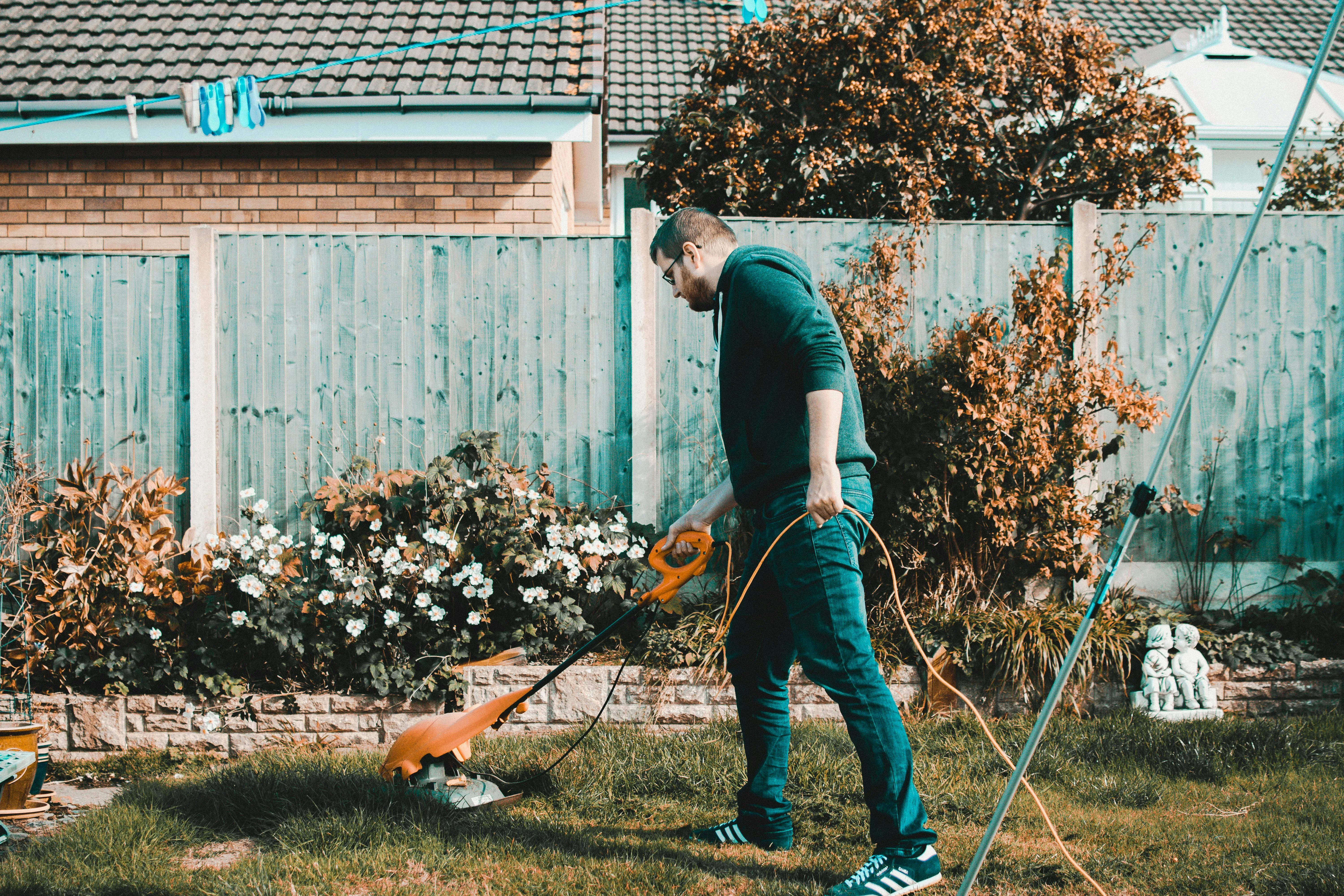
Small Lawns: Keep It Light and Simple
If your lawn is under 100 square metres — and that includes most terraced houses, new-build estates, and plenty of semis — you do not need a big mower. What you need is something light, easy to store, and quick to get out and put away again.
Corded electric mowers are the classic choice here and there’s a reason they’ve stuck around. They’re light (typically 8-12 kg), cheap to buy (£50-120 from Argos or Amazon UK), and require zero maintenance beyond keeping the blade sharp. The Bosch Rotak range has been the go-to for years; the Rotak 32R at about £90 is still hard to beat for a small lawn. It’s compact, cuts cleanly, and weighs under 7 kg.
The main annoyance is the cable. You’ll be doing the cord-management dance — looping it over your shoulder, trying not to run over it. On a small lawn, this is tolerable. On anything bigger, it gets old fast.
Cordless electric mowers have become properly good in the last few years. A 40V battery will comfortably handle 100 square metres on a single charge, and you get the freedom of no trailing wire. The Bosch CityMower 18-32 (about £160) is ideal for pocket-sized gardens — it folds up for storage and weighs just 7.4 kg. If you want something with a bit more grunt, the Makita DLM382 twin 18V (around £200 without batteries) is superb, though you’ll need Makita batteries which push the total cost up.
Hover mowers like the classic Flymo TurboLite 250 (about £55) also suit small, flat lawns. They’re very light and glide over the grass rather than rolling. The catch is they tend to mulch rather than collect, so you’ll need to rake clippings if you want a tidy finish. They also struggle with longer or damp grass — if you miss a week, you’ll know about it.
For small lawns, my pick would be a cordless mower. The convenience of no cable, combined with enough battery life that you’ll never run out mid-cut, makes the slight price premium over corded models completely worth it.
Medium Lawns: The Sweet Spot for Cordless
Medium lawns between 100 and 250 square metres are where most UK gardeners sit, and this is where your choice matters most. Too small a mower and you’ll be out there for ages. Too big and you’re paying for capability you don’t need.
Cordless is king at this size. Battery technology has caught up enough that a good 36V or 40V mower will handle 200+ square metres comfortably. The cutting width matters here — look for 36-40 cm rather than the 32 cm models suited to small lawns. Wider cut means fewer passes and faster mowing.
The Bosch AdvancedRotak 36-750 (around £400) is a strong option — self-propelled, 44 cm cut, and the 4.0Ah battery lasts long enough for medium lawns with room to spare. If you’re in the Einhell ecosystem, their GE-CM 36/47 S (about £280 with batteries) offers a 47 cm cut width at a lower price point, though it doesn’t feel quite as refined.
Corded electrics still work at this size if you don’t mind the cable, and they’ll save you £100-200 over a comparable cordless. The Hyundai HYM3800E (around £130 from Amazon UK) gives you a 38 cm cut and a powerful 1600W motor. Just factor in a 25-metre outdoor extension lead if you haven’t already got one.
Petrol mowers start to make sense at the upper end of medium lawns, particularly if the ground is uneven or the grass gets thick. They’re heavier, noisier, and need annual servicing (oil change, spark plug, air filter — about £20-30 in parts if you do it yourself). But they don’t run out of charge and they’ll power through long, wet grass that would choke an electric mower. The Hyundai HYM430SP (about £230 from Hyundai Direct or Amazon UK) is a solid self-propelled 43 cm petrol mower that won’t break the bank.
At this size, I’d lean towards a good cordless mower with a 36V+ battery. The convenience factor is huge — no mixing fuel, no pull-starting, no servicing. Just charge it, cut the lawn, and get on with your weekend.
Large Lawns: Petrol Earns Its Keep
Once you’re over 250 square metres, the calculus shifts. Battery life becomes a genuine concern with cordless mowers — you might get through 300 square metres on a charge, but you’ll be running it flat every time, and battery capacity drops over the years. For a large garden that you’re trying to maximise, the wrong mower can turn a manageable job into a marathon.
Self-propelled petrol mowers are the workhorse choice. With a 46-51 cm cutting width and no battery to worry about, they’ll chew through big lawns efficiently. Self-propulsion isn’t a luxury at this size — it’s a necessity unless you want a workout. The Honda HRX 476 (about £750) is the gold standard: Honda’s own GXV160 engine, Roto-Stop blade brake (lets you stop the blade without killing the engine), and a 19-inch cut. It’s not cheap, but people keep these mowers for 15-20 years. The Hayter Harrier 48 (around £650) is another cracking choice and a proper British brand.
If budget matters, the Mountfield SP46 Elite (about £350 from a local dealer or Amazon UK) punches well above its weight. It’s self-propelled, has a 46 cm cut, and the Mountfield engine is reliable enough for domestic use.
Cordless can work for large lawns if you invest in a premium system. The EGO LM1903E-SP with a 56V 7.5Ah battery (about £700-800 from Toolstation or Amazon UK) will manage 400+ square metres. But you’re spending petrol-mower money for a battery mower, and the runtime on a cold March morning with thick spring growth won’t match the spec sheet.
- For 250-400 sq m — either a premium cordless or a mid-range self-propelled petrol
- For 400+ sq m — petrol is the sensible choice unless you’re committed to battery and willing to invest in a spare battery

Very Large Lawns: Think Ride-On or Robotic
Above 500 square metres, pushing any mower gets tedious. This is ride-on territory, though the alternatives have improved.
Ride-on mowers start at about £1,800 for a basic model like the Mountfield 28M (available through local Mountfield dealers). At the other end, a John Deere X350 will set you back around £3,500 but cuts an 107 cm swathe and feels like driving a small tractor. You’ll need storage space — a single garage or large shed at minimum.
Robotic mowers are the hands-off solution. They work like a Roomba for your lawn — you set a boundary wire, programme a schedule, and the robot quietly trims the grass every day or two, keeping it perpetually short. The Husqvarna Automower 305 (about £900) handles up to 600 square metres, while the Automower 415X (around £2,000) manages up to 1,500 square metres and can handle slopes up to 40%. The WORX Landroid M500 (about £600) is a more affordable entry point for lawns up to 500 square metres.
The upfront cost stings, but robotic mowers save you hours every week during the growing season. If your time is worth anything to you — and you’ve got a large, relatively flat lawn — they’re worth a serious look.
Cutting Width: The Number That Actually Matters
Beyond garden size, cutting width is the single most important spec. It determines how many passes you make and therefore how long you spend mowing.
- 30-34 cm — ideal for small lawns and tight spaces (gateways, narrow side gardens)
- 35-40 cm — the sweet spot for small-to-medium lawns
- 41-46 cm — standard for medium-to-large lawns
- 48-56 cm — large lawns where speed matters
Wider isn’t always better. If you’ve got a lawn with lots of obstacles — flower beds, a trampoline, fruit trees — a narrower mower is easier to manoeuvre around them. A 51 cm mower is brilliant on a wide-open lawn but a pain when you’re trying to edge around a circular patio.
Think about access too. If your mower needs to pass through a 70 cm side gate, a 53 cm-wide mower with its wheels extending beyond the deck might not fit. Check the total width including wheels, not just the cutting width.
Features Worth Paying For (and Ones That Aren’t)
Some mower features are really useful. Others are marketing fluff that adds to the price without adding to the experience.
Worth it:
- Self-propulsion — essential for lawns over 150 square metres or any sloped garden. Your arms and back will thank you
- Height adjustment — a single lever that changes all four wheels at once rather than individual adjusters. You’ll change cutting height more than you think (shorter in summer, longer in spring and autumn)
- Decent-sized collection box — 50+ litres for medium lawns, 60+ for large. A small box means constant trips to the compost bin
- Mulching capability — finely chops clippings and returns them to the lawn as natural fertiliser. Brilliant once you try it, saves the faff of emptying the box
Not worth the premium:
- LED headlights — how often are you mowing in the dark?
- Bluetooth connectivity — app-connected mowers that send you mowing stats. It’s a lawn, not a fitness tracker
- Premium handle grips — standard grips are fine. Your hands aren’t on the mower long enough for ergonomic grips to matter on a domestic lawn
Electric vs Petrol: The Real Trade-Offs
This is the biggest decision after size, and the answer depends on more than just your lawn.
Electric (corded or cordless) wins on:
- Noise — far quieter. You can mow at 8am on a Sunday without getting a passive-aggressive note through the door
- Maintenance — essentially zero. No oil, no spark plugs, no fuel to store
- Running costs — a full battery charge costs about 5-10p. A tank of petrol costs £3-4
- Storage — no fuel means no fire risk in the shed, no petrol smell
- Instant start — press a button and go, no pull-cord wrestling
Petrol wins on:
- Power — cuts through thick, damp, overgrown grass without bogging down
- Runtime — limited only by fuel in the tank, not battery chemistry
- Longevity — a well-maintained petrol engine lasts 15-20 years. Battery cells degrade after 5-8 years
- Independence — no need to plan charging around mowing day
For most UK gardens under 250 square metres, electric makes more sense today than it did even three years ago. Battery mowers have crossed the threshold where they’re powerful enough and run long enough for the average lawn. Above 250 square metres, petrol still has the edge unless you’re spending premium money on a high-capacity battery system.
What to Spend: Realistic UK Budget Ranges
You can spend anywhere from £50 to £5,000 on a lawnmower, but here’s where the value actually sits:
- Small lawn (under 100 sq m) — budget £80-200. A corded electric at £80-120 or a basic cordless at £150-200
- Medium lawn (100-250 sq m) — budget £200-450. A quality cordless with a 36V+ battery or a mid-range petrol
- Large lawn (250-500 sq m) — budget £350-800. A self-propelled petrol mower or premium cordless system
- Very large lawn (500+ sq m) — budget £800-3,500+. Ride-on, robotic, or commercial-grade walk-behind
The sweet spot for most UK households is £200-400. That gets you a capable cordless mower or a reliable self-propelled petrol — either will last years if you look after it.
Buy from somewhere with a decent returns policy. John Lewis gives you a two-year guarantee on everything, which is worth the slight markup over Amazon UK. For petrol mowers, buying from a local dealer means you get servicing support — useful when it’s time for the annual tune-up.
Matching Your Mower to Your Garden: A Quick Summary
If you’ve measured your lawn and you’re still not sure, here’s the simplest way to think about it:
- Tiny courtyard lawn (under 50 sq m) — lightweight cordless or hover mower, 30-34 cm cut. Get the cheapest decent one
- Standard suburban lawn (50-150 sq m) — cordless electric, 34-40 cm cut. This is the sweet spot for value and convenience
- Big suburban or country lawn (150-400 sq m) — self-propelled petrol or premium cordless, 40-46 cm cut
- Proper acreage (400+ sq m) — ride-on or robotic. Your Saturday mornings are too precious for three-hour mowing sessions
Whatever you choose, don’t forget the basics that actually affect your lawn’s health. Set the cutting height to at least 3-4 cm (most people cut too short), mow when the grass is dry, and vary your mowing pattern each week so you don’t create ruts. A £100 mower used well will give you a better lawn than a £500 mower used badly.
And if you’re also kitting out the rest of your outdoor space, it’s worth thinking about the right garden furniture to enjoy that freshly cut lawn from — and keeping everything properly cleaned through the seasons so your garden looks its best year-round.
For mowing height and seasonal cutting habits, the RHS lawn care guidance pairs well with the mower-size advice above.
Keep reading on Plot & Patio: Flymo vs Bosch vs Einhell: Which Lawnmower Brand Wins in 2026?, Best Robotic Lawnmowers 2026 UK: Set and Forget, Best Lawnmowers 2026 UK: Cordless, Electric & Petrol, Strimmer vs Lawn Edger: Which Do You Need?.
Frequently Asked Questions
What lawnmower size is best for a small garden? For a small lawn, a compact electric or cordless mower with a 30-34cm cutting width is usually easier to store and manoeuvre than a large petrol mower.
Do I need a petrol mower for a UK garden? Most small and medium UK gardens do not need petrol. Petrol mowers make sense for large lawns, rough ground or areas far from outdoor power.
What cutting width should I choose? Choose around 30-34cm for small lawns, 36-42cm for medium lawns and 46cm or more for larger open lawns where fewer passes matter.