You’ve just moved into a place with a garden — or maybe you’ve stared at the same patchy lawn and overgrown borders for three years and finally thought “right, I’m doing something about this.” You grab a cup of tea, step outside, and immediately feel overwhelmed. Where does the patio go? Should the shed stay where it is? And what on earth do you do with that shady corner next to the fence?
Learning how to plan a garden layout doesn’t require a degree in landscape architecture — the RHS garden design hub is packed with free inspiration. It’s more about understanding what you’ve actually got, what you want from it, and making sensible decisions about where things go. Get this bit right and everything else — the planting, the furniture, the weekend barbecues — falls into place.
Start With What You’ve Got
Before you sketch a single line or browse Pinterest for ideas, spend a full day just watching your garden. Seriously. Grab a chair, sit outside at different times, and notice where the sun hits. Most UK gardens face one direction, which means the sun patterns are fixed — your south-facing patio might be glorious at lunch but completely shaded by 4pm thanks to next door’s sycamore tree.
Here’s what to note down:
- Sun and shade patterns — mark which areas get full sun (6+ hours), partial shade, and full shade throughout the day
- Soil type — grab a handful and squeeze it. Sandy soil crumbles apart, clay holds together like plasticine, and loam (the good stuff) holds shape but breaks apart when poked
- Drainage — where does water pool after heavy rain? That boggy patch at the bottom of the garden isn’t going away unless you deal with it
- Wind exposure — which direction does the prevailing wind come from? In most of the UK, it’s from the south-west
- Existing features — mature trees, walls, fences, manholes, drains. Some of these you can move. Some you definitely can’t.
Take measurements while you’re out there. A 30-metre tape measure from B&Q costs about £8 and it’ll save you from that horrible moment when the new patio furniture arrives and doesn’t fit. Measure the full length and width of your garden, plus the distance from the house to any fixed features like trees, sheds, or boundary walls.
Measure and Sketch a Base Plan
You don’t need fancy software for this — a sheet of graph paper works brilliantly. Use a scale like 1 square = 50cm and draw the outline of your garden, including the back of the house, any doors or windows, and where the downpipes are (they matter more than you’d think when planning drainage).
Mark everything that’s staying: the old apple tree, the garage, the neighbour’s extension that blocks the afternoon sun. Then measure and mark things you’re unsure about — that crumbling retaining wall, the shed you’ve been meaning to replace since 2019.
A few tools that help if you prefer digital:
- Google Earth gives you a surprisingly accurate aerial view for checking proportions
- SmartDraw and Garden Planner have free trials with drag-and-drop garden elements
- A pencil and rubber — still the fastest way to try five layouts in twenty minutes
The base plan is your canvas. Everything else gets layered on top. Don’t rush this bit; an accurate plan saves you from expensive mistakes later. I’ve seen people order £2,000 worth of sandstone paving only to discover their garden was 30cm narrower than they thought. Ask me how I know.
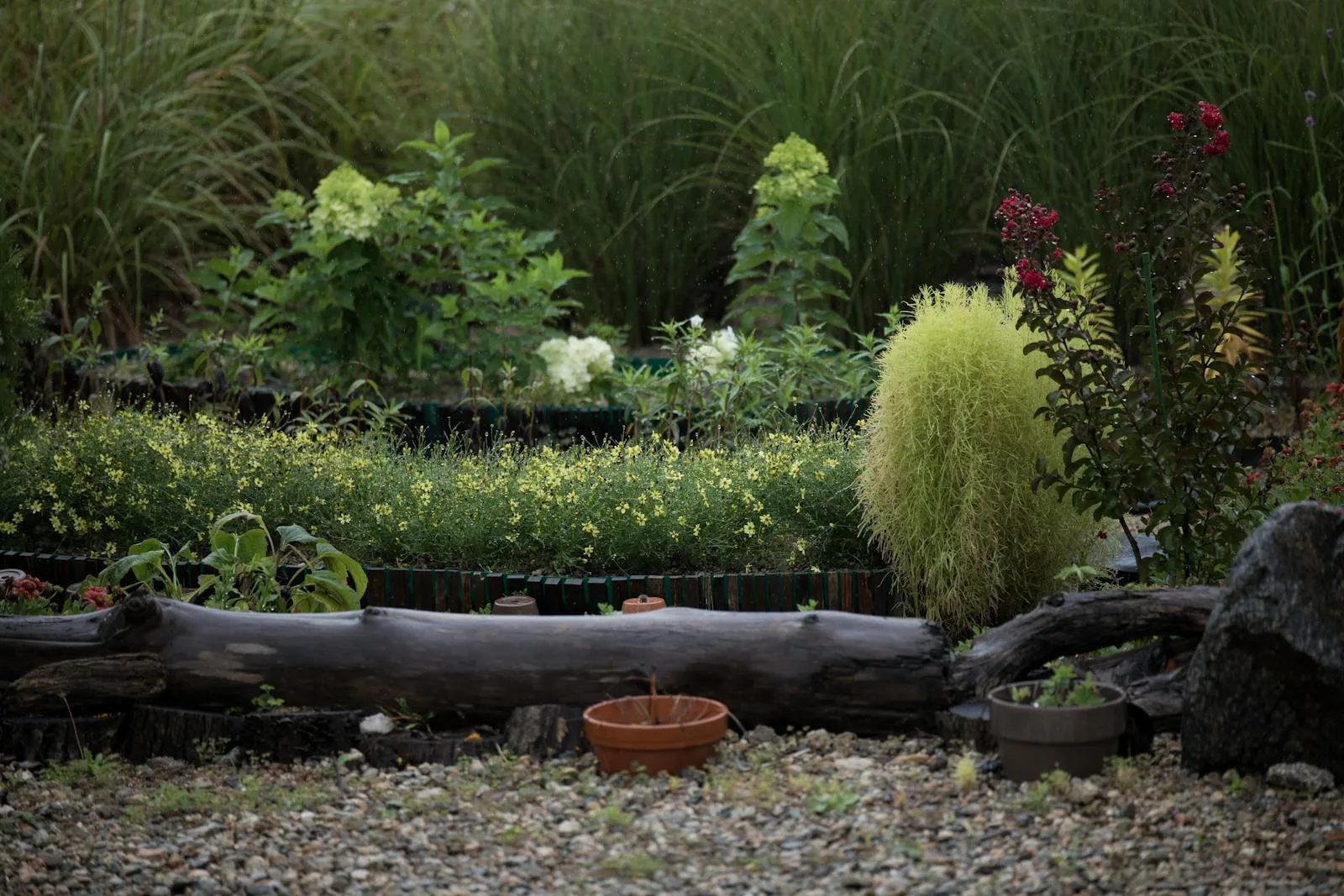
Think in Zones, Not Just Plants
Here’s where most beginners go wrong. They jump straight to “I want roses over there and maybe some lavender” without thinking about how the garden actually gets used. Before picking a single plant, divide your garden into functional zones.
Most UK gardens — especially the classic rectangular plots you find behind terraced and semi-detached houses — work well with three to four zones:
- Living zone — this is your patio or deck, where you eat, sit, and entertain. It should be close to the house for easy access to the kitchen. South or west-facing is ideal, but you can work with what you’ve got using the right garden furniture and some creative screening
- Active zone — lawn for the kids, space for a washing line, maybe room for a football goal or badminton net. Needs to be relatively flat and open
- Planting zone — borders, beds, a veg patch if you’re keen. This is where the colour and texture live
- Utility zone — shed, bins, compost heap, water butt. Tuck it away but keep it accessible. Nobody wants to look at their bins from the kitchen window
Think about flow between these zones. You shouldn’t have to trudge through the flower beds to get to the compost, and the kids’ football area probably shouldn’t be right next to the greenhouse. Create natural pathways — even a simple gap in the planting — so movement feels intuitive.
The size of each zone depends on your priorities. Got young kids? The active zone dominates. Keen grower? Give the planting zone more square footage. Love hosting? That living zone needs to fit a proper dining set — and choosing the right size makes a bigger difference than you’d expect.
Design Your Living and Entertaining Space
Your patio or terrace is likely the single most-used part of the garden, so get this right first. The biggest mistake people make? Going too small. A patio needs to be at least 3m x 3m for a four-person table with room to pull chairs out. If you want a separate lounging area with a sofa set, you’re looking at 4m x 5m minimum.
Materials matter for both looks and maintenance:
- Natural stone (sandstone, limestone) looks gorgeous but costs £40-80 per square metre plus labour
- Porcelain paving — increasingly popular, stain-resistant, around £30-60 per square metre. Looks like stone without the moss problem
- Concrete slabs — the budget option at £15-25 per square metre. Fine for a starter patio, especially if you dress it up with planters
- Decking — great for uneven ground or raised areas, but needs annual treatment in the UK climate. Budget £40-70 per square metre installed
Think about what sits on it. A dining table with six chairs needs roughly 3m x 2.5m of clear space. Add a parasol base and you need another 30cm around the edge. If you’re comparing materials like teak, rattan, or metal, factor in that heavier furniture is harder to rearrange once placed.
Consider a pergola or shade sail if your patio gets scorching midday sun. They also make the space feel more defined — like an outdoor room rather than just some slabs next to the house.

Plan Your Planting Scheme
This is where the garden starts to feel like yours rather than just a plot with some zones drawn on paper. The RHS website is your best friend here — their plant finder lets you filter by soil type, aspect, and mature size, which saves you from planting a tree that’ll outgrow its spot in three years.
A few principles that keep things manageable for beginners:
Work from the back forward. Put the tallest plants at the back of borders (or the centre of island beds) and grade down to the lowest at the front. Sounds obvious, but you’d be surprised how many people plant a 2-metre hydrangea in front of everything else.
Right plant, right place. That shade-loving fern won’t thrive on your sun-baked south-facing wall, and Mediterranean herbs will sulk in a boggy north-facing corner. Match plants to conditions and they’ll basically look after themselves.
Repeat and rhythm. Rather than one of everything (the “garden centre impulse buy” approach), pick 5-8 core plants and repeat them throughout the garden. Three lavender plants along the path look intentional. One looks lonely.
Year-round interest. Plan for every season. Spring bulbs, summer perennials, autumn grasses, and winter evergreens. Nobody wants a garden that looks fantastic in July and depressing from October to March.
Good starter plants for UK gardens:
- Sun — lavender, salvia, geranium (the hardy kind, not the bedding plants), sedum, Japanese anemone
- Shade — hostas, ferns, hellebores, brunnera, astrantia
- Structure — box hedging (if blight isn’t an issue locally), pittosporum, photinia, ornamental grasses like miscanthus
- Climbers — clematis, jasmine, honeysuckle — brilliant for covering fences and adding vertical interest
If you’re working with a small garden, vertical planting and climbers become even more important for making the space feel bigger than it is.
Don’t Forget the Practical Stuff
The unglamorous bits of garden planning are often the ones that matter most. Skip them now and you’ll regret it in two years when you’re replaying your patio because the drainage was wrong.
Drainage. Water runs downhill — obvious, but people forget this when they build a patio that slopes towards the house. Make sure hard surfaces slope away from the building at a minimum fall of 1:80. If your garden is on clay soil and turns into a swamp every winter, consider a French drain or soakaway. A landscaper will charge about £500-1,000 for a basic system.
Access. Can you get a wheelbarrow from the front of the house to the back garden? You’ll need to during construction and probably a few times a year afterwards. If your only access is through the house, plan for that when scheduling deliveries.
Lighting. Even basic solar stake lights along a path make the garden usable after dark and look lovely from the kitchen window. For something more impactful, low-voltage LED systems start at about £100 for a starter set from Screwfix. Run the cabling before you lay any paving.
Irrigation. If you’re planting heavily, a leaky hose or simple drip system through the borders will save you hours of hand-watering. About £30-50 for a basic setup from Amazon UK or any garden centre.
Boundaries. Fences, walls, and hedges define your space and provide privacy. Standard 1.8m fence panels cost £20-40 each from Wickes or B&Q. If your boundaries need replacing, do it before the planting — nothing kills new shrubs faster than a fence panel landing on them.
Putting Your Plan Into Action
You’ve measured, sketched, zoned, and chosen your plants. Now comes the fun part — actually building it. Here’s a sensible order of operations:
Hard landscaping first. Paving, paths, retaining walls, raised beds — all the structural elements go in before anything gets planted. This is messy, heavy work that will destroy anything growing nearby.
Soil preparation second. Once the hard stuff is in, improve your soil. Most UK garden soil benefits from a couple of bags of well-rotted compost or farmyard manure dug into the top 30cm. Don’t skip this — good soil is the difference between plants that thrive and plants that just survive.
Planting third. Autumn (September-November) is the best planting season in the UK. The soil is still warm, there’s usually enough rain, and plants have all winter to establish roots before the growing season. Spring works too, but you’ll spend more time watering.
Lawn last. Whether you’re laying turf or sowing seed, the lawn goes in after everything else. Turf can go down almost year-round except during frost or drought, but early autumn is ideal. Budget about £3-5 per square metre for decent quality turf, delivered.
One more thing — don’t try to do everything in one weekend. Or even one season. Professional garden designers plan in phases, and you should too. Get the patio and main borders sorted in year one. Add the veg patch in year two. Build the pergola in year three. You’ll make better decisions when you’ve actually lived with the space for a while.
Common Beginner Mistakes to Avoid
A few traps that catch people out repeatedly:
- Planting too close together — it looks sparse on day one, but those 30cm perennials will be 90cm wide in two years. Check the mature spread on the label and space accordingly
- Ignoring mature tree sizes — that cute ornamental cherry from the garden centre will be 8 metres tall and wide in fifteen years. Make sure it won’t block your light or damage foundations
- Forgetting about maintenance — a cottage garden is gorgeous but needs weekly attention in summer. Be honest about how much time you’ll actually spend gardening. Low-maintenance doesn’t mean no-maintenance, but gravel gardens with drought-tolerant planting come close
- Not considering the neighbours — tall plants or structures near the boundary can block their light. Check your deeds for boundary rules, and a quick chat over the fence goes a long way
- Buying everything at once — garden centres are designed to make you impulse-buy. Go with a list. Stick to it. Your wallet and your garden plan will thank you
Your Garden, Your Rules
The best garden plans aren’t the prettiest drawings — they’re the ones that actually work for how you live. A family with three kids and a dog needs a different layout to a retired couple who want a peaceful place to read. Neither is more valid. Plan for your life, not for a magazine photo shoot.
Start simple, build gradually, and don’t be afraid to change things. Gardens are living spaces — they evolve, and your plan should too. The fact that you’re thinking about layout before buying anything puts you ahead of most people who just wing it and wonder why nothing looks right.
Get the bones right — the zones, the proportions, the practical stuff — and the details will fall into place. Now put the kettle on, grab that graph paper, and go measure your garden. You’ll be glad you did.
Keep reading on Plot & Patio: Small Garden Ideas: 15 Ways to Maximise a Tiny UK Garden, How to Create a Wildlife-Friendly Garden, How to Create Garden Zones for Different Uses, Shade-Loving Plants for UK Gardens: What Thrives in Dark Corners.
Frequently Asked Questions
What is the first step in planning a garden layout? Start by measuring the garden and noting sun, shade, drainage, access and fixed features. A simple base plan prevents expensive layout mistakes later.
How many zones should a garden have? Most UK gardens work well with three or four zones: seating, planting, utility/storage and open space. Small gardens may only need two strong zones.
Should patio position come before planting? Yes. Place patios, paths and access first because they set the structure of the garden. Planting can then soften and frame those fixed areas.