You’ve ripped up the old cracked slabs, the skip’s booked for Saturday, and now you’re knee-deep in sample squares from B&Q wondering why there are seventeen shades of grey and none of them look like the garden on Pinterest. Choosing patio materials in the UK isn’t just about looks — it’s about what survives five months of rain, a week of frost in February, and the odd glorious barbecue weekend that makes it all worthwhile.
Having patio materials compared side by side is the only sensible way to decide. Each option — concrete, natural stone, porcelain, and composite — handles British weather differently, costs differently, and ages differently. Some look stunning on day one and dreadful by year three. Others start modest and develop real character. This guide breaks down exactly what you’re getting with each material so you can spend your money wisely.
The Four Main Patio Materials at a Glance
Before we get into the detail, here’s the honest summary. Every material has a sweet spot, and none of them is perfect for every garden.
- Concrete paving — cheapest upfront, widest range of styles, but can look tired after a few years without maintenance
- Natural stone — beautiful and hard-wearing, but heavy, pricey, and every slab is slightly different (which is either a selling point or a headache, depending on your personality)
- Porcelain — the modern favourite, virtually zero maintenance, but expensive and needs proper installation
- Composite — warm underfoot and splinter-free, but still relatively new to the UK market and limited in style
The right choice depends on your budget, how much maintenance you’re willing to do, and whether you want a patio that blends into a traditional cottage garden or looks like a Mediterranean terrace.
Concrete Paving: The Budget Workhorse
Concrete is where most UK patios start, and there’s no shame in that. A decent concrete slab from Wickes or B&Q will set you back about £20-35 per square metre — roughly a third of the price of natural stone. For a typical 15m² patio, you’re looking at £300-525 just for materials.
What Concrete Does Well
Modern concrete paving has come a long way from the plain grey slabs your nan had. Manufacturers like Marshalls and Bradstone now produce concrete pavers that mimic natural stone remarkably well. The Marshalls Heritage range, for example, uses multiple moulds so no two slabs look identical — a clever trick that fools most people from a distance.
Concrete is also forgiving to lay. It’s lighter than natural stone (typically 35-40kg per m² compared to 50-60kg for sandstone), comes in consistent thicknesses, and doesn’t need specialist cutting equipment. A competent DIYer can lay a concrete patio over a weekend.
Where Concrete Falls Short
Here’s the trade-off: concrete is porous. It absorbs water, which means algae, moss, and black spot stains are an annual battle in the UK climate. You’ll need to pressure-wash at least once a year — twice if your patio sits in shade. Sealing helps but adds £3-5 per square metre and needs reapplying every two to three years.
Colour fading is the other issue. That warm buff tone you chose in the showroom will look noticeably different after two British winters. UV and rain gradually leach the surface pigment, leaving a washed-out appearance that no amount of cleaning fixes.
If you go the concrete route, budget for a good patio slab maintenance routine — keeping the joints clean makes a surprising difference to how the whole thing looks.
Best For
Small patios on a tight budget, rental properties, or areas you plan to upgrade in five to ten years. Also worth considering if you’re doing a large area where material costs would be eye-watering in stone or porcelain.
Natural Stone: The Classic Choice
Natural stone is the prestige option and has been the go-to for British gardens for centuries. Indian sandstone dominates the UK market — you’ll find it at every landscaping supplier and most big-box stores — but limestone, slate, and granite all have their place.
Indian Sandstone
By far the most popular natural stone in UK patios. Expect to pay £30-60 per square metre for decent quality. The Raj Green and Kandla Grey varieties are everywhere because they work. They’re hard-wearing, come in various finishes (riven, sawn, tumbled), and develop a lovely patina over time.
The catch? Quality varies enormely between suppliers. Cheap Indian sandstone — the stuff at £15-20 per m² — is often poorly calibrated (meaning slab thicknesses vary by several millimetres), which makes laying a nightmare. It may also be more porous, leading to faster staining and potential frost damage. Spend the extra and buy from a reputable supplier like Pavestone, Stonemarket, or a specialist yard.
Limestone and Slate
Limestone gives you a cleaner, more contemporary look than sandstone. It’s denser, which means less water absorption and better frost resistance. But it’s also more expensive — £45-80 per square metre — and the colour range is narrower. Black limestone is popular for modern gardens, though be warned: it lightens notably in the first year as the surface oxidises.
Slate is stunning but niche. It’s very hard-wearing and naturally slip-resistant when wet, which makes it excellent around pools or hot tubs. The downsides? Limited colour palette (basically grey-green or purple), difficult to cut, and expensive at £50-90 per m².
Natural Stone Pros and Cons
- Durability — properly laid sandstone will outlast most of us, and it actually looks better with age
- Unique character — natural colour variation means no two patios look the same
- Heavy — a single 600x600mm sandstone slab weighs around 20kg, which makes laying physically demanding
- Inconsistent — thickness variations mean more mortar adjustment during installation
- Staining — natural stone is porous and will absorb spills, leaf tannins, and rust marks
Natural stone pairs brilliantly with traditional garden furniture. If you’re weighing up what to put on your new patio, our guide to the best garden furniture for UK weather covers materials that complement stone beautifully.
Porcelain Paving: The Low-Maintenance Favourite
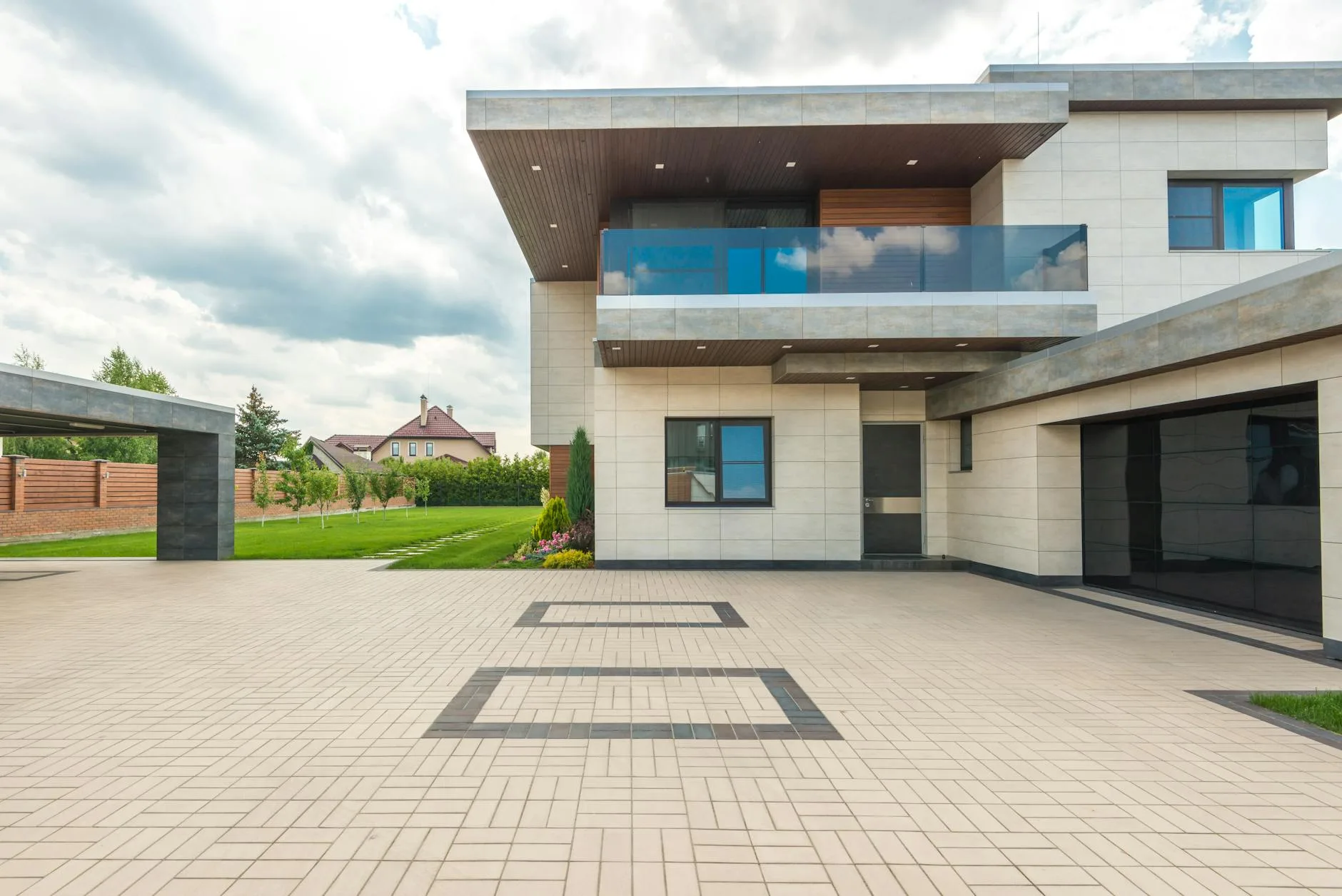
Porcelain has exploded in popularity over the past five years, and for good reason. It’s essentially a very dense, kiln-fired ceramic tile made specifically for outdoor use. If you’ve seen those impossibly clean patios on Instagram that still look perfect three years later — they’re almost definitely porcelain.
Why Porcelain Is Taking Over
The numbers tell the story. Porcelain has a water absorption rate below 0.5% (compared to 3-6% for sandstone). That means almost zero algae growth, no frost damage, no staining, and no sealing required. You can spill red wine on a porcelain patio, leave it overnight, and wipe it clean in the morning. Try that with sandstone.
It’s also incredibly consistent. Every slab is the same thickness, the same colour, and perfectly square — which makes laying faster and the finished result more precise. The surface comes in dozens of finishes, from realistic wood-effect to marble-look to plain contemporary.
Expect to pay £40-80 per square metre for the slabs themselves. Brands like PorcelPave, Valverdi, and the Marshalls Symphony range are well-established in the UK market.
The Porcelain Downsides
Cost is the obvious one, but the bigger hidden expense is installation. Porcelain must be laid on a full mortar bed using a specialist priming slurry (like BAL PTB Plus or Palace Porcelain Primer) because the surface is so non-porous that standard cement won’t bond to it. That rules out most DIY installations and adds £15-25 per m² in labour costs.
Cutting porcelain requires a diamond wet saw. It’s not something you’ll manage with a standard angle grinder — the material is too hard and too brittle. Expect to break a few slabs during installation, so order 10% extra.
The other thing nobody tells you: porcelain can feel slightly artificial up close. The printed surface patterns repeat every few slabs, and in bright sunlight the uniformity can look a bit… clinical. It lacks the organic warmth of real stone. Whether that bothers you is a personal call.
According to the Landscape Institute, porcelain paving now accounts for a growing share of UK residential projects, reflecting the shift towards low-maintenance garden design.
Best For
Anyone who wants a pristine, modern patio without ongoing maintenance. Particularly good for shaded areas where stone or concrete would turn green within months. If you’re planning your garden layout from scratch, porcelain gives you the cleanest canvas to work with.
Composite Patio Tiles: The New Contender
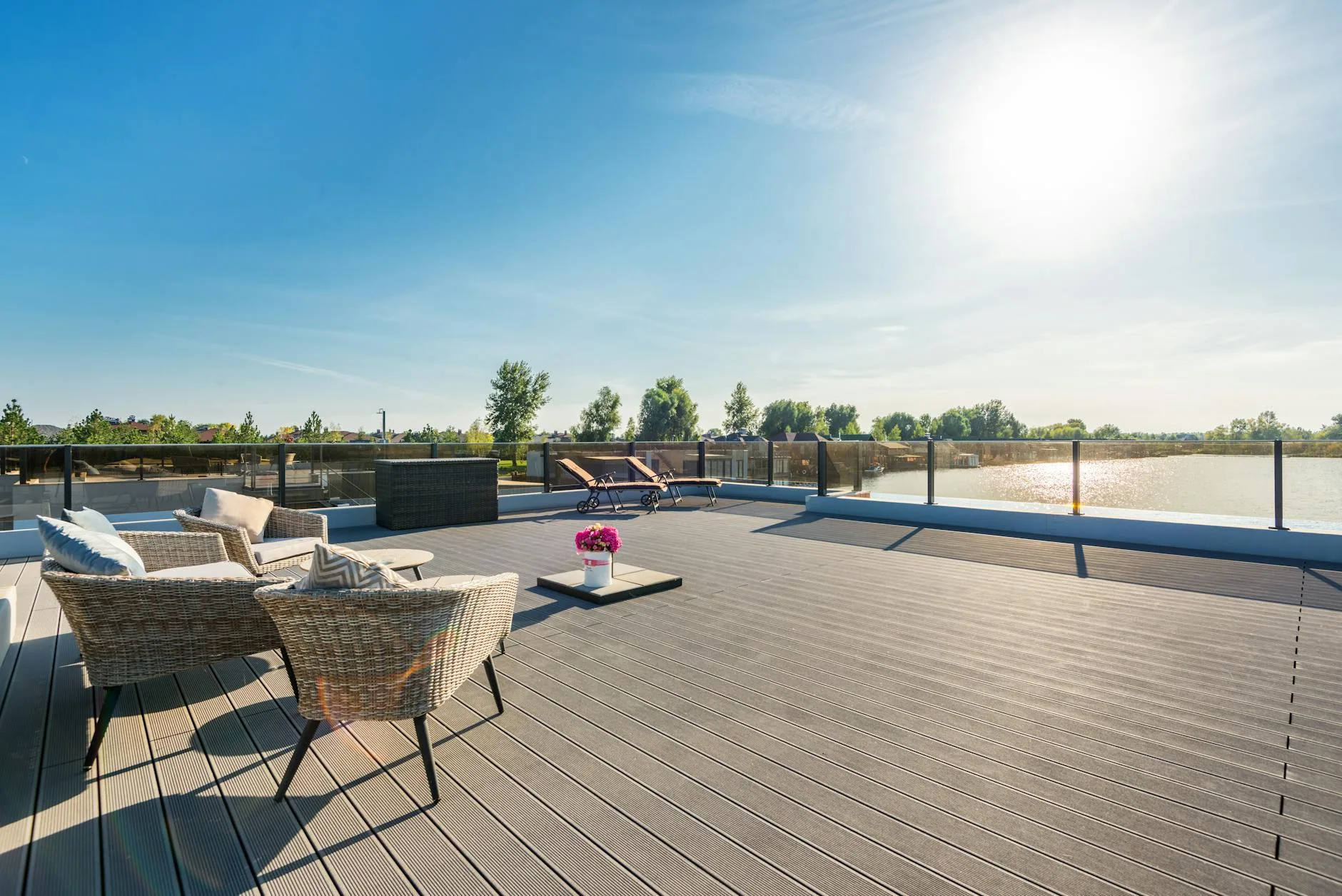
Composite — a blend of recycled wood fibres and plastic polymers — has been popular for decking for years. Composite patio tiles and pavers are newer to the UK market, but they’re carving out a niche, particularly for balconies, roof terraces, and areas where weight matters.
What Makes Composite Different
The main selling point is that composite feels warm and soft underfoot. On a summer morning, you can walk on it barefoot without the shock of cold stone. It’s also lighter than any mineral-based paving — typically 8-12kg per m² for tiles, compared to 40-60kg for stone. That matters for balconies and raised structures where load-bearing is a concern.
Most composite patio tiles use a click-lock or pedestal system, meaning they can be installed without mortar or adhesive over an existing hard surface. You can literally lay them over old concrete slabs. Brands like Cladco, Trex, and TimberTech all offer UK-compatible systems, priced at roughly £40-70 per square metre.
The Limitations You Need to Know
Composite expands and contracts with temperature more than stone or porcelain. In the UK that’s manageable — we don’t get extreme heat — but you still need to leave expansion gaps and follow the manufacturer’s spacing guides precisely.
Colour options are mostly wood-effect. If you want a stone or slate look, composite isn’t your material. And while it resists rot and doesn’t splinter, it can scratch from dragged furniture and may develop a slight sheen over time that some people find unappealing.
Longevity data in the UK is still limited. The best composite brands claim 25-year warranties, but the material has only been widely available here for about a decade. We simply don’t have the multi-generational evidence that we do with stone. It’s a reasonable bet, but it is still a bet.
Best For
Balconies, roof terraces, pool surrounds, and anywhere you want a warm-feeling surface. Also worth considering if you’re overlaying an existing patio without wanting to rip everything up.
How to Choose: The Decision Framework
Still undecided? Run through these five questions:
What’s your total budget? For a 15m² patio including installation, expect roughly: concrete £800-1,500
natural stone £1,200-2,500
porcelain £1,500-3,000
composite £1,000-2,000. Those ranges assume professional laying — DIY saves 40-50% on concrete and composite, less on porcelain and stone.
How much maintenance will you actually do? Be honest. If you know you won’t pressure-wash annually, avoid concrete. If you can’t be bothered sealing every few years, cross off natural stone. Porcelain and composite both offer a fit-and-forget experience.
What style is your garden? Cottage and traditional gardens suit natural stone. Modern and minimalist spaces look best with porcelain. Composite works for contemporary, Scandinavian-inspired outdoor rooms. Concrete is the chameleon — it can work anywhere but rarely steals the show.
Do you need slip resistance? This matters if you have elderly visitors or young children running about. Natural stone (especially riven finishes) and composite both perform well when wet. Some porcelain tiles have textured R11 or R12 slip ratings — always check before buying, because smooth polished porcelain can be treacherous in the rain.
How long are you staying? If this is your forever home, invest in stone or porcelain. If you might move in five years, concrete or composite gives you a solid patio without overcapitalising.
Mixing Materials: A Smart UK Trend
One approach gaining traction is combining two materials. A porcelain main patio with a natural stone border, for instance, gives you the low maintenance of porcelain with the organic edge detail of stone. Or a composite dining area adjacent to a stone path — warm where your bare feet hit, hard-wearing where the foot traffic concentrates.
If you’re thinking about what furniture to pair with your new patio, the material underneath matters more than you’d think. Metal and aluminium furniture suits porcelain beautifully, while wooden furniture like teak works best on natural stone where the natural textures complement each other.
Just ensure your contractor understands the different laying requirements for each material. Porcelain and stone need different adhesive beds, and the fall gradients may need adjusting at transition points to prevent water pooling.
Final Verdict
There’s no single best patio material — only the best one for your situation. If pushed for a recommendation, porcelain is the smartest all-round choice for most UK homeowners right now. The upfront cost is higher, but the zero-maintenance reality and frost-proof durability make it genuinely cheaper over a ten-year period than concrete or stone when you factor in cleaning, sealing, and replacement costs.
Natural stone remains the premium choice for character and longevity. Concrete is perfectly respectable on a budget. And composite fills a gap that nothing else does for weight-sensitive or overlay applications.
Whatever you choose, get the sub-base right. Every patio material fails on a bad foundation. A minimum 100mm of compacted MOT Type 1 with a proper fall of 1:60 away from the house is non-negotiable. Skimp on that, and even the most expensive porcelain will crack and shift within a couple of winters. Your material choice matters, but what’s underneath it matters more.
Keep reading on Plot & Patio: How to Stop Weeds Growing Between Patio Slabs, How to Lay a Patio: Step-by-Step DIY Guide, Best Pressure Washers 2026 UK: Patio, Car & Decking, Pergolas vs Gazebos: Which Is Right for Your Garden?.
Frequently Asked Questions
What is the best patio material for low maintenance? Porcelain is usually the lowest-maintenance patio material because it resists staining, absorbs little water and is less prone to algae than many natural stones.
Is natural stone better than concrete paving? Natural stone usually looks richer and ages better, while concrete is cheaper and more consistent. The best choice depends on budget, style and how much maintenance you accept.
Which patio material is best for UK weather? Porcelain, sandstone and good-quality concrete all work in UK weather when laid properly on a suitable base with correct drainage and jointing.
What should I check first with Patio Materials Compared: Concrete, Stone, Porcelain & Composite? Start with the real use case, then check size, compatibility, running costs and maintenance. A product that looks good on paper can still be the wrong fit if it does not suit the room, routine or budget.
How do I avoid wasting money on Patio Materials Compared: Concrete, Stone, Porcelain & Composite? Avoid buying on one headline feature alone. Compare the practical details, read the warranty or returns terms, and choose the option that solves your main problem rather than the one with the longest specification list.