The La Hacienda Circo is the best chiminea for most UK patios: its steel body heats quickly, the enclosed opening directs the fire towards a seating area, and it is easier to position than a heavy cast-iron model. Choose clay for traditional looks and gradual warmth, or cast iron when heat retention and a permanent position matter more than weight.
Material is only half the decision. Check the footprint, chimney clearance, surface below, storage plan and whether everyone can sit outside the spark zone. A chiminea is an open fire, not a patio appliance that can be tucked against a fence.
Contents
- Our direct answer
- Comparison table
- Six reviews
- Clay, cast iron or steel
- Size and positioning
- Fuel and fire safety
- Care and winter storage
- Final verdict
- FAQs
Best Chimineas: Our Direct Answer
Start with the La Hacienda Circo for a conventional medium steel chiminea. It offers the simplest balance of manageable weight, directed warmth and a contained front opening. The Leon Medium is better when people sit around several sides and flame visibility matters.
For clay, choose the compact Charles Bentley Leaf Design where space is limited or the Barcelona Large where the traditional body should be a garden feature. For cast iron, the Monster Shop package provides the broadest accessory set; the Relaxdays model is easier to fit into a smaller permanent area.
Chimineas at a Glance
| Model | Our award | Material | Key detail | Main compromise |
|---|---|---|---|---|
| La Hacienda Circo | Best overall | Steel | Enclosed front-opening design | Needs rust protection |
| La Hacienda Leon Medium | Best 360-degree steel option | Steel | 90 × 37cm mesh body | More exposed to sparks |
| Charles Bentley Leaf Design | Best compact clay option | Clay | Medium grey body with stand | Needs frost protection |
| Charles Bentley Barcelona Large | Best large clay option | Clay | Large natural clay body with stand | Heavy and fragile |
| Monster Shop Cast Iron Chiminea | Best cast-iron package | Cast iron | Cover, poker and cooking racks included | Very heavy |
| Relaxdays Terrace Oven | Best compact cast-iron option | Cast iron | 86 × 46 × 38cm | Finish needs maintenance |
The comparison table uses stable construction and size details rather than prices, which change frequently.
The Six Best Chimineas Reviewed
1. La Hacienda Circo — Best overall

The La Hacienda Circo is the best all-round starting point for most patios. Its steel body is lighter to position than cast iron, while the enclosed fire chamber and chimney give it the familiar front-facing chiminea format rather than the all-round exposure of a fire basket.
Choose it for a medium patio where directed warmth and a contained opening matter. Steel heats quickly but also loses heat quickly after the fire dies. Keep the painted surface dry, touch up corrosion promptly and use a cover only after the unit is completely cold.
2. La Hacienda Leon Medium — Best 360-degree steel option
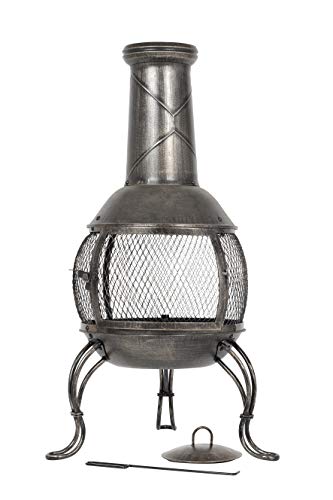
The Leon Medium suits groups seated around the fire because its mesh body offers a wider view of the flames than a conventional front-opening chiminea. At 90cm tall and 37cm in diameter, it is easier to place than many large cast-iron models.
The trade-off is reduced wind protection and more exposed sparks. Use the supplied guard arrangement correctly, keep the unit well away from combustible furniture and do not treat the mesh as permission to load an oversized fire.
3. Charles Bentley Leaf Design — Best compact clay option

This medium Charles Bentley model is the approachable clay choice for a smaller patio. Clay gives the traditional rounded look and releases warmth gradually, while the stand keeps the body raised from the supporting surface.
Clay needs the most careful ownership. Start with small fires, increase heat gradually and keep water away from a hot body. Moisture followed by frost can crack clay, so sheltered winter storage is far better than relying on a loose cover in an exposed garden.
4. Charles Bentley Barcelona Large — Best large clay option

The Barcelona Large is the clay option for buyers who want more visual presence and a larger fire chamber. The natural finish suits traditional gardens, and the supplied stand supports the body at a practical height.
Large does not mean invulnerable. The heavier clay body is awkward to move, must sit level and still needs gentle first fires. Choose it only if you have a stable permanent position and a genuinely dry storage plan for winter.
5. Monster Shop Cast Iron Chiminea — Best cast-iron package

The Monster Shop model is the most complete cast-iron package here. It includes a rain cover, poker and cooking or toasting racks, so it suits buyers who want both a substantial heater and occasional food use without sourcing several accessories separately.
Cast iron retains heat well but is heavy and prone to surface rust when neglected. Assemble it where it will stay, protect the patio beneath it and maintain the finish. Cooking accessories do not turn it into a precision barbecue; follow the supplied fuel and food-use instructions.
6. Relaxdays Terrace Oven — Best compact cast-iron option
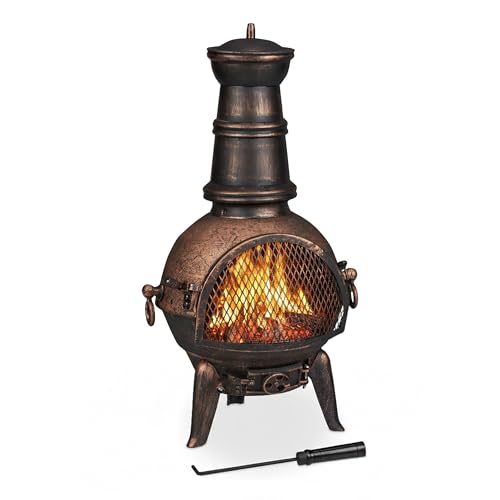
The Relaxdays Terrace Oven is the compact cast-iron choice. Its 86 × 46 × 38cm dimensions make it easier to accommodate than oversized traditional models while retaining the weight and heat-holding character that attracts buyers to cast iron.
It is still too hot and heavy for casual repositioning once used. Check the base is level, leave generous clearance around the chimney and door, and expect the bronze-effect finish to need care if exposed to rain.
Clay, Cast Iron or Steel?
Clay
Clay offers the classic look and warms gradually, but it is vulnerable to thermal shock, absorbed moisture and frost. Use small initial fires, never cool it with water and store it dry in winter. A clay body can crack even when handled carefully, so it suits buyers prepared for more protective ownership.
Cast iron
Cast iron is heavy, slow to move and good at holding heat. It can remain a long-term garden feature if the surface is protected from rust. Position it before assembly where possible and check that the patio can support it without rocking.
Steel
Steel is lighter and heats quickly. It is the easiest material to move before use, though thin steel loses heat faster and damaged coatings allow rust. For other forms of outdoor warmth, compare our patio-heater guide.
Choosing the Right Size and Position
Allow open space around the body and a clear route above the chimney. Keep it away from fences, sheds, trees, parasols, garden cushions and low branches. Never use a chiminea in a gazebo, conservatory, garage or other enclosed space because smoke and carbon monoxide can accumulate.
A compact model suits a small paved seating area only when clearances remain generous. Larger models need a stable base and enough room for people to circulate without brushing the hot body. Our garden-furniture guide can help plan seating that does not crowd the fire.
Fuel, Lighting and Fire Safety
Use only the fuels the manufacturer permits. Dry seasoned or kiln-dried wood generally burns with less smoke than wet wood. Never burn painted or treated timber, household waste, plastics or accelerants. The rules on smoke nuisance still apply; the government guidance on garden fires and smoke explains the legal context.
- Prepare: check the unit, base and clearances before lighting.
- Start small: use kindling and a modest fire rather than filling the chamber.
- Supervise: keep children and pets outside the hot zone and never leave the fire unattended.
- Let it cool naturally: do not pour water onto hot clay or metal.
- Dispose safely: remove ash only when completely cold.
If cooking is a priority, a dedicated barbecue or outdoor pizza oven gives more predictable food control.
Care, Covers and Winter Storage
Clean out cold ash, keep drainage paths clear and inspect fasteners, mesh and fire bowls regularly. Covers protect from rain only when fitted to a cold, dry chiminea; trapping moisture beneath a cover can worsen corrosion.
Store clay under cover and away from frost. Steel and cast iron can remain outdoors when protected, but inspect for paint damage and rust. Never move any chiminea while it is hot, and avoid dragging heavy cast iron across paving.
Low-level garden lighting can make the route around a chiminea safer without competing with the fire.
Which Chiminea Should You Buy?
Choose the La Hacienda Circo for the best overall balance of directed warmth, manageable weight and familiar design. Pick the Leon for wider flame visibility, Charles Bentley Leaf Design for compact clay, Barcelona Large for a traditional statement, Monster Shop for a complete cast-iron package, or Relaxdays for compact cast iron.
The biggest mistake is choosing on appearance before planning clearance and storage. A smaller chiminea used safely is a better buy than a large model crowded against combustible furniture.
Frequently Asked Questions
What is the best chiminea material? Steel suits buyers wanting lower weight and quick heat, cast iron suits a permanent position and heat retention, while clay offers traditional looks but needs the most protection from moisture and frost.
Can a chiminea stay outside all year? Metal models can remain outside with maintenance and a suitable cover, though corrosion remains possible. Clay is better stored somewhere dry and frost-free.
What should I burn in a chiminea? Use only fuel the manufacturer permits, commonly dry seasoned or kiln-dried wood. Never burn treated timber, waste, plastics or accelerants.
Can I put a chiminea on decking? Only with the manufacturer’s clearance requirements and a suitable non-combustible heat-resistant base. Keep sparks and radiant heat away from combustible decking and furniture.
Do chimineas produce less smoke than fire pits? The chimney directs smoke upward, but fuel moisture, airflow and fire management still determine how smoky it is. A chiminea is not smoke-free.
Can you cook on a chiminea? Only use a model and accessories specifically designed for cooking, and follow the maker’s fuel and food-safety instructions.