The average new-build garden in the UK is now just 50 square metres, according to research from the Royal Horticultural Society — roughly the size of a large living room. Many terraced houses, flats, and urban properties have even less outdoor space to work with. But a small garden doesn’t have to feel small. With the right design principles and some creative thinking, even the tiniest plot can become a genuinely useful, beautiful outdoor space. We’ve tried these ideas in real gardens across the UK, and these 15 aren’t Pinterest fantasies requiring professional landscapers — they’re practical, achievable improvements that work in real UK gardens, with real UK weather, on realistic budgets.
1. Think in Zones, Not Features
The most common mistake in small garden design (and the same applies to choosing a dining set for a small patio) is trying to fit too many individual features into the space — a lawn, a flower bed, a seating area, a shed, a vegetable patch — without any organising principle. The result feels cluttered and each area is too small to be useful.
Instead, divide your garden into 2-3 functional zones. For example: a paved seating area nearest the house, a planting zone in the middle, and a utility area (bins, storage, compost) at the far end, screened from view. Defining clear zones creates a sense of purpose and makes the space feel intentional rather than chaotic. Even in a garden as small as 5m x 4m, two distinct zones work better than one undifferentiated space.
2. Go Vertical With Planting
When floor space is limited, walls and fences become your most valuable growing area. Vertical planting doesn’t require expensive living wall systems — simple approaches work brilliantly:
- Climbing plants on trellis — jasmine, clematis, and climbing roses add colour and fragrance without taking up ground space. Fix trellis panels to fences or walls and let plants do the work
- Wall-mounted planters — staggered at different heights along a wall or fence, these add greenery without using any floor area. Herbs grow particularly well in wall planters near the kitchen door
- Tiered shelving for pots — a simple stepped plant stand against a wall turns one pot’s worth of floor space into room for 6-8 plants
- Hanging baskets — yes, they’re old-fashioned, but they add overhead interest and colour without touching the ground. Modern macramé or minimalist wire baskets look far more contemporary than traditional plastic ones
Vertical planting also makes fences and walls feel less dominant by softening hard boundaries with greenery — one of the most effective ways to make a small garden feel less enclosed.
3. Choose Multi-Purpose Furniture
In a small garden, every item needs to earn its space. Multi-purpose furniture is the single most practical way to make a compact outdoor area work harder:
- Storage benches — provide seating and cushion/tool storage in the same footprint. The IKEA ÄPPLARÖ storage bench or the Keter Eden Garden Bench are solid budget options
- Folding tables and chairs — can be set up for dining and folded flat when you need the space. IKEA’s NÄMMARÖ bistro set folds compactly against a wall
- Height-adjustable tables — the Kettler Palma table adjusts from coffee-table height to dining height, eliminating the need for two separate tables
- Built-in seating — a simple bench built into a raised bed wall or along a boundary fence provides permanent seating without taking up movable furniture space
4. Use Large Pots Instead of Flower Beds
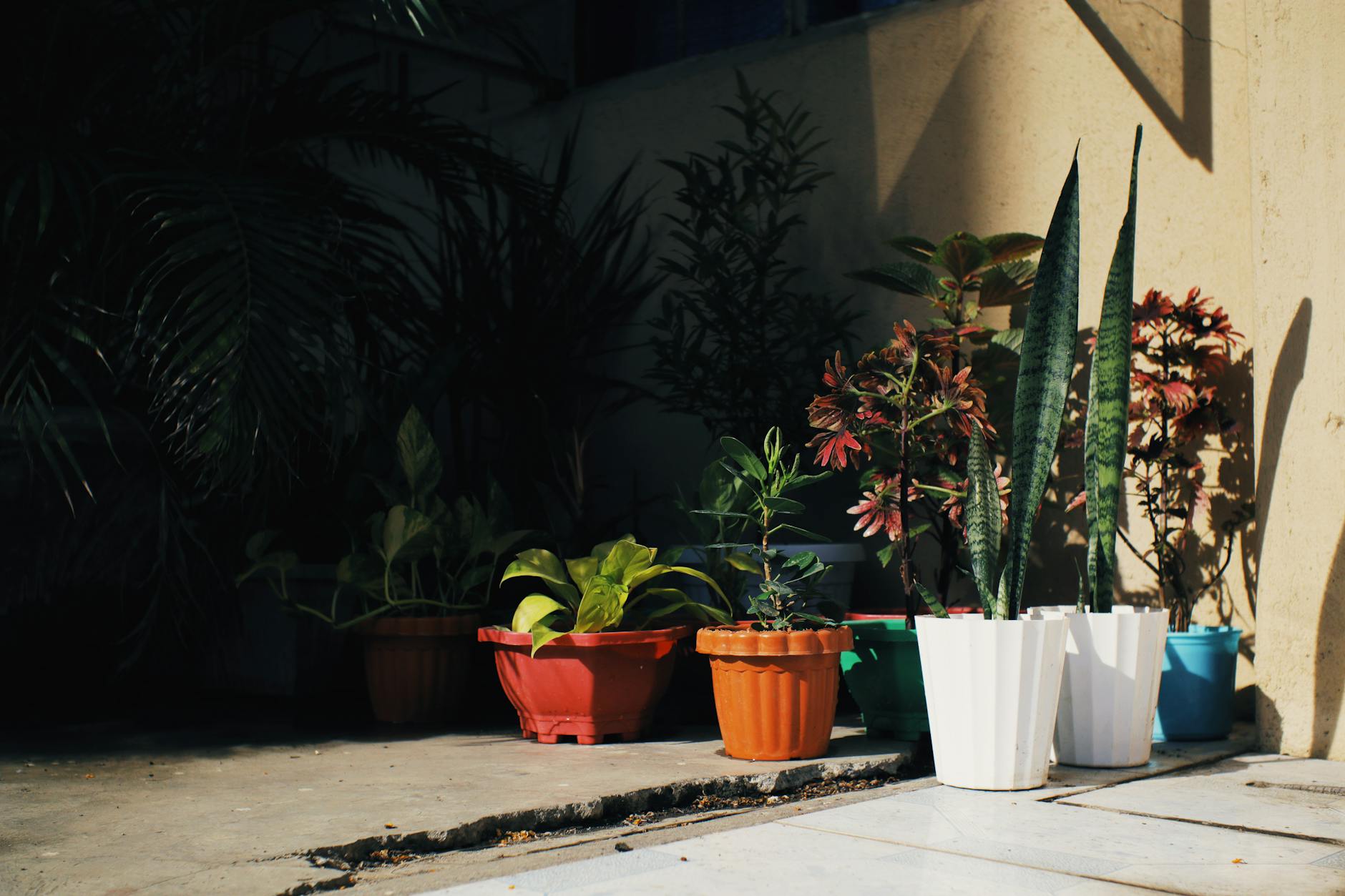
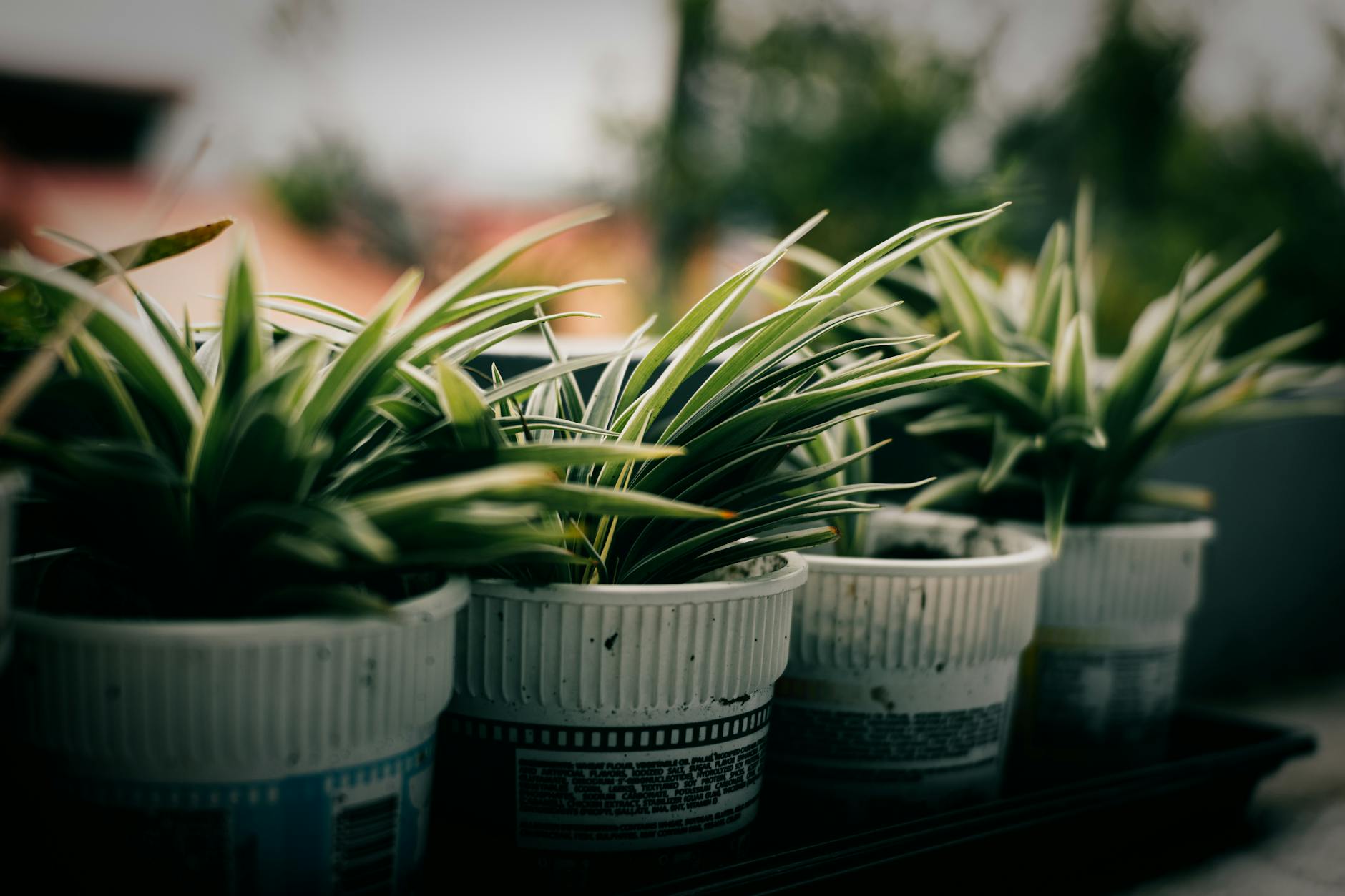
Traditional flower beds consume ground space and limit how you use the garden. In a small plot, large pots and containers offer several advantages: they’re moveable (you can reconfigure the layout seasonally), they define edges without permanent construction, and they allow you to grow a wide variety of plants in controlled conditions.
The key is to use fewer, larger pots rather than lots of small ones. A cluster of three or four large pots (40-60cm diameter) looks intentional and impactful. A collection of twenty small pots looks cluttered. Group pots in odd numbers (3 or 5) at different heights for the most visually pleasing effect.
Lightweight fibrecite or polycite pots look like concrete or terracotta but weigh a fraction as much — important on balconies or roof terraces with weight restrictions. Crescent Garden and LECHUZA make stylish, lightweight options available in the UK.
5. Create the Illusion of Depth
Garden designers use several tricks to make small spaces feel larger than they are:
- Diagonal lines — laying decking or paving diagonally makes the eye travel further than straight lines across the shortest dimension. A diagonal path or deck automatically makes the garden feel wider
- A focal point at the far end — a mirror, a piece of sculpture, a distinctive plant, or a water feature at the end of the garden draws the eye and creates perceived depth
- Lighter colours at the back — pale flowers, white-painted walls, or light-coloured paving at the far end of the garden make it appear to recede further
- Partially hidden areas — even in a tiny garden, a slight curve in a path or a partial screen that hints at more space beyond creates intrigue and perceived depth. You don’t need a lot of room for this — a single tall plant or a narrow trellis panel can create the effect
6. Rethink the Lawn
A lawn in a small garden is often more trouble than it’s worth. A tiny rectangle of grass needs mowing, edging, feeding, and watering — and still looks patchy because it doesn’t get enough light, takes too much foot traffic for its size, or both. In gardens under about 30 square metres, we’d suggest considering alternatives:
- Replace with paving or gravel — a well-designed hard surface is lower maintenance and more usable year-round. Gravel with stepping stones is particularly effective and inexpensive
- Artificial grass — controversial but practical. Modern artificial grass looks convincing, stays green year-round, and eliminates lawn maintenance. Quality UK options from Easigrass or Trulawn start from about £25/m² installed
- Ground cover plants — creeping thyme, chamomile, or clover create a green, living surface that’s lower maintenance than grass and more interesting visually. They handle light foot traffic and fill gaps between pavers beautifully
- If you must have a lawn — keep it a simple shape (rectangle or circle) with clean edges. A small, well-maintained lawn looks intentional; an awkward shape with patchy edges just emphasises the limited space
7. Add Outdoor Lighting
Lighting transforms a small garden more noticeably than almost any other change, and it extends the usable hours deep into the evening. Solar-powered options have improved enormously and cost almost nothing to run:
- Solar stake lights along paths — create definition and atmosphere for literally a few pounds each
- Festoon lights — string lights zigzagged above a seating area create the most impactful transformation. Solar-powered festoon lights from Lights4fun start at about £15-25
- Uplighting key plants or features — a single spotlight at the base of a tree or architectural plant creates dramatic shadows and draws the eye. Solar spotlights are available from £10-20
- LED candles on the table — battery-operated flickering LED candles are cheap, weather-resistant, and create genuine ambience without the fire risk of real candles in an enclosed space
The principle with lighting in small gardens is to create multiple pools of gentle light rather than one bright floodlight. Soft, layered lighting makes any space feel more atmospheric and actually makes it feel larger by drawing attention to specific features rather than illuminating the boundaries.
8. Build Raised Beds
Raised beds are one of the best investments in a small garden. They add structure and visual interest, improve drainage (critical in clay-heavy UK soils), make gardening more accessible (less bending), and create clear boundaries between planting and living areas.
In a small garden, raised beds work best along boundaries rather than in the centre. An L-shaped raised bed in a corner adds significant planting volume without consuming the central space you need for seating or moving around. Standard height is 30-45cm, but building to 50-60cm creates a seat wall — turning a planting bed into multi-purpose furniture.
Railway sleepers remain the most popular DIY material for raised beds in the UK (around £20-35 each from builders’ merchants), though the newer “Eco sleepers” made from recycled plastic are lower maintenance and don’t leach chemicals into the soil. For a more contemporary look, galvanised steel raised bed kits (from Vego Garden or similar) are increasingly popular.
9. Grow Edibles in Your Small Space
You don’t need an allotment to grow food. Many vegetables, herbs, and fruits thrive in containers and small raised beds. The most productive crops for tiny UK gardens include:
- Herbs — basil, parsley, coriander, rosemary, thyme, and mint all grow beautifully in pots. A windowsill herb garden or wall-mounted planters near the kitchen door put fresh herbs within arm’s reach
- Tomatoes — cherry tomatoes in a grow bag or large pot against a sunny wall are one of the most rewarding small-space crops. Bush varieties like ‘Tumbling Tom’ work well in hanging baskets
- Salad leaves — lettuce, rocket, and mixed salad leaves grow quickly in shallow containers and can be harvested repeatedly. Start new sowings every 2-3 weeks for continuous supply
- Strawberries — perfect for pots, hanging baskets, or tiered planters. UK varieties like ‘Cambridge Favourite’ are reliable producers
- Dwarf fruit trees — apple trees on M27 rootstock grow to just 1.5-2m tall and produce full-size fruit. A single dwarf apple or pear tree in a large pot adds both productivity and a focal point
10. Use Mirrors Strategically
Outdoor mirrors are a classic small-garden trick that really works. A well-placed mirror on a boundary wall or fence reflects light and greenery, creating the illusion of a larger space or a hidden garden beyond. The most effective placement is at the end of a path or in a dark corner where the reflected light and imagery create maximum impact.
Use outdoor-rated acrylic mirrors rather than real glass for safety and durability. Frame them with climbing plants or trellis to soften the edges and make the illusion more convincing. Positioning at a slight angle (rather than flat against the wall) prevents the mirror from simply reflecting you looking at it, which breaks the illusion.
11. Create a Water Feature
The sound of moving water adds a sensory dimension that makes any garden feel more immersive and tranquil — and in a small urban garden, it helpfully masks background traffic noise. You don’t need a pond. Self-contained water features that recirculate water through a pump are available from about £50 for a simple bowl fountain to £200+ for more elaborate designs.
Solar-powered water features have improved notably and eliminate the need for outdoor electrical connections, though they only operate in direct sunlight. For reliable performance, a mains-powered pump with a transformer is more consistent, especially in the less-than-sunny UK climate.
In small gardens, wall-mounted water features or tabletop fountains provide the sound benefit without consuming any floor space at all.
12. Screen the Ugly Stuff
Every UK garden has ugly practical necessities — wheelie bins, a compost bin, the back of the shed, air conditioning units. In a small garden, these eyesores are more prominent because there’s nowhere to hide them. Simple screening makes a disproportionate difference:
- Slatted screens — contemporary timber or composite slat panels hide bins while allowing airflow. Available as ready-made panels from fencing suppliers
- Tall planters in front of bins — a pair of tall pots with ornamental grasses or bamboo blocks the view without permanent construction
- Living screens — fast-growing climbers on a simple frame can conceal unsightly areas within a single growing season. Evergreen options like ivy or star jasmine provide year-round screening
13. Choose the Right Plants
Plant choice in a small garden matters more than in a large one because every plant is visible. The key principles:
- Multi-season interest — choose plants that earn their space across multiple seasons. Evergreens provide year-round structure. Deciduous plants should offer at least two seasons of interest (spring blossom + autumn colour, for example)
- Proportion — avoid plants that will outgrow their space within a few years. Check the mature size, not just the size at purchase. One beautiful small tree or large shrub is better than five things competing for space
- Layering — combine plants at different heights: ground cover, low perennials, mid-height shrubs, and one or two taller specimens. This creates a sense of abundance without spreading horizontally
- UK-hardy plants — exotic-looking doesn’t mean tropical. Hardy palms (Trachycarpus fortunei), tree ferns (Dicksonia antarctica), and New Zealand flax (Phormium) all survive UK winters and give a lush, exotic feel to a small garden
14. Think About Privacy
Small UK gardens, especially in terraced and semi-detached houses, are often overlooked by neighbours. Improving privacy makes a tiny garden feel more like an outdoor room and considerably increases how much you actually use it.
- Tall planters with bamboo or ornamental grasses — these add height exactly where you need it without building permanent structures. Phyllostachys bissetii is a good clumping bamboo that doesn’t spread invasively
- A sail shade or pergola — overhead screening blocks views from upper windows. A simple shade sail (£30-60) creates both privacy and shade
- Fence height extensions — trellis panels on top of a standard 1.8m fence add another 30-60cm of screening (check local planning rules — you generally don’t need permission for up to 2m total height)
15. Keep It Simple
The final and perhaps most important principle: simplicity. In a small garden, restraint is your greatest design tool. Choosing compact, weather-proof furniture that does double duty helps enormously. A small space with a clean palette of 2-3 materials, a limited plant selection, and clear sight lines feels calm and spacious. The same space crammed with different paving types, a dozen plant varieties, ornaments, features, and furniture feels chaotic and smaller than it is.
Choose one consistent material for hard landscaping (the same paving throughout, or gravel with one type of edging). Stick to a cohesive colour palette for planting (whites and greens for calm, or purples and oranges for warmth — but not everything at once). Resist the urge to fill every corner. Some empty space is fine — it’s what allows the garden to breathe.
The Bottom Line
A small UK garden is a design challenge, not a limitation. The 15 ideas above can be mixed, matched, and adapted to almost any space, from a tiny courtyard to a narrow new-build plot. The unifying principle is intentionality: every element should earn its place, serve a purpose, and contribute to a space that you truly enjoy spending time in.
Start with the structural changes (zones, raised beds, hard landscaping) and layer in the details (lighting, planting, accessories) over time. Gardens aren’t built in a day, and even the smallest plot evolves season by season. The best small garden isn’t the most feature-packed — it’s the one that makes you want to step outside, sit down, and stay a while.
Keep reading on Plot & Patio: How to Plan a Garden Layout: A Beginner’s Guide, How to Create a Wildlife-Friendly Garden, How to Create Garden Zones for Different Uses, Shade-Loving Plants for UK Gardens: What Thrives in Dark Corners.
Frequently Asked Questions
How do you make a small garden look bigger? Use fewer, larger zones, keep boundaries softened with climbers, and avoid filling every edge with small features. Large pots, vertical planting and furniture that folds or stores cushions all help a compact garden feel less cramped.
What is the best layout for a small UK garden? Most small UK gardens work best with two or three clear zones: a seating area near the house, planting through the middle, and storage or utility space screened at the far end.
Should a small garden have a lawn? Only keep a lawn if it will be used. In very small gardens, paving, gravel, raised beds and large containers often give more year-round value with less maintenance.
What should I check first with Small Garden Ideas: 15 Ways to Maximise a Tiny Garden? Start with the real use case, then check size, compatibility, running costs and maintenance. A product that looks good on paper can still be the wrong fit if it does not suit the room, routine or budget.
How do I avoid wasting money on Small Garden Ideas: 15 Ways to Maximise a Tiny Garden? Avoid buying on one headline feature alone. Compare the practical details, read the warranty or returns terms, and choose the option that solves your main problem rather than the one with the longest specification list.