That beautiful teak bench you bought three years ago is looking more like driftwood every season. The golden colour has faded to a flat grey, the grain feels rough and splintery, and there’s a suspicious green tinge creeping across the armrests. You’re not alone — wood left untreated in British weather ages faster than you’d think, and most people don’t realise how simple it is to bring it back.
Oiling and maintaining wooden garden furniture isn’t difficult. An afternoon’s work once or twice a year keeps your pieces looking good and structurally sound for decades. I’ve been maintaining the same set of teak chairs for over five years now, and they still look almost as good as the day I bought them — because I oil them every spring and give them a proper clean before winter storage.
In This Article
- Why Wooden Garden Furniture Needs Oiling
- Which Oil to Use for Each Wood Type
- How to Prepare Your Furniture for Oiling
- Step-by-Step Oiling Guide
- Seasonal Maintenance Calendar
- Dealing with Common Problems
- Teak-Specific Care
- Protecting Furniture in Winter
- When to Sand and Refinish
- Tools and Products You’ll Need
- Frequently Asked Questions
Why Wooden Garden Furniture Needs Oiling
Wood is a natural material that expands and contracts with moisture and temperature changes. Left untreated outdoors in the UK, even the most durable hardwoods go through a predictable cycle of damage:
What Happens to Untreated Wood
- UV degradation — sunlight breaks down lignin, the natural glue holding wood fibres together. This causes the surface to turn grey and feel fuzzy
- Moisture cycling — British weather means constant wet-dry-wet cycles. Wood absorbs rain, swells, then dries and shrinks. Repeated cycling opens micro-cracks in the grain
- Fungal growth — algae and mildew colonise the damp, rough surface. The green tinge you see on neglected furniture is usually algae, not moss
- Structural weakening — over time, untreated wood becomes brittle at the surface. Joints loosen as the wood shrinks and swells unevenly
What Oil Does
Oil penetrates into the wood grain and does three things:
- Repels water by filling the pores that would otherwise absorb rain
- Protects against UV (most furniture oils contain UV inhibitors that slow the greying process)
- Nourishes the wood by replacing the natural oils that weather strips out, keeping the fibres flexible and less prone to cracking
The difference between oiled and unoiled furniture after two UK winters is stark. Oiled pieces retain their colour and feel smooth to the touch. Unoiled pieces look 10 years older than they are.
Which Oil to Use for Each Wood Type
Not all wood oils are interchangeable. Using the wrong oil can leave a sticky residue, attract dirt, or fail to protect the wood properly.
Teak
Teak is naturally oily and weather-resistant, which is why it’s the gold standard for garden furniture. It doesn’t need oil to survive — it will last decades untreated — but it will turn silver-grey without it.
- Best option: Teak oil (Barrettine, Ronseal, or Osmo teak oil — about £12-18 per litre from B&Q or Screwfix)
- Alternative: Danish oil gives a slightly richer colour but needs more frequent reapplication
- Avoid: Linseed oil on teak. Raw linseed takes forever to dry and goes sticky in humid conditions; boiled linseed is better but still not ideal for teak’s dense grain
If you’re comparing teak against other materials, the maintenance trade-off is worth knowing — teak costs more upfront but needs less intensive care than cheaper softwoods.
Hardwoods (Acacia, Eucalyptus, Shorea)
These mid-range hardwoods are increasingly popular in UK garden furniture because they cost less than teak but still offer decent weather resistance.
- Best option: Hardwood furniture oil (Cuprinol Garden Furniture Oil or Ronseal Ultimate Protection Hardwood Furniture Oil — about £10-15 per litre)
- Alternative: Danish oil works well on acacia and eucalyptus
- Application: These woods are less dense than teak, so they absorb more oil and need treating every 6-8 months in exposed positions
Softwoods (Pine, Cedar, Spruce)
Softwood furniture is the budget option — and it needs the most maintenance. Untreated softwood can rot within 2-3 years in UK conditions.
- Best option: Exterior wood oil with preservative (Ronseal or Cuprinol — about £8-12 per litre)
- Better option for longevity: A wood preserver first (Cuprinol Wood Preserver, about £12 for 1L), then oil on top once the preserver has dried
- Application frequency: Every 4-6 months for exposed softwood, or every 8-12 months if the furniture is sheltered
What About Varnish or Paint?
Varnish and paint sit on the surface rather than penetrating the wood. They look great initially but crack and peel as the wood moves underneath, letting water in through the cracks — often worse than no protection at all. Oil is almost always the better choice for outdoor furniture because it moves with the wood.
The exception is pre-painted furniture (like those pastel Adirondack chairs). If your furniture is already painted, maintain it with exterior wood paint rather than switching to oil — you’d need to strip all the old paint first.
How to Prepare Your Furniture for Oiling
Proper preparation is the difference between oil that lasts 12 months and oil that washes off in the first heavy rain. This step takes longer than the actual oiling, but it matters more.
Cleaning
- Brush off loose dirt, leaves, and cobwebs with a stiff hand brush
- Mix warm water with a squirt of washing-up liquid in a bucket
- Scrub the entire piece with a soft-bristled brush, working along the grain — never across it
- For stubborn grime or algae, use a dedicated garden furniture cleaner (Cuprinol Garden Furniture Cleaner, about £8 from B&Q) or a solution of 1 part white vinegar to 4 parts water
- Rinse thoroughly with clean water from a hose or watering can
- Allow to dry completely — at least 24-48 hours in dry weather. The wood must be bone dry before oiling, otherwise the oil won’t penetrate
Never use a pressure washer on wooden furniture. The force drives water deep into the grain and can blast away the softer wood fibres between the harder grain lines, leaving a permanently rough, ridged surface. I made this mistake on a pine table years ago and the surface never felt right again, even after sanding.
Light Sanding (If Needed)
If the wood feels rough or has visible grey patches after cleaning:
- Sand with 120-grit sandpaper to remove the grey surface layer, working along the grain
- Follow with 180 or 240-grit for a smooth finish
- Brush or vacuum away all sanding dust — any dust left on the surface will mix with the oil and create a muddy finish
You don’t need to sand every time you oil. Freshly cleaned wood that still feels smooth is ready for oil without sanding. Annual oiling prevents the grey layer from forming in the first place.
If your furniture needs a deeper clean first, our guide on how to clean garden furniture covers wood, metal, and plastic methods in detail.
Step-by-Step Oiling Guide
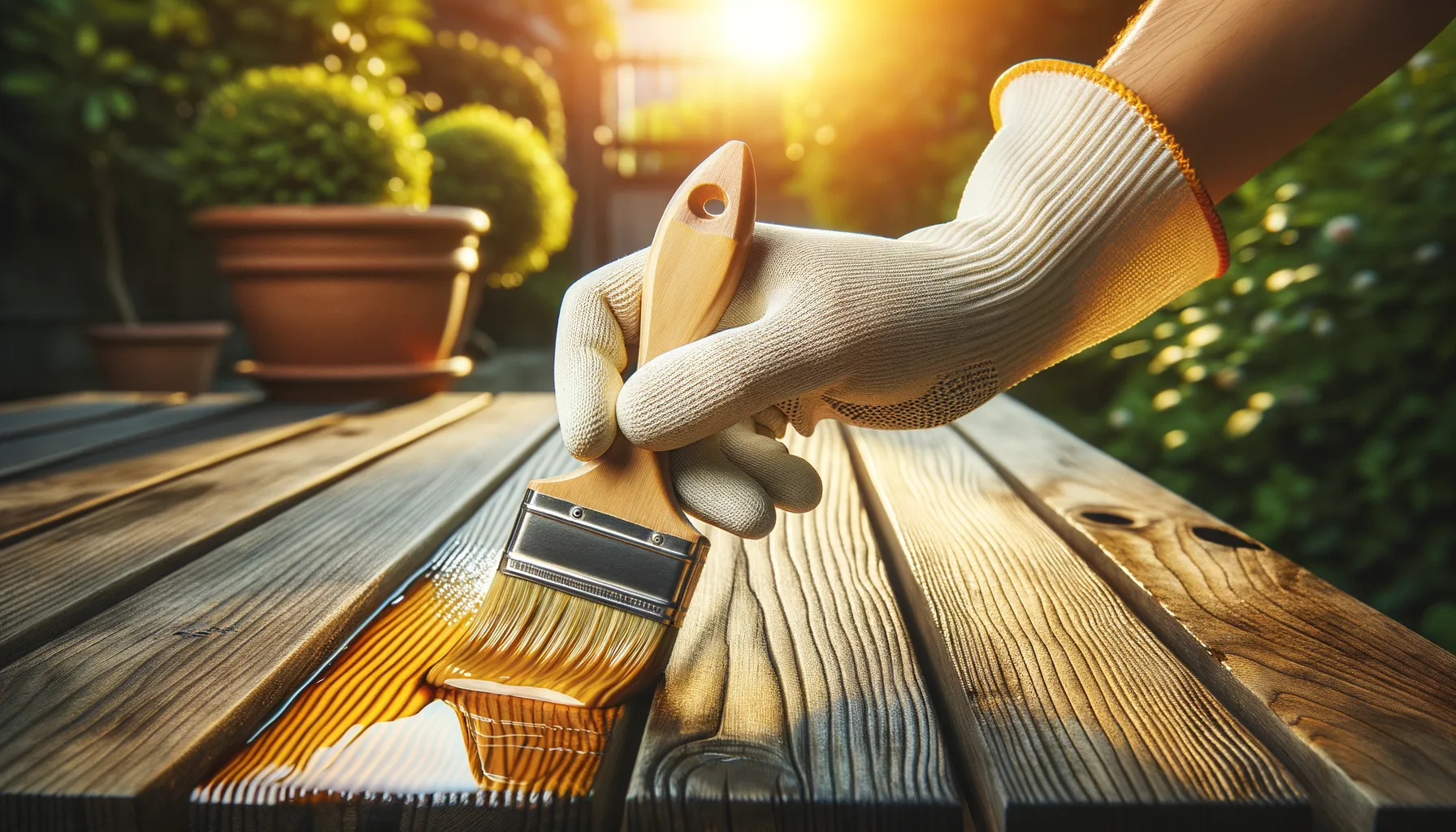
The actual oiling process is satisfying and quick. Most people overthink this — it’s really just wiping oil onto wood.
What You Need
- Your chosen wood oil
- A lint-free cloth, foam brush, or a paint pad (cloth gives the best control)
- Nitrile gloves (oil stains hands for days)
- Old newspaper or a dust sheet underneath
The Process
- Stir the oil thoroughly — pigments and UV inhibitors settle at the bottom of the tin
- Apply a generous coat along the grain using a cloth, brush, or pad. Don’t worry about putting on too much at this stage
- Let it soak in for 15-20 minutes
- Wipe off any excess with a clean, dry cloth — any oil sitting on the surface after 20 minutes won’t absorb and will go sticky
- Wait 4-6 hours (or overnight in cooler weather) for the first coat to dry
- Apply a second coat using the same method. Two thin coats penetrate better than one thick coat
- Allow 24 hours for the final coat to cure fully before using the furniture
Tips for a Professional Finish
- Work in sections — oil one surface at a time (seat, then legs, then back) rather than trying to do the whole piece at once
- Oil the underside too. This is the bit everyone skips. Unsealed undersides absorb moisture from damp ground, and the uneven absorption causes warping. It doesn’t need to look perfect — just seal it
- Check the weather forecast. You need at least 24 hours of dry weather after oiling. Apply in the morning so the oil has the warmest part of the day to cure. Don’t oil if rain is forecast within 24 hours
- Temperature matters. Oil between 10-25°C. Below 10°C, most oils won’t cure properly. Above 25°C, they can dry too fast and not penetrate fully
Seasonal Maintenance Calendar
Wooden furniture in the UK benefits from a predictable maintenance rhythm. Here’s what to do and when.
Spring (March-April)
This is your main maintenance window. After winter, your furniture needs the most attention:
- Inspect for any winter damage — loose joints, cracks, surface damage
- Clean thoroughly (see preparation section above)
- Sand if the surface has greyed over winter
- Oil with two coats (this is the most important oiling of the year)
- Tighten any bolts or screws that have worked loose
Summer (June-August)
- Mid-season wipe down with a damp cloth every few weeks to remove bird droppings, pollen, and spilt drinks before they stain
- Touch-up oil any areas that look dry or have lost their sheen — usually table tops and armrests that get the most wear
- Check for any new cracks that have opened in hot weather
Autumn (September-October)
- Final clean of the season
- Light oil coat before winter — this is your weather protection for the next 4-5 months
- Move furniture to a sheltered position if possible, or fit covers
Winter (November-February)
- Cover with breathable furniture covers (not polythene — it traps condensation and encourages mould)
- Elevate legs off wet ground using pot feet or bricks — standing water rots end grain faster than anything else
- Store cushions indoors — fabric cushions left out over winter are ruined by mildew
Dealing with Common Problems
Grey, Weathered Surface
This is UV damage to the surface layer, not structural damage. It’s purely cosmetic and fully reversible:
- Sand with 120-grit to remove the grey layer (you’ll see the original colour appear immediately underneath)
- Follow with 240-grit for smoothness
- Oil with two coats
Most grey teak furniture is one sanding session away from looking brand new.
Green Algae or Mildew
The green film on neglected wood is algae, and it thrives on damp, untreated surfaces:
- Scrub with a dedicated wood cleaner or a white vinegar solution (1:4 ratio with water)
- For stubborn patches, use a product containing sodium percarbonate (like Oxiclean or Net-Trol) — it lifts stains without bleaching the wood
- Rinse thoroughly and dry completely
- Sand lightly if the surface is still rough after cleaning
- Oil to prevent recolonisation
Small Cracks
Hairline cracks along the grain (called “checking”) are normal in outdoor wood and don’t affect structural integrity. Large cracks do need attention:
- Small checks (under 2mm): Fill with oil — it seeps into the crack and seals it from moisture. Apply extra oil directly into the crack and wipe away the excess
- Larger cracks (2-5mm): Fill with exterior wood filler (Ronseal High Performance Wood Filler, about £8 from Screwfix), sand flush once cured, then oil over the top
- Structural cracks (over 5mm or through joints): These need woodworking repair — waterproof wood glue (Gorilla Wood Glue or Cascamite), clamped overnight, then refinished
Wobbly Joints
Joints loosen as wood shrinks and swells. Fix them before they break:
- Disassemble the joint if possible
- Scrape off old glue
- Apply waterproof wood glue (not PVA — it’s not weather-resistant)
- Reassemble and clamp for 24 hours
- For bolt-together furniture, tighten the bolts and add a drop of thread-lock to prevent them working loose again
Teak-Specific Care
Teak deserves its own section because it behaves differently from other woods and a lot of the advice online is misleading.
The Grey Patina Debate
Here’s the thing — teak’s silver-grey patina is natural and doesn’t damage the wood. Some people genuinely prefer the aged look (it’s similar to the weathered wood you see on coastal buildings). Teak is so naturally durable that it outlasts most other woods even without any treatment.
If you want to keep the golden colour, you need to oil regularly. If you’re happy with grey, you can skip the oiling and just clean annually to prevent algae.
Teak Oil Application Tips
- Teak’s dense grain means it absorbs oil slowly — let each coat soak for 30 minutes rather than the usual 15-20
- You’ll need less oil per coat than on softer woods because less soaks in
- Teak oil is specifically formulated for teak’s density — standard furniture oil doesn’t penetrate as well and can leave a tacky surface
Teak Cleaners and Brighteners
If your teak has gone grey and you want to restore the colour without heavy sanding:
- Teak cleaner (like Barrettine Teak Cleaner, about £12) removes surface grey and dirt
- Teak brightener restores the golden tone without sanding — it’s essentially a mild oxalic acid solution that lifts the grey
- Use cleaner first, then brightener, then oil. The three-step process gives the best result on heavily weathered teak
The RHS advice on maintaining garden seats and tables recommends seasonal care for all outdoor wood structures, and the same principles apply to furniture.

Protecting Furniture in Winter
British winters are the harshest test for outdoor wood. Rain, frost, and prolonged damp cause more damage in four months than summer UV does in eight.
Furniture Covers
- Use breathable covers made from polyester or polypropylene with ventilation gaps. About £20-40 from Amazon UK or garden centres
- Avoid polythene or tarpaulins — they trap condensation underneath, creating a permanently damp environment that’s worse than leaving furniture uncovered
- Secure covers properly with ties or elastic hems — wind-blown covers expose furniture to the worst of the weather at random intervals
Storage
If you have space, bringing furniture indoors (a shed, garage, or covered outbuilding) is the best winter protection:
- Stand pieces upright or on their side to avoid pooling water on flat surfaces
- Don’t wrap in plastic — allow air circulation
- A dehumidifier in the storage space prevents damp air from affecting the wood
Elevation
Whatever you do, get the legs off wet ground:
- Pot feet (about £3-5 for a pack of 4 from garden centres) lift legs 2-3cm off the surface
- Bricks or paving slabs work just as well
- Standing water wicks up through end grain and causes rot from the inside out — it’s the single fastest way to destroy outdoor furniture
When to Sand and Refinish
Sometimes oil alone isn’t enough. If the wood has deep grey patches, rough grain that won’t smooth with light sanding, or multiple coats of old oil have built up and gone dark and patchy, you need a full refinish.
How to Do a Full Refinish
- Sand the entire piece with 80-grit sandpaper to strip back to fresh wood. An orbital sander makes this much faster on large tables and benches
- Work through 120-grit, then 180-grit, then 240-grit for a smooth finish
- Vacuum or brush away all dust
- Wipe with a tack cloth (available from any decorating aisle, about £2)
- Apply two to three coats of your chosen oil, allowing drying time between coats
A full refinish transforms even the most neglected furniture. I refinished a teak bench last spring that had been sitting untreated in a garden for about eight years — three hours of sanding and oiling and it looked like a new purchase. The wood underneath the grey surface was still perfect.
Power Sanding vs Hand Sanding
- Orbital sander — use for large flat surfaces (table tops, bench seats). Much faster and gives a more even finish. About £30-50 for a decent one from Screwfix or B&Q
- Hand sanding — essential for curves, legs, slats, and anywhere the sander can’t reach. Use a sanding block to keep even pressure
For the best garden bench options to begin with, our guide to garden benches covers wooden, metal, and stone choices.
Tools and Products You’ll Need
Essential Products
- Wood oil appropriate for your wood type (£10-18 per litre) — one litre covers approximately 8-12m² per coat
- Furniture cleaner (£6-10) or washing-up liquid
- Sandpaper in 120, 180, and 240 grits (multipack about £5 from Screwfix)
- Lint-free cloths for application — old cotton t-shirts work perfectly
- Nitrile gloves — cheap from any pharmacy or hardware shop
Nice to Have
- Teak brightener (£10-15) for restoring grey teak without heavy sanding
- Orbital sander (£30-50) if you have large pieces or do annual refinishing
- Breathable furniture covers (£20-40) for winter protection
- Pot feet (£3-5 per pack) for elevating legs off wet ground
- Exterior wood filler (£8-10) for filling cracks
Keep reading on Plot & Patio: Best Garden Furniture 2026: UK Weather-Proof Picks, How to Choose the Right Size Dining Set for Your Patio, How to Clean Garden Furniture: Wood, Metal & Plastic, Teak vs Rattan vs Metal Garden Furniture: Which Lasts Longest?.
Frequently Asked Questions
How often should I oil my wooden garden furniture? For hardwoods like teak, acacia, and eucalyptus, once or twice a year is enough — a thorough oiling in spring and a lighter top-up coat in autumn. Softwoods like pine need treating every 4-6 months because they’re less dense and lose their protection faster. If the wood no longer beads water when splashed, it’s time for another coat.
Can I use cooking oil on garden furniture? No — vegetable oils like olive oil and sunflower oil go rancid outdoors, attract insects, and provide no UV protection. They’ll also turn black and sticky within weeks. Always use a purpose-made exterior wood oil that contains UV inhibitors and water repellents.
What’s the difference between teak oil and Danish oil? Teak oil is formulated specifically for dense hardwoods — it’s thinner and penetrates teak’s tight grain better. Danish oil is a blend of oil and varnish that gives a slightly harder, more glossy finish and works well on a wider range of woods. Either works on teak, but teak oil gives a more natural look and Danish oil gives more visible sheen.
Should I sand before every oiling? No — sanding is only needed when the surface has turned grey, feels rough, or has old oil build-up. If your furniture has been regularly maintained and still feels smooth after cleaning, just clean it and oil directly. Unnecessary sanding removes good wood and shortens the furniture’s lifespan.
My furniture has gone grey — is it ruined? Not at all. The grey colour is just UV damage to the very top layer of the wood — typically less than 1mm deep. A light sanding with 120-grit removes the grey completely and reveals the original colour underneath. Sand, then oil, and it’ll look almost new. Even furniture that’s been neglected for years can usually be fully restored.