The Aptliton Hanging Egg Chair is the best egg chair for most UK gardens. Its included stand, folding PE-rattan basket, cushions, cover and stated 150kg capacity make it the strongest all-round package here. Choose the LIVIVO Luna if budget matters most, the OHS for a smaller patio, or the Outsunny Double when two seats matter more than a compact footprint.
The important differences are less about colour and more about assembled size, stated load limit, how easily the basket stores and whether you want a single or double seat. Every recommendation below includes its stand and cushions, but none should be treated as maintenance-free in British weather.
Quick Picks
- Best overall: Aptliton Hanging Egg Chair
- Best budget choice: LIVIVO Luna Egg Chair
- Best for small spaces: OHS Grey Hanging Egg Chair
- Best stable base: VITA5 Egg Chair
- Best sturdy frame: Jack Stonehouse Rattan Egg Chair
- Best two-seater: Outsunny Double Hanging Egg Chair
Contents
- Egg chair comparison
- Best egg chairs reviewed
- Hanging vs freestanding
- How to choose
- Head-to-head comparisons
- Which egg chair should you buy?
- Frequently asked questions
Best Egg Chairs UK: Comparison Table
| Chair | Best for | Type | Stated capacity | Storage |
|---|---|---|---|---|
| Aptliton | Overall | Single hanging chair | 150kg | Basket folds |
| LIVIVO Luna | Budget | Single hanging chair | 150kg | Basket folds |
| OHS Grey | Small spaces | Single hanging chair | 100kg | Basket folds |
| VITA5 | Stable base | Single hanging chair | 150kg | Basket folds |
| Jack Stonehouse | Sturdy frame | Single hanging chair | 120kg | Basket does not fold |
| Outsunny Double | Two people | Double hanging chair | 240kg | Large fixed basket |
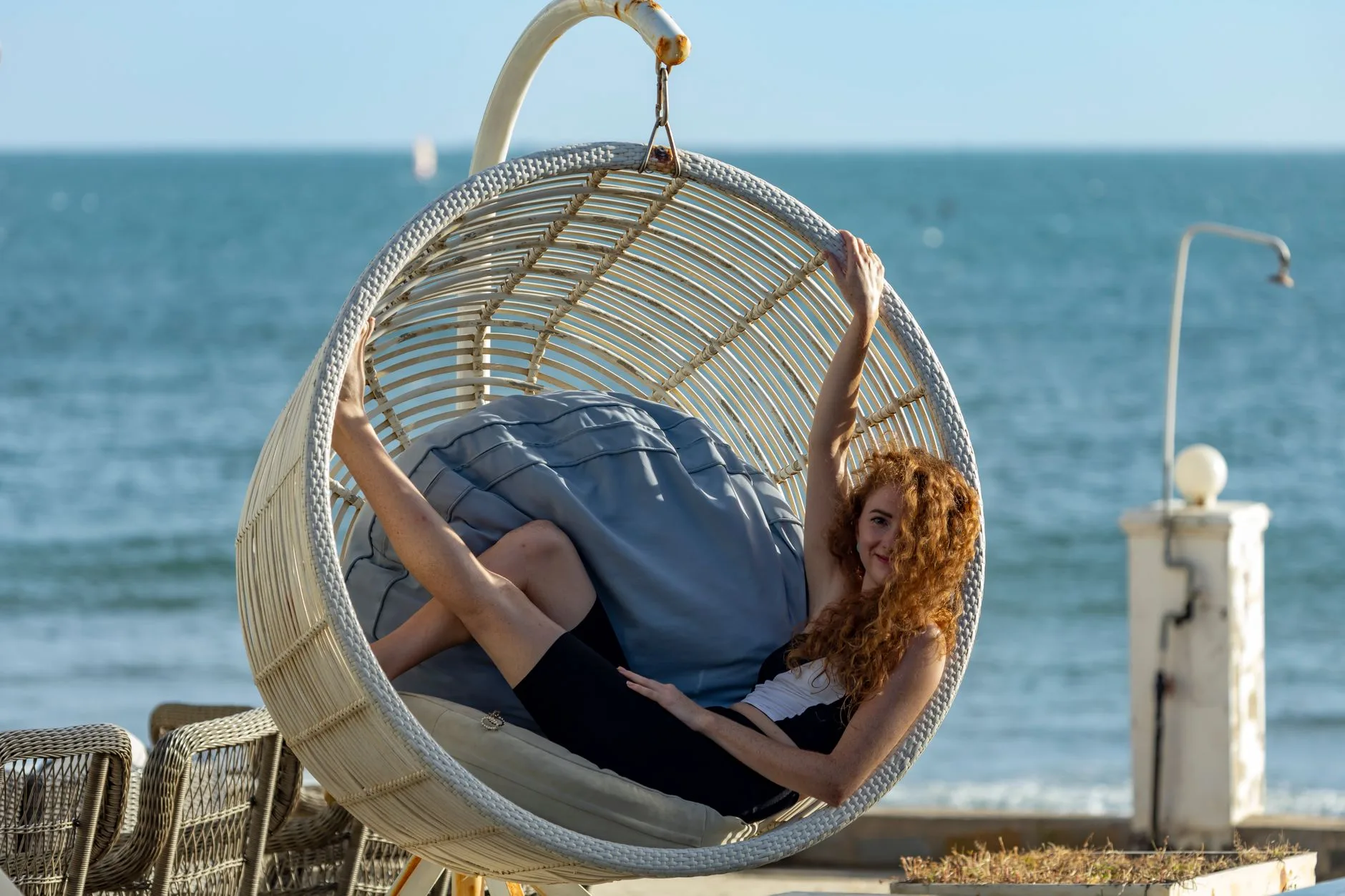
The 6 Best Egg Chairs for UK Homes and Gardens
1. Aptliton Hanging Egg Chair — Best Overall
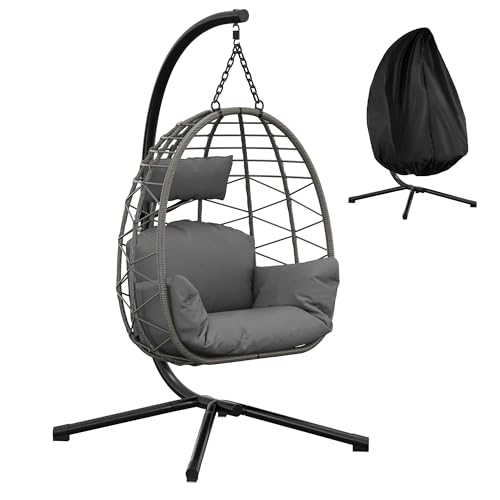
The Aptliton is the most complete single-seat package in this group. The powder-coated metal stand, folding PE-rattan basket, cushions and supplied cover remove the need to buy the main accessories separately, while the stated 150kg limit gives it more headroom than the OHS and Jack Stonehouse chairs.
Buy it if: You want a balanced all-rounder with a folding basket, included cover and a relatively compact 115cm by 59.5cm frame footprint.
Skip it if: You dislike any swinging movement or need a chair for two people.
Main compromise: The supplied cover helps with dust and short spells of poor weather, but the cushions still need dry storage and the frame needs seasonal checks.
2. LIVIVO Luna Egg Chair — Best Budget Choice

The LIVIVO Luna is the price-led choice without a drastic drop in headline capacity. Its 183cm-high frame is shorter than several rivals, the basket folds, and the integrated hood gives useful shade from direct sun. The maker states a 150kg capacity and describes the fabric as shower resistant rather than fully waterproof.
Buy it if: You want the lowest current price in this shortlist and like the extra shade of a hooded basket.
Skip it if: You prefer the woven rattan look or want a taller frame with more open sightlines.
Main compromise: The hood and fabric construction are practical, but they create a bulkier visual shape and still need sensible storage through wet weather.
3. OHS Grey Hanging Egg Chair — Best for Small Spaces

The OHS is the sensible choice for a modest patio, balcony or conservatory. Its basket folds when the seat is not needed, and the grey finish is easy to pair with existing furniture. The limitation is its stated 100kg capacity, the lowest of the six, so it is not automatically the right compact option for every user. Our small garden ideas can help you plan the rest of the space around it.
Buy it if: Space is tight and a folding single basket matters more than maximum load capacity.
Skip it if: The intended user is close to or above the stated 100kg limit, or you need a seat for two.
Main compromise: It saves storage space at the basket, but the stand still occupies floor area and needs clearance for controlled movement.
4. VITA5 Egg Chair — Best Stable Base
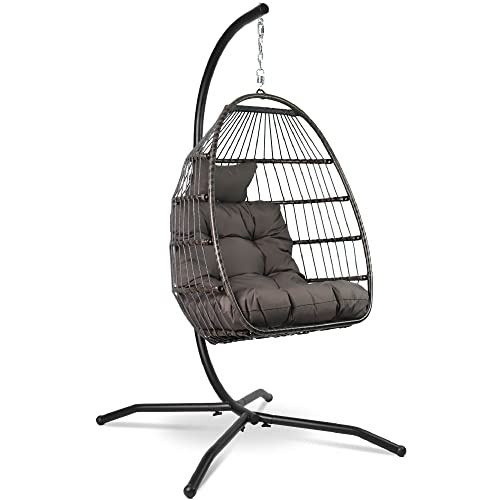
The VITA5 stands out for its four-foot frame and clearly stated 200cm by 100cm by 100cm assembled dimensions. That makes it easier to plan accurately than vague ‘compact’ descriptions. The folding basket and stated 150kg capacity make it a credible alternative to Aptliton when base stability and a broad seating area are the priorities.
Buy it if: You want a four-foot base, a roomy single basket and clear dimensions before committing patio space.
Skip it if: A 2m-high frame will dominate your chosen spot or you need the cheapest option.
Main compromise: The broad, stable-looking frame needs a full square metre of floor space before movement clearance is added.
5. Jack Stonehouse Rattan Egg Chair — Best Sturdy Frame

The Jack Stonehouse is the frame-focused pick. Its galvanised steel structure measures about 105cm by 105cm and 195cm high, with a stated 120kg limit and a 92cm-wide basket. The breathable woven seat and separate head cushion suit a permanent patio position better than buyers who expect to fold everything away after each use.
Buy it if: You prioritise galvanised steel construction, a defined footprint and a generous single basket.
Skip it if: You need a folding basket or the highest stated capacity in the group.
Main compromise: It costs more than most single-seat rivals while its stated load limit is lower than the 150kg options.
6. Outsunny Double Hanging Egg Chair — Best Two-Seater
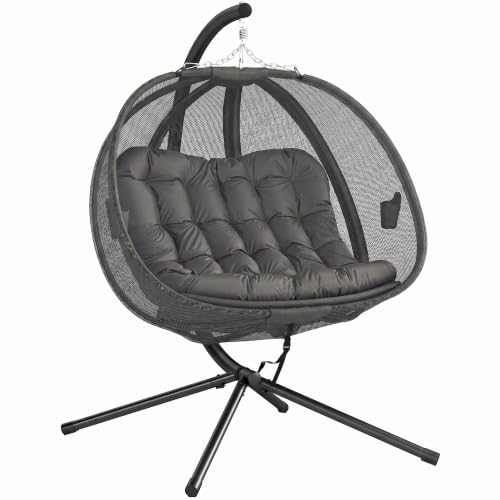
The Outsunny Double is the only recommendation here designed for two people. Its wide basket, steel stand and full-width cushion turn the egg-chair idea into a shared garden seat, with a stated 240kg maximum load. It is much larger than a single chair, so the decision starts with measuring rather than assuming it will fit wherever a standard basket would.
Buy it if: You want a shared seat and have a wide, level patio area with room around the moving basket.
Skip it if: You need easy winter storage, a narrow footprint or a chair that can move through typical indoor doorways assembled.
Main compromise: Two-person comfort comes with the largest footprint, the highest price in this shortlist and more awkward seasonal storage.
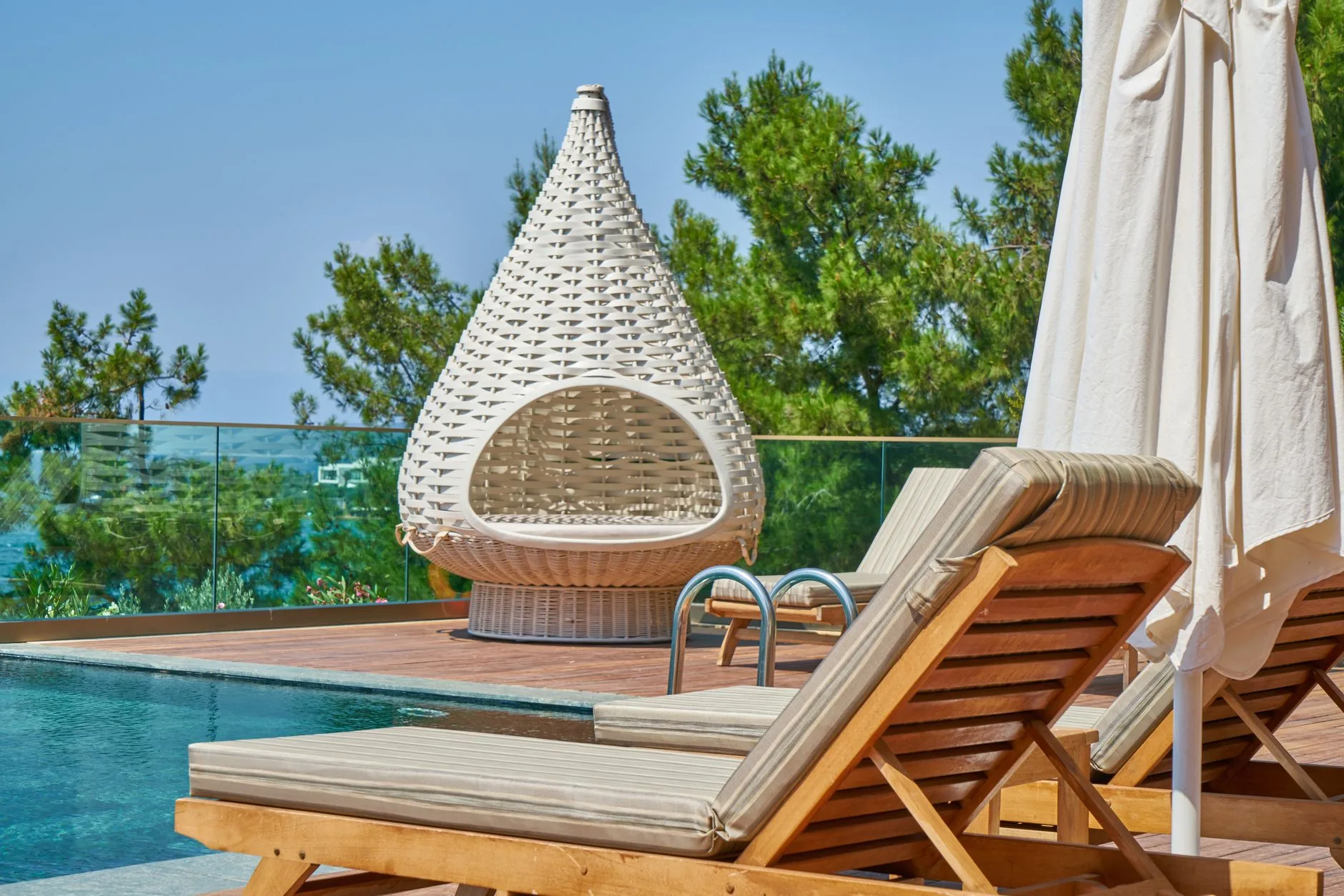
Hanging vs Freestanding Egg Chairs
A hanging egg chair with its own stand gives the familiar suspended feel without fixing anything to a ceiling. It needs a level surface and enough clearance for controlled movement. A fixed-leg or pedestal chair occupies a more predictable footprint, feels steadier when getting in and out, and usually suits indoor rooms better.
Do not confuse a self-supported hanging chair with a basket designed to hang from a ceiling or beam. Structural fixings must suit both the building and the dynamic load, so use the manufacturer’s instructions and obtain competent advice if the fixing point is uncertain.
How to Choose an Egg Chair
Measure the Full Footprint
Measure width, depth and height, then allow extra clearance around a hanging basket. Check doorways if the chair may move indoors. The same principles in our guide to measuring patio furniture apply here. In a narrow garden, improving the wider layout with our small garden design ideas can matter more than saving a few centimetres on the chair itself.
Check Capacity and Frame Construction
The stated limit must cover the user, and it should never be treated as a target. Look for a broad, stable base, intact welds and a properly coated steel frame. Follow the assembly sequence and recheck fasteners after initial use. If a model is subject to a safety notice, the UK government’s product recalls and alerts service is the authoritative place to check.
Plan for Cushions and UK Weather
PE rattan and coated metal cope better outdoors than natural rattan, but cushions normally need dry storage. A cover helps with dirt and rain, yet it should not trap moisture. Our guide to protecting garden furniture over winter covers cleaning, ventilation and storage in more detail.
Consider Comfort and Access
Deep baskets feel enclosed, but shorter users may find a high hanging seat awkward and some people prefer firmer back support. Fixed-leg models are generally easier to enter. Children should not use an egg chair as a swing, and the chair should remain on a stable surface away from fire pits and other heat sources; see our garden fire-pit safety guide.
Egg Chair Head-to-Head Comparisons
Aptliton vs LIVIVO Luna
Both have a folding basket and stated 150kg capacity. Aptliton is the better all-rounder because its PE-rattan basket, cover and conventional open shape suit more gardens. LIVIVO Luna is the better budget buy when its lower price and shaded hood are useful rather than merely decorative.
OHS Grey vs VITA5
Choose OHS where a compact-feeling basket and lower price matter, provided the stated 100kg limit is suitable. Choose VITA5 for its 150kg stated capacity, four-foot base and clearly documented 100cm-square frame. Neither eliminates the need for movement clearance.
Jack Stonehouse vs Outsunny Double
Jack Stonehouse is the more manageable single-seat option and emphasises galvanised frame construction. Outsunny Double is the clear answer for two people, but it requires more floor area and is harder to store. Buy on required seating capacity first, not appearance.
Which Egg Chair Should You Buy?
Buy the Aptliton for the strongest overall combination of stated capacity, folding storage, included cover and value. Pick the LIVIVO Luna to spend less, the OHS Grey for a tighter space, or the VITA5 when its four-foot base and clear dimensions appeal. The Jack Stonehouse is the sturdier-frame choice, while the Outsunny Double is the only one here that makes sense for two people.
Frequently Asked Questions
Can egg chairs stay outside all year?
Many PE-rattan egg-chair frames can remain outside, but cushions should be stored dry and the frame checked regularly for damage or corrosion. Follow the maker’s instructions and use a ventilated cover rather than trapping moisture.
Are hanging egg chairs safe?
They are safe when correctly assembled, placed on a level surface and used within the stated weight limit. Inspect the stand, chain, spring, fixings and basket before use, and do not allow children to treat the chair as a playground swing.
How much space does an egg chair need?
Use the product’s assembled dimensions and allow clearance around a hanging basket for gentle movement. Measure the base, full height, access route and nearby furniture before buying; compact rooms often suit a fixed-leg chair better.
Can you use an egg chair indoors?
Yes, if the floor is level, the chair fits through the access route and there is enough clearance. A fixed-leg design is usually easier indoors because its footprint does not change as the seat moves.
What is the best egg chair for a small garden?
The OHS Grey is our small-space pick because its basket folds and it is aimed at compact settings. Its stated 100kg limit will not suit everyone, so check capacity and complete assembled dimensions before ordering.