A Sunday barbecue in Bristol can go from sunny enough for bare feet on the patio to a grey, damp evening before the plates are cleared. That is where an outdoor rug earns, or loses, its place: not in a styled product photo, but under a real garden table with chair legs scraping, children dropping crisps, and rain blowing in sideways just as everyone moves indoors.
In This Article
- Quick Verdict for UK Gardens
- What Outdoor Rugs Actually Do
- Best Places to Use an Outdoor Rug
- Materials That Handle British Weather
- Sizing and Placement Rules
- UK Prices and Where to Buy
- Problems to Check Before Buying
- Cleaning Storage and Winter Care
- Are Outdoor Rugs Worth It in Different Garden Setups
- Buying Checklist Before You Order
- Frequently Asked Questions
Quick Verdict for UK Gardens
Outdoor rugs do work in UK gardens, but they are not magic flooring. Their strongest role is making a patio, deck or balcony feel more finished and comfortable. They can pull a furniture set together, soften the look of hard paving and make a small seating area feel more intentional.
They are worth considering if you have:
- A well-drained patio, balcony or deck
- Garden furniture that looks a little lost on bare slabs
- A sheltered seating or dining area
- A rental garden where permanent changes are limited
- A family space where people sit, play or eat outdoors in summer
They are less appealing if the spot stays damp, has puddles after rain, sits under dripping trees or already grows algae. In those cases, the rug may become another wet item to clean rather than a useful design layer.
For most UK homes, the best buy is a flatwoven polypropylene or recycled plastic rug in a medium tone. It should be big enough to anchor the furniture, light enough to lift after heavy rain, and easy to hose clean. Treat it as seasonal garden furniture rather than permanent flooring and it is much more likely to feel worth the money.
What Outdoor Rugs Actually Do
Outdoor rugs are usually made from synthetic fibres, often polypropylene or PET, rather than wool or cotton. They are designed to dry faster than indoor rugs and cope with showers, UV exposure and general garden mess. That does not mean every outdoor rug can sit outside all year with no care.
They create an outdoor room feel
The biggest benefit is visual. A rug marks out a seating or dining zone, especially on a large patio where a sofa set can look stranded. Put the front legs of a garden sofa and chairs on a rug and the whole area feels planned rather than temporary.
This is particularly useful with modular rattan-style sets, metal bistro furniture or timber lounge chairs. If you are still choosing the furniture itself, our comparison of teak, rattan and metal garden furniture can help you match the rug to materials that suit your garden and maintenance habits.
They make hard surfaces more comfortable
Porcelain paving, concrete slabs and composite decking can feel cool and hard underfoot. A rug gives bare feet a softer surface and makes a seating area feel more relaxed in the evening.
It will not insulate like indoor carpet, and it should not be used to cover broken slabs or uneven boards. It can, though, make a patio table feel more inviting for longer meals and give children a cleaner place to sit during summer lunches.
They hide tired paving with limits
A rug can disguise plain concrete or dated slabs, which is useful in a rental property or a small courtyard. It is cheaper than relaying a patio and quicker than painting or staining.
The limit is drainage. If the paving underneath is cracked, dipping or holding water, a rug may hide the problem while making damp worse. Fix wobbly slabs, blocked drains and slippery algae first.
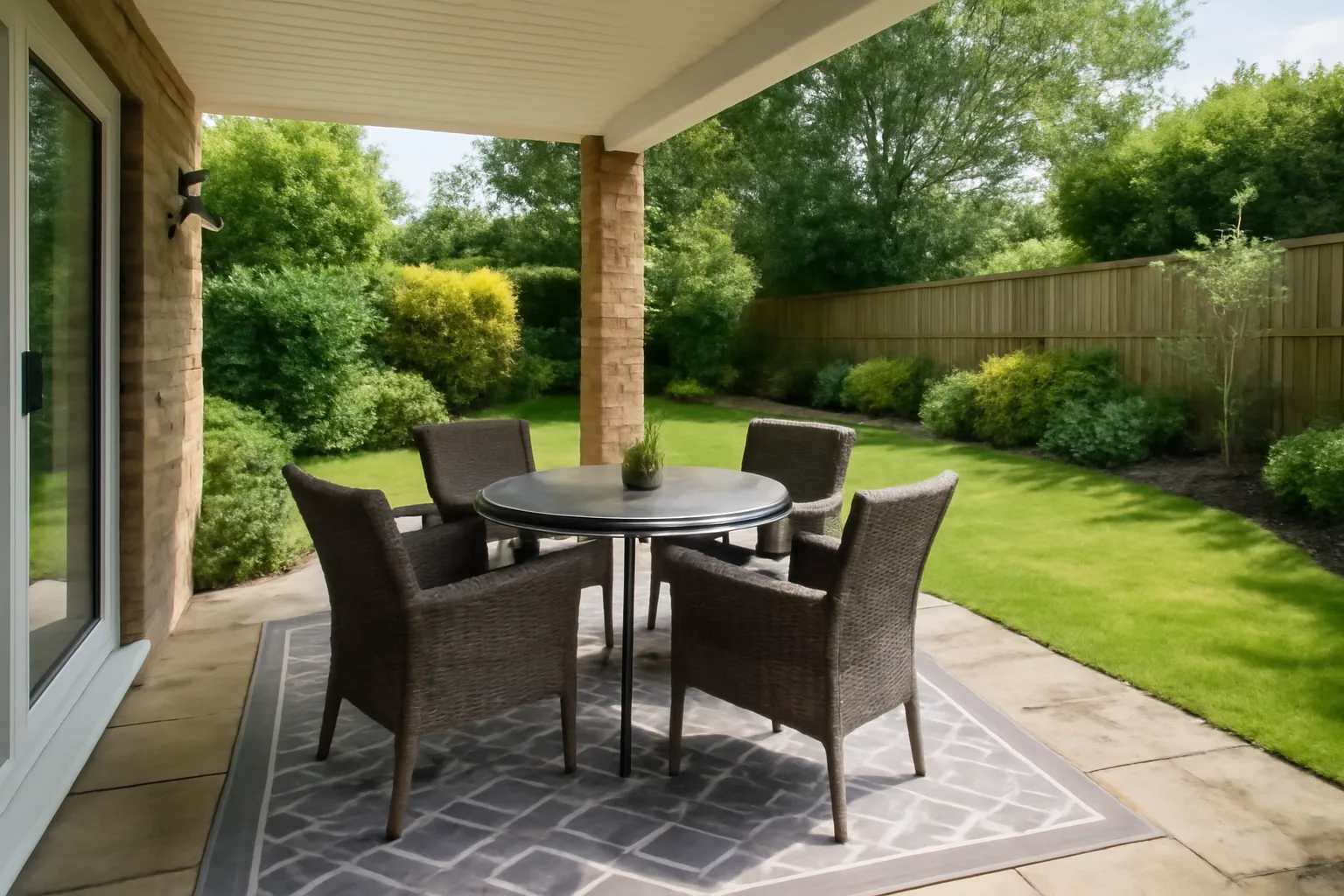
Best Places to Use an Outdoor Rug
Location matters more than pattern. The same rug that works beautifully on a sunny porcelain patio may smell musty on a shaded timber deck.
Patios and paving
Outdoor rugs usually suit hard, level surfaces with a slight fall for rainwater. Porcelain, concrete and stone patios can all work if the area drains well and does not sit wet for days.
Leave space around drains, air bricks and door thresholds. A rug pushed tight against the house wall can trap moisture and grit where you least want it. If your patio is smooth porcelain, consider whether the rug needs a suitable outdoor non-slip underlay.
Decking and balconies
Composite decking can be a good base if there is airflow underneath and the rug is lifted now and then. Timber decking needs more care. Any mat or rug left in one place for long periods can trap moisture and cause darker marks, algae or uneven weathering.
On balconies, check that the rug cannot block drainage outlets or lift in wind. In flats, avoid loose lightweight rugs on exposed balconies where gusts could create a nuisance or hazard. Heavier furniture over the corners helps, but follow lease rules and building guidance if you are adding any fixings.
Covered seating areas
A pergola, veranda, awning or covered outdoor kitchen gives an outdoor rug a better chance. Less direct rain means less drying time and fewer mould issues.
The RHS advice on creating a holiday feel in the garden shows how shade, seating, planting and decorative details can make an outdoor area feel more relaxed. A rug fits neatly into that layered look, especially beneath a dining set or low lounge table.
Covered does not mean dry forever. Rain can still blow in, and condensation can build in enclosed corners. Lift the rug now and then to check the underside.
Materials That Handle British Weather
The label should say suitable for outdoor use. Phrases such as “garden style” or “patio look” are not enough on their own. Look for material details, care instructions and customer reviews that mention outdoor use in changeable weather.
Polypropylene
Polypropylene is the common choice in UK shops including IKEA, Dunelm, B&Q, The Range, John Lewis and many garden centres. It is popular because it is affordable, light, stain-resistant for normal garden spills and relatively quick to dry.
It can feel more plasticky than an indoor rug, and cheaper versions may curl or fade sooner. A tight flatweave with neat edges is usually more practical than a thick pile. The Consumer Reports outdoor rug buying advice also points buyers towards weather-suitable fibres and sensible care, which is relevant even though UK product ranges differ.
Recycled plastic and PET
Many outdoor rugs are now made from recycled plastic bottles or PET yarn. These can feel softer than expected and often come in bolder patterns. They are a good option for patios and balconies if the product is clearly outdoor-rated.
Check the construction as well as the claim. A recycled material rug that lasts several seasons is a better purchase than a flimsy one that needs replacing after one summer. Look for reviews that mention drying, edge quality and colour retention.
Natural fibres
Jute, sisal, seagrass and cotton may look lovely in conservatories and garden rooms, but they are risky on exposed patios. They absorb water, dry slowly and can develop mildew smells.
They may be acceptable in a fully enclosed summerhouse or under a roof that keeps out wind-blown rain. For a normal UK patio, synthetic fibres are usually the safer choice.
Backing and edges
Backing is often overlooked. A thick rubbery backing can hold water against paving or decking. A breathable flatwoven design is easier to dry and less awkward to move.
Useful features include:
- Outdoor-rated material
- UV-resistant or fade-resistant wording
- Hose-cleanable care instructions
- Low-profile edges
- A weight you can lift when damp
- No tassels where children or pets may trip or chew
Sizing and Placement Rules
A rug that is too small can make a garden furniture set look cheaper than it is. A rug that is too large can block drains, catch on doors and become difficult to store. Measure the furniture first, not just the patio.
Lounge furniture sizing
For a sofa and chairs, aim for at least the front legs to sit on the rug. This ties the seating together without needing a huge area of coverage.
Common UK sizes are:
- 120 cm x 180 cm for a small balcony or bistro corner
- 160 cm x 230 cm for compact lounge sets
- 200 cm x 290 cm for larger corner sofas or bigger patios
- 240 cm x 340 cm for generous covered terraces, if storage is practical
Large modular garden sofas can be deeper than they look online, so measure the actual footprint. If you are comparing premium sets, our guide to Maze, Bramblecrest and Kettler garden furniture may help you judge how much to spend on the furniture before adding accessories.
Dining furniture sizing
Dining rugs need more clearance because chairs move. Allow at least 60 cm beyond each side of the table where possible. If chairs catch the rug edge every time someone sits down, the rug will become annoying quickly.
For a four-seater rectangular table, 160 cm x 230 cm can work. For a six-seater, 200 cm x 290 cm is often a better starting point. Round rugs can look smart under round tables, but check the chair movement carefully.
A simple measuring method
Before ordering, try this sequence:
- Put the furniture exactly where it normally sits.
- Mark the rug outline with string, masking tape or spare canes.
- Pull chairs out as if people are sitting down.
- Open patio doors and check any thresholds.
- Check drain covers, air bricks and wall gaps.
- Measure the marked space and compare it with standard rug sizes.
This quick check avoids most sizing mistakes and helps you spot trip points before spending money.
UK Prices and Where to Buy
Outdoor rugs range from cheap summer refreshes to large design-led pieces. Size is the biggest price driver, followed by weave quality, brand and finish.
Typical price bands
As a rough UK guide:
- Small mats around 90 cm x 150 cm: £15 to £40
- Medium rugs around 120 cm x 180 cm: £25 to £70
- Popular patio sizes around 160 cm x 230 cm: £45 to £150
- Large rugs around 200 cm x 290 cm: £90 to £300+
- Premium designer outdoor rugs: £300 to £800+
Budget and mid-range options are common at IKEA, Dunelm, B&Q, The Range, Homebase and supermarkets during spring. John Lewis, Cox & Cox, Garden Trading, Barker and Stonehouse, Heal’s and specialist outdoor living shops tend to offer larger or more design-led choices.
Extra costs to allow for
You may need more than the rug itself. Possible extras include:
- Outdoor non-slip underlay
- Furniture glides to reduce rust or pressure marks
- A breathable storage bag
- Mild outdoor cleaner
- A larger storage box, shed hook or garage space
If you are planning a full patio refresh, it helps to put the rug in context with the furniture budget. Our garden furniture cost guide explains typical UK spending ranges for seating, dining sets and accessories.
Cheap vs Expensive Outdoor Rugs
A £30 rug can be a sensible buy for a rented balcony, a student house garden or one season of colour. It is less appealing if the corners curl, the surface feels harsh or the pattern fades quickly.
A more expensive rug may give you better edges, a denser weave, more weight and a design that suits higher-end furniture. Price is not a guarantee, so read reviews that mention rain, cleaning and storage rather than only colour.
Problems to Check Before Buying
Outdoor rugs are attractive because they change a patio quickly. The drawbacks are manageable, but they need to be considered before you buy.
Damp and mould risk
Damp is the main UK issue. A rug on a shaded north-facing patio may stay wet underneath long after the top looks dry. That can encourage algae on paving and musty smells in the rug.
If anyone in the household has asthma, allergies or mould sensitivity, be cautious with rugs in damp spots. Use them in dry-season areas only, or choose a position with better airflow and sun.
Slips and trips
Curled corners and rippled edges can catch feet. This matters near steps, patio doors and routes used by older relatives or young children.
Do not use a rug to hide uneven paving. Repair moving slabs, raised deck boards and broken edges first. On smooth tiles, use an outdoor-rated underlay if the rug moves underfoot, and check it will not mark the surface.
Fading, Stains and Heat
Sun can fade colours, especially on cheaper rugs. Pale designs show mud, wet leaves and barbecue spills; very dark designs can show pollen and dust.
Keep rugs away from barbecues, pizza ovens, chimineas and fire pits. Synthetic fibres may melt or scorch, and hot fat or embers can create a fire risk. Place cooking and heating equipment on stable, suitable, non-combustible surfaces and follow the manufacturer’s instructions.
Rust can also mark pale rugs. Metal chair legs and table feet should be clean and in good condition. For wider furniture care, see our advice on cleaning garden furniture made from wood, metal and plastic.
Cleaning Storage and Winter Care
An outdoor rug is easier to live with if cleaning fits your normal garden routine. If a large wet rug would be impossible to dry at your home, choose a smaller one.
Routine cleaning
For normal summer use, try this process:
- Shake or brush off leaves, crumbs and grit.
- Vacuum on a low setting if the care label allows it and the rug is dry.
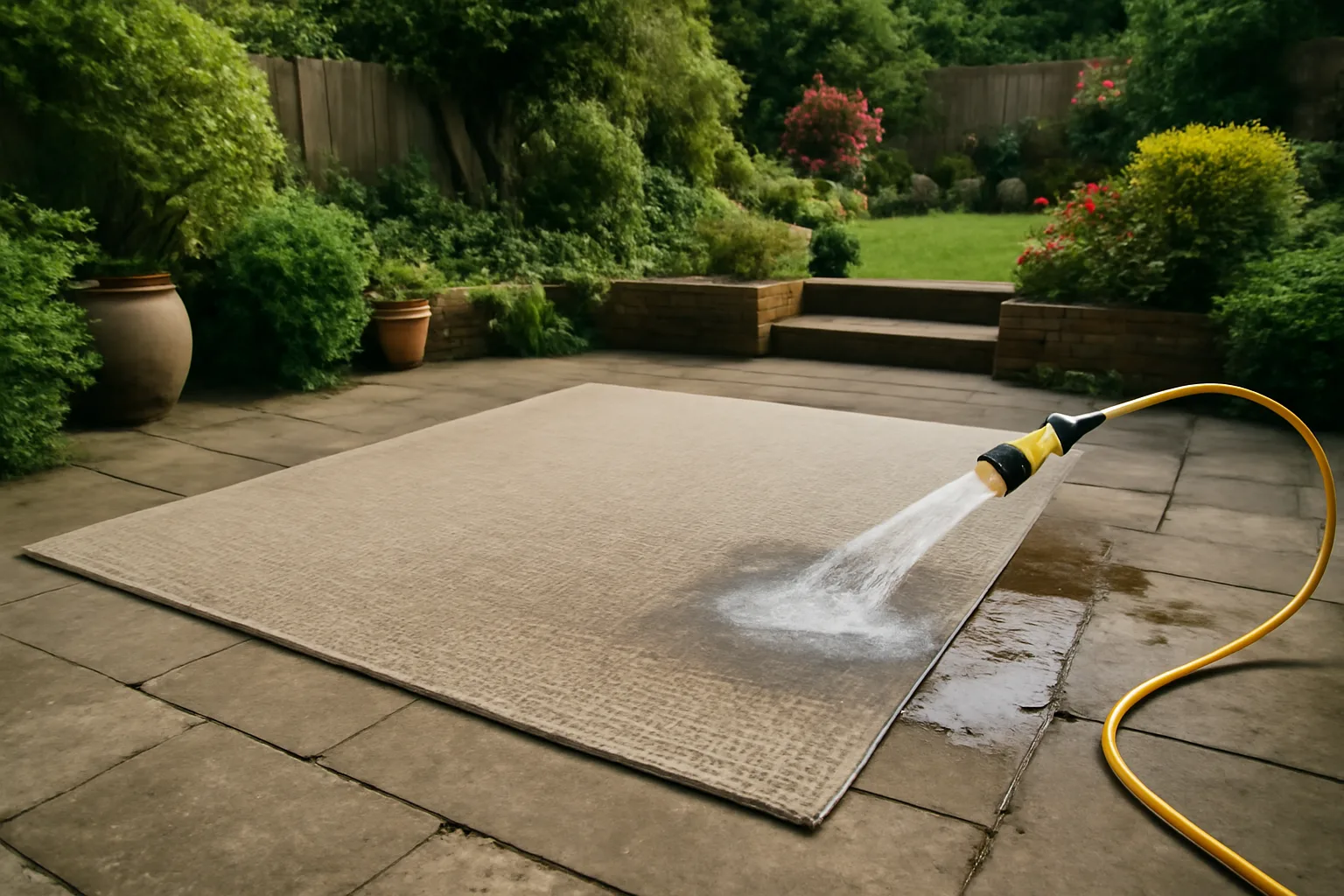
- Hose lightly from the centre outwards.
- Spot clean marks with mild soapy water.
- Rinse well so soap residue does not attract dirt.
- Drape the rug over a rail, chair backs or a clean line until both sides are dry.
Avoid harsh chemicals unless the care label permits them. Pressure washing can damage some weaves, so use caution and keep the jet gentle if the manufacturer says it is allowed.
Seasonal storage
Most outdoor rugs last longer if stored dry during winter. Roll rather than fold where possible, as folds can become permanent creases. A shed, garage, loft or dry cupboard can work, but avoid leaving the rug on a damp concrete floor.
Before storing it:
- Clean both sides
- Let it dry fully
- Remove trapped leaves or insects
- Roll it loosely around a tube if available
- Use a breathable cover if the product guidance allows
Garden storage boxes are useful for cushions and smaller accessories, but they can collect condensation. Our guide to whether garden furniture covers are worth it explains the same moisture problem with covered items left outside.
Care for nearby wooden furniture
If your rug sits under timber chairs or a teak dining set, pay attention to both the rug and the furniture feet. Damp trapped around timber can cause staining or marks on the rug.
Clean the feet before placing furniture back after winter. If you own timber pieces, our guide to oiling and maintaining wooden garden furniture covers the seasonal care that helps wood cope with rain and sun.
Are Outdoor Rugs Worth It in Different Garden Setups
The value changes by garden type. A rug can be a smart finishing touch in one space and a damp nuisance in another.
Small terrace patio
Usually yes, if the area drains. A 120 cm x 180 cm or 160 cm x 230 cm rug can make a small paved yard feel warmer and more styled. Choose a patterned mid-tone that hides mud from bins, bikes and back gates.
New build garden
Often yes. New-build patios can feel bare while planting is young, and a rug adds texture quickly. Avoid trying to cover the whole patio. Use the rug to frame the seating or dining area instead.
Family garden with pets
Potentially yes, but buy for cleaning rather than perfection. Low-pile synthetic rugs with patterns are best. Avoid tassels if dogs chew or children run across the area. Treat the rug as a spring-to-autumn item rather than leaving it out in muddy months.
Exposed coastal or rural garden
Mixed. Wind and driving rain make light rugs harder to manage. A heavier rug under substantial furniture may work in a sheltered courtyard, but a loose rug on an open terrace may spend more time rolled up than in use.
Covered dining or outdoor kitchen area
Often yes, on the dining side. Keep the rug well away from cooking appliances and heat. Under a table, it can soften the look of hard landscaping and reduce chair scraping. Near a barbecue, it is usually not worth the cleaning or heat risk.
Buying Checklist Before You Order
A good outdoor rug is not just the nicest pattern on the retailer’s website. Check the practical details before you commit, especially with large sizes that may be awkward to return.
Product details to check
Look for clear information on:
- Material, such as polypropylene or recycled PET
- Outdoor suitability
- UV or fade resistance
- Cleaning instructions
- Thickness and backing type
- Weight, especially for large rugs
- Returns policy and delivery costs
If the listing does not clearly say outdoor use, be cautious. Some indoor rugs are photographed outside for style.
Colour and pattern choices
Mid-tones are the safest choice for UK gardens. Cream shows mud and leaf stains; black or navy can show dust and pollen. Warm neutrals, sage green, terracotta, charcoal patterns and muted stripes tend to cope well visually.
Match the rug to the furniture rather than the house interior. Rattan-effect sets often suit geometric patterns. Timber furniture pairs well with greens, rusts and natural tones. Metal furniture can take bolder monochrome or Mediterranean-style designs.
The final call
An outdoor rug is worth it if it improves a usable space you already enjoy. It should sit on a draining surface, fit the furniture properly and be easy enough to clean and store. It is not worth it as a cover-up for damp paving, poor drainage or a patio that rarely dries.
For most UK gardens, spend enough to get the right size and a flat, durable weave. Save money on elaborate patterns if the rug is only for a small balcony or one summer. The best outdoor rug is the one you will actually lift, clean and put away before winter.
Frequently Asked Questions
Can outdoor rugs be left outside in the rain? Many outdoor rugs can cope with rain, but they still need drainage and airflow. If the underside stays wet for more than a day or two, lift the rug and dry it fully before putting it back.
Do outdoor rugs damage decking? They can contribute to staining, algae or moisture marks if left on timber decking for long periods. Use a breathable flatwoven rug, lift it regularly and avoid thick waterproof backings that trap damp.
What is the best outdoor rug material for the UK? Polypropylene is the most common practical option because it is affordable, widely sold and quick to dry. Recycled PET can also work well if it is clearly rated for outdoor use.
Can I put an outdoor rug on grass? You can use one on grass for a short event, but it is not a good permanent choice. It can flatten the lawn, block light and hold moisture against the ground after rain.
How do I stop an outdoor rug slipping or blowing away? Put furniture legs on the rug, choose a heavier flatweave and use a suitable outdoor non-slip underlay on smooth paving if needed. In exposed wind, roll the rug away when not in use.
Are expensive outdoor rugs worth the money? They can be if you need a large size, better edge finishing, more weight or a design that suits premium furniture. For a temporary balcony refresh, a cheaper rug may be enough.