In a leafy Manchester cul-de-sac, the Smith family step into their garden early on a May weekend. Their three- and seven-year-old children charge out the patio doors, bee-lining for the willow wigwam and their treasure patch of strawberries. Mum, cup of tea in hand, eyes her new seating area—out of football range but still close enough to keep an eye out. Like thousands of UK families, the Smiths want outdoor space that’s safe, fun and beautiful, working for growing children and peaceful afternoons with friends alike. But how do you create a garden that’s both enchanting for play and reassuring for parents? A child friendly garden design is more than fencing and plastic slides—it’s a blend of safety, adventure, and multi-age practicality suited for British life.
In This Article
- Why Child Friendly Garden Design Matters
- First Steps: Assessing Your Space
- Prioritising Garden Safety for Children
- Selecting Child Friendly Plants and Turf
- Designing Creative and Imaginative Play Zones
- Zoning: Balancing Play, Rest, and Grown-Up Needs
- Sustainable Features and Supporting Wildlife
- Maintenance Tips and Seasonal Care
- Furniture and Shade: Selecting Child Friendly Options
- Frequently Asked Questions
Why Child Friendly Garden Design Matters
UK gardens are a haven for play, adventure and learning. But they’re also one of the most common places for household accidents, especially for under-10s. A well-thought-out child friendly garden design doesn’t just keep young explorers safe—families report more confident outdoor play, less worry over hidden hazards and more shared memories year-round. According to RHS child-friendly garden design advice, tailoring your garden for children can foster creativity, physical skills, and a love for nature that lasts into adulthood.
Gardens in towns like York, Bristol, or Glasgow all have unique challenges. Whether shaded by mature trees, squeezed into a small plot, or facing blustery weather, thoughtful design can ensure every member of the household has a space they love.
First Steps: Assessing Your Space
A child friendly garden starts with a clear-eyed survey of what you already have:
- Sun and shade patterns: Map the garden at different times. Is there risk of sunburn or do areas get soggy?
- Levels and surfaces: Flat lawns are excellent for ball games, but consider where there are steps, slopes or raised beds. Gentle level changes can add secret corners.
- Existing hazards: Look for loose paving, splintered fences, open ponds, rusty nails, or thorny/wild planting.
- Access and visibility: Can adults supervise all areas easily? Is the shed locked? Are bins accessible?
- Current usage and wishes: What activities do your children and adults actually want? Mud pie kitchens? Quiet reading? Football? Dens? Gather their ideas.
Getting Children Involved
Sit down with your children and draw their dream garden. Typical UK families are surprised by suggestions—some want a fairy-trap willow tunnel, a bug hotel, or somewhere to plant their own vegetables. Include these priorities from the outset, as they can be low-cost but high-joy.
For younger children, keep the choices simple: one thing to climb, one thing to dig, one thing to grow, and one place to sit. Older children often want more independence, so give them a corner that can change over time rather than a fixed toddler-style play area they will outgrow quickly. A chalkboard fence panel, movable pots, a weatherproof storage box and a small patch of lawn can adapt better than a large plastic structure.
Think about sightlines from the kitchen, patio doors and main seating area. A garden can feel safe on paper but become awkward if the play zone is hidden behind a shed or tall planting. Low grasses, open pergola sides and waist-height planters define space without blocking supervision. That matters more than making every feature child-themed.

Prioritising Garden Safety for Children
Home garden accidents can often be prevented with good planning. Advice from RoSPA garden safety advice recommends a focus on boundaries, surfacing, and secure storage.
Five Steps for a Safer Family Garden
- Secure boundaries: Fencing should be 1.8m with flush panels. Gates must self-close, with latches 1.5m or higher. Block any gaps—hedgehogs can slip through 13cm holes, so consider wire mesh at the base for safety without blocking wildlife entirely.
- Water feature caution: Open ponds should be covered with rigid steel grids (£50–£85 at UK garden retailers). Avoid deep features with under-fives—bird baths or shallow water tables are safer alternatives and still attract wildlife.
- Surfaces underfoot: Where bikes, swings or trampolines are sited, lay bark mulch or soft rubber mats (£8–£14/m² at B&Q). Artificial turf is a neat solution, but select certified low-toxin products compliant with UK safety standards.
- Pathways and steps: Slip-resistant paving is essential. Choose textured flags over smooth, and keep gravel <10mm to avoid choking hazards.
- Shed and chemical storage: All tools and chemicals must be locked away when not in use. Combination codes or high padlocks mean children can’t access what they shouldn’t.
Safety should be layered rather than dependent on one fix. A locked shed helps, but so does storing secateurs high up. A covered pond helps, but so does placing it away from the main running route. A self-closing gate helps, but only if children cannot drag a chair over to the latch. Walk the garden at child height and look for tempting shortcuts, climbable bins and loose objects that could become steps.
Year-Round Safety Checks
- Inspect swing seats and climbing frames monthly for loose bolts and cracks.
- Prune or tie back brambles and stingers after winter regrowth.
- Replace or rake play bark as needed.
- Check boundaries after storms.
Selecting Child Friendly Plants and Turf
A child friendly garden design isn’t complete without safe, engaging planting. The RHS child-friendly plants list is a helpful reference for inspiration.
Safe Planting Choices
- Avoid: Laburnum, monkshood, foxgloves, lily-of-the-valley, and daffodil bulbs in play areas, as all can be toxic.
- Favourites: Snapdragons, sunflowers, ferns, calendula, eryngium, and ornamental grasses for sensory interest.
- Herbs: Sage, mint, chives, and rosemary are robust and great for picking and sniffing. Raised beds or planters minimise mess and can be moved as children grow.
Picking Lawn Alternatives
Not every patch can support a traditional lawn. If football turf isn’t practical, try clover mixes or patchwork wildflower matting (from £10/m² at UK garden centres). These are resilient and nourish pollinators. For shaded or high-abrasion areas, consider artificial grasses—opt for reputable UK brands at £15–£30/m² with child-safe certifications.
Involving Children in Planting
Fast-sprouting seeds like nasturtium (£1–£2 a packet), peas, and sweet peas let children experience gardening hands-on. Plant in pots made of recycled materials for easy movement and to avoid ground compaction.
Designing Creative and Imaginative Play Zones
Children flourish with both open and snug spaces. UK families report lasting joy in gardens that balance structure and flexibility. Classic playground sets can be excellent, but creative, natural zones spark imagination and don’t dominate a space.
- Dens and hideaways: Willow domes, bamboo teepees, or pop-up tents (from £25 at Sainsbury’s or Argos). A simple tarpaulin between two robust trees or posts creates an instant den.
- Mud and sand play: A self-built mud kitchen or sandpit (with tight-waterproof cover, £50–£150) delivers years of fun and is easy to customise using recycled pallets or logs.
- Sensory features: Wind chimes, mirrored panels (out of direct sun), old pots for music making, and log stepping stones provide tactile and sound experiences.
DIY Play Spaces: What to Consider
- Choose naturally rot-resistant woods (robust UK larch or cedar). Sand any sharp edges.
- Anchor structures to the ground, especially for climbing or swinging.
- Avoid treated timber where children will dig, and finish with non-toxic paints or oils.
- Keep distance from hard paving, and always supervise young children during active play.
Avoid designing the whole garden around today’s favourite toy. Trampolines, football goals and sandpits all have a season, and some dominate small plots. If space is tight, choose foldable goals, removable swing seats or a mud kitchen that can later become a potting bench. This keeps the garden useful when children’s interests shift.
It also saves money when the garden needs to grow up with the family over several seasons.
Zoning: Balancing Play, Rest, and Grown-Up Needs
The most loved British family gardens don’t look like school playgrounds—they’re layered to serve everyone. But many spaces, especially in new builds or terraces, are compact (<50m²).
- Play zone: Place active areas near the kitchen doors for easy supervision. Use informal planting or low box hedges to mark the boundary.
- Quiet corners: A garden bench in dappled shade is a reset zone for children or adults.
- Edibles area: Even window boxes or three stacked planters on a fence allow proud carrot or strawberry growing. Consider a ‘family potager’ raised bed, shared between children and adults.
- Entertaining/eating area: Keep this level, away from ball play and ideally with space for a 4–6 person table (see more in our teak, rattan and metal garden furniture comparison).
Supporting Family Hobbies
For families keen on wildlife, plant a hedge with hazel and hawthorn, or install a mini-pond with mesh cover. If you have small garden ambitions, our 15 small garden ideas are packed with zoning advice.
Sustainable Features and Supporting Wildlife
UK parents increasingly seek eco-friendly, wildlife-friendly features. Natural options needn’t be more expensive or less safe. A sustainable, child friendly garden design inspires curiosity about the natural world.
- Wildflower strip or meadow: A strip just 1m wide and 3m long provides food for bees and butterflies (£12/m² at Crocus).
- Composting: Tidy plastic bins (£35 at most garden centres) are easy to manage; involve children with a simple rule: brown and greens, no cooked food.
- Mini ponds: Use half barrels or preformed liners sunk to ground level. Always cover with a strong metal grid and site away from main paths.
- Log piles/insect hotels: A bundle of logs or drilled wood blocks in a shaded corner attracts wildlife and enriches play. For more bright ideas, see our wildlife-friendly garden guide.
Planting for Biodiversity
Native UK plants like dog rose, hazel, and rowan are safe and nurture birds. Sunflowers, nasturtiums, and calendula suit pollinators and look cheerful.
Maintenance Tips and Seasonal Care
A practical maintenance routine protects your investment and keeps children safe all year round:
- Weekly/fortnightly checks: Look for broken fencing, surface wear, sticking gates and play equipment faults.
- Lawn and plants: Use hard-wearing sports turf mixes (£6–£12/patch), and reseed every autumn. Always dispose of grass cuttings and autumn leaves to avoid slips.
- Play bark or safety mats: Top up annually (expect to use 2–3 large sacks per play zone, £24 total per year). Inspect for hidden debris or animal waste.
- Gutter and drain safety: Ensure grilles are in place; standing water is a slip and health risk.
- Tools and machinery: Store securely between uses; strimmers and mowers should be locked away.
If you need inspiration for time-saving approaches, find ideas in our guide to low-maintenance UK gardens.
Tips for the British Climate
- Choose rainproof outdoor storage boxes for toys and cushions (£35–£70 at B&Q).
- Look for UV-stabilised outdoor play plastics.
- Ensure all wood is treated or painted annually to resist damp and rot.
- Reapply non-slip treatments to paving pre-winter.
Furniture and Shade: Selecting Child Friendly Options
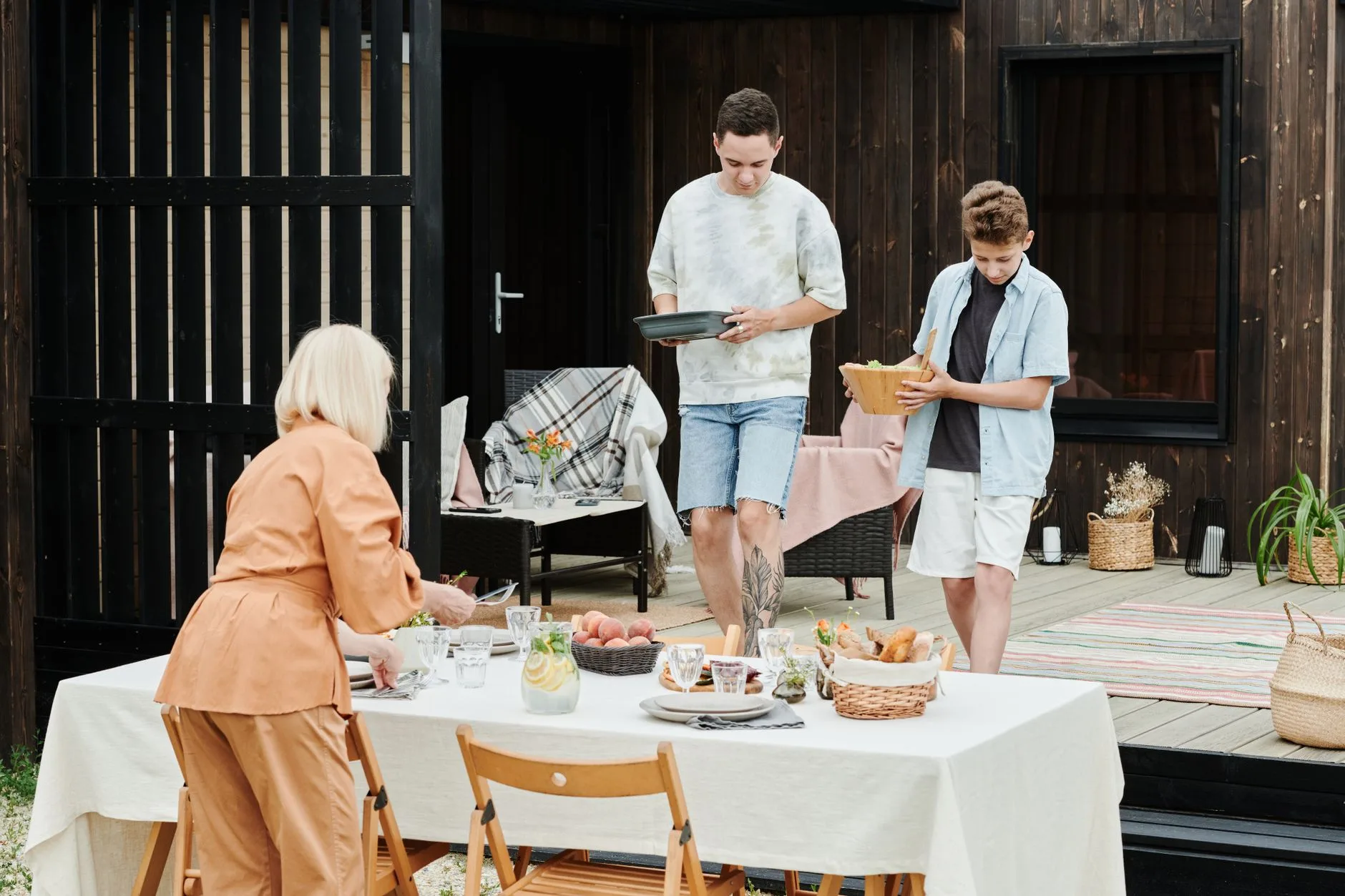
Creating a welcoming, child friendly garden design means thinking beyond plastic chairs. Comfortable, robust furniture extends the use of the garden into autumn and makes it a relaxing place for parents too.
- Materials: Powder-coated aluminium and high-quality rattan-effect resin sets (from £250) are popular for their UK weather resistance and easy cleaning. For brand comparisons, see our in-depth look at Maze, Bramblecrest and Kettler garden furniture.
- Extendable tables: Family meals become effortless—look for models between £180–£400 at UK retailers.
- Soft floor seating: Outdoor beanbags, plush mats, or hardwearing picnic rugs (£30–£60) let adults and children lounge together within sight.
Shade-Making Solutions
Britain’s sun isn’t Mediterranean-strong, but UV protection is vital. Consider:
- Sail-style canopies: Easy to move, store, and adjust. From £40–£100 online.
- Pop-up gazebos or pergolas: Provide flexible shade for dining areas (compare pergolas vs gazebos).
- Natural shade: Fast-growing hazel or willow offer shade within three summers, while mature trees shouldn’t shade the entire garden—balance is key.
Frequently Asked Questions
How do I make my garden safe for toddlers and young children? Check boundaries and lock storage. Use non-slip, soft surfaces and avoid open water features. Routinely remove tripping hazards and check play equipment.
What plants are safe and engaging for children in the UK? Choose snapdragons, sunflowers, ferns, chives, and strawberries. Avoid foxgloves, daffodil bulbs and laburnum.
How can I create engaging play areas in a small garden? Focus on vertical planting, movable features (like tents or stepping stones), and use fences for chalk boards or painted murals. Read our small garden ideas for maxi-impact.
Are artificial lawns safe for children to play on? UK-sold artificial turf with child-safe certification and correct infill is suitable for play. Buy from trusted retailers and keep clean of animal waste.
What garden furniture is best for families with young children? Powder-coated metal and rattan-effect resin are hard-wearing and easy to wipe down. See our reviews of garden furniture brands popular in UK gardens.
How can I support wildlife without compromising safety? Use covered mini-ponds, pollinator-pleasing flowers, and insect hotels positioned away from main play areas. See how to create a wildlife-friendly garden.