A garden hose buying guide should start with the boring truth: most people buy too much length, too little wall thickness and the cheapest plastic connectors in the same basket. That combination works for a fortnight, then the hose kinks behind a planter, the spray gun leaks down your sleeve, and watering pots becomes oddly annoying. For most UK gardens, a 20-30m reinforced hose with brass or good-quality plastic fittings is the sensible middle ground.
In This Article
- The Quick Answer
- Choose the Right Garden Hose Length
- Pick the Right Hose Material
- Garden Hose Fittings, Connectors and Spray Guns
- Expandable, Flat or Traditional Hose?
- Water Pressure, Flow and Outdoor Taps
- Storage, Kinks and Everyday Use
- Frequently Asked Questions
The Quick Answer
If you want one safe recommendation, buy a 25m reinforced hose from Hozelock, Gardena, Claber or Karcher, add decent tap connectors, and store it on a wall reel or hose cart. Expect to pay roughly £25-£45 for the hose, £8-£18 for connectors, and £20-£60 for storage. That setup suits most terraces, semis and medium gardens without becoming a heavy coil you resent moving.
What I would buy for a normal UK garden
For a small patio or courtyard, I would choose a 15m hose or a compact wall-mounted reel. For a typical back garden, 25m is usually right. For a long plot, 30-50m can make sense, but only if you actually need the reach. Extra length is not free convenience. It adds weight, takes longer to drain, reduces flow a bit, and creates more hose to trip over.
The best value setup for most people is:
- Hose: 20-30m reinforced anti-kink hose, about £25-£45 from B&Q, Screwfix, Amazon UK or garden centres.
- Tap connector: Brass or branded plastic connector, about £5-£12.
- Hose-end connector: Water-stop connector for the spray-gun end, about £5-£10.
- Spray gun: Multi-pattern gun or lance, about £10-£25.
- Storage: Wall reel or cart, roughly £20-£60.
That is not the cheapest basket, but it avoids the usual false economy. The £12 hose set with brittle connectors looks fine on a dry shelf. It feels less clever when it twists shut every time you walk round the corner.
Where this guide stops
This is not a product roundup. It is about choosing length, material and fittings so you can judge any hose on the shelf. If you want to compare named models later, use the principles here first, then shortlist by price and warranty. A hose with a shiny spray gun and weak connectors is still a weak hose.
Choose the Right Garden Hose Length
Length is the easiest spec to overbuy. A longer hose sounds more useful, but the right length is the shortest one that reaches the furthest point comfortably. If you need 22m, a 25m hose is better than a 50m hose. If you need 34m, a 30m hose will annoy you every time.
Measure the route, not the garden
Do not measure the garden in a straight line unless your hose can float through walls, shrubs and furniture. Measure from the tap to the furthest watering point along the route the hose will actually take. Include corners around raised beds, a detour around the barbecue, or the awkward bit where it has to pass the side gate.
A simple rule works well:
- Balcony or tiny courtyard: 7.5-10m, or even a coiled hose.
- Small patio garden: 10-15m.
- Typical UK rear garden: 20-30m.
- Long narrow garden: 30-50m, ideally on a reel or cart.
- Allotment or large plot: Consider multiple taps, water butts or a hose cart rather than one huge hose.
If you are only watering pots near the house, a 50m hose is a nuisance. If you are washing a car on the drive and watering a greenhouse at the back, a 30m hose may still be too short unless the tap is central.
How length affects flow
Longer hoses can reduce flow because water has more distance and friction to travel through. It is not usually a disaster for watering borders, but it can matter for sprinklers, pressure washers and spray lances. A 50m hose on a low-pressure outdoor tap may feel feeble at the far end.
Dry spells and hosepipe restrictions can change how often you water. A hose should be part of a sensible watering setup, not the only plan.
The two-hose trick
For awkward gardens, two shorter hoses can be better than one monster coil. Keep a 15-20m hose near the patio and a second 20-30m hose for the far end, joined only when needed. It costs a little more in connectors, but it is easier to store, easier to drain and less likely to become a knot behind the shed.
This works especially well if you already have a water butt near a greenhouse. Our guide to small garden ideas makes the same point in a different context: small spaces work better when every item has a clear job rather than trying to make one thing do everything.
Pick the Right Hose Material
Material decides how the hose feels in your hand, how easily it kinks, and whether it survives being dragged over paving. You do not need industrial-grade kit for a few pots, but you do need more than a thin green tube if you use it every week.
PVC and reinforced PVC
Most garden hoses are PVC or reinforced PVC. Basic PVC hoses are cheap, light and fine for occasional watering. Reinforced versions add layers or mesh to improve strength and reduce kinking. For most UK homes, reinforced PVC is the sensible default.
Expect prices like this:
- Basic 15-20m hose: £10-£20 from supermarkets, B&M, Amazon UK or DIY shops.
- Reinforced 25m hose: £25-£45 from Hozelock, Gardena, Claber or Karcher.
- Premium anti-kink 30m hose: £45-£80 depending on brand, warranty and fittings.
The middle option is where I would spend. The very cheapest hose is usually thin, glossy and springy in the wrong way. It looks tidy when new, then remembers every coil shape and folds shut under light pressure.
Rubber and hybrid hoses
Rubber hoses are tougher and more flexible in cold weather, but they are heavier and less common in standard UK garden centres. Hybrid hoses use blends to improve flexibility without becoming too heavy. They can be excellent, especially on rough paving or larger gardens, but check the weight before buying.
A heavy hose is not automatically better. If Lauren from next door can borrow it once and immediately curse your life choices, it may be overkill. For patios, pots and borders, handling matters more than ruggedness.
Kink resistance and wall thickness
Anti-kink claims vary. The real clues are wall thickness, reinforcement and how the hose bends in your hands. If the packaging lets you feel a sample, bend it gently. A good hose forms a smooth curve. A poor one collapses into a sharp fold.
Look for:
- Reinforced layers: Usually described as knitted, braided or mesh reinforced.
- UV resistance: Useful if the hose lives outside.
- Temperature range: Helpful if it sits in a cold shed over winter.
- Warranty: A 10-20 year warranty usually signals a better hose, though it does not excuse abuse.
If you drag the hose across old patio slabs, read our patio cleaning guide as well. Mossy slabs and wet hoses are a poor combination for grip, especially near steps.
Garden Hose Fittings, Connectors and Spray Guns
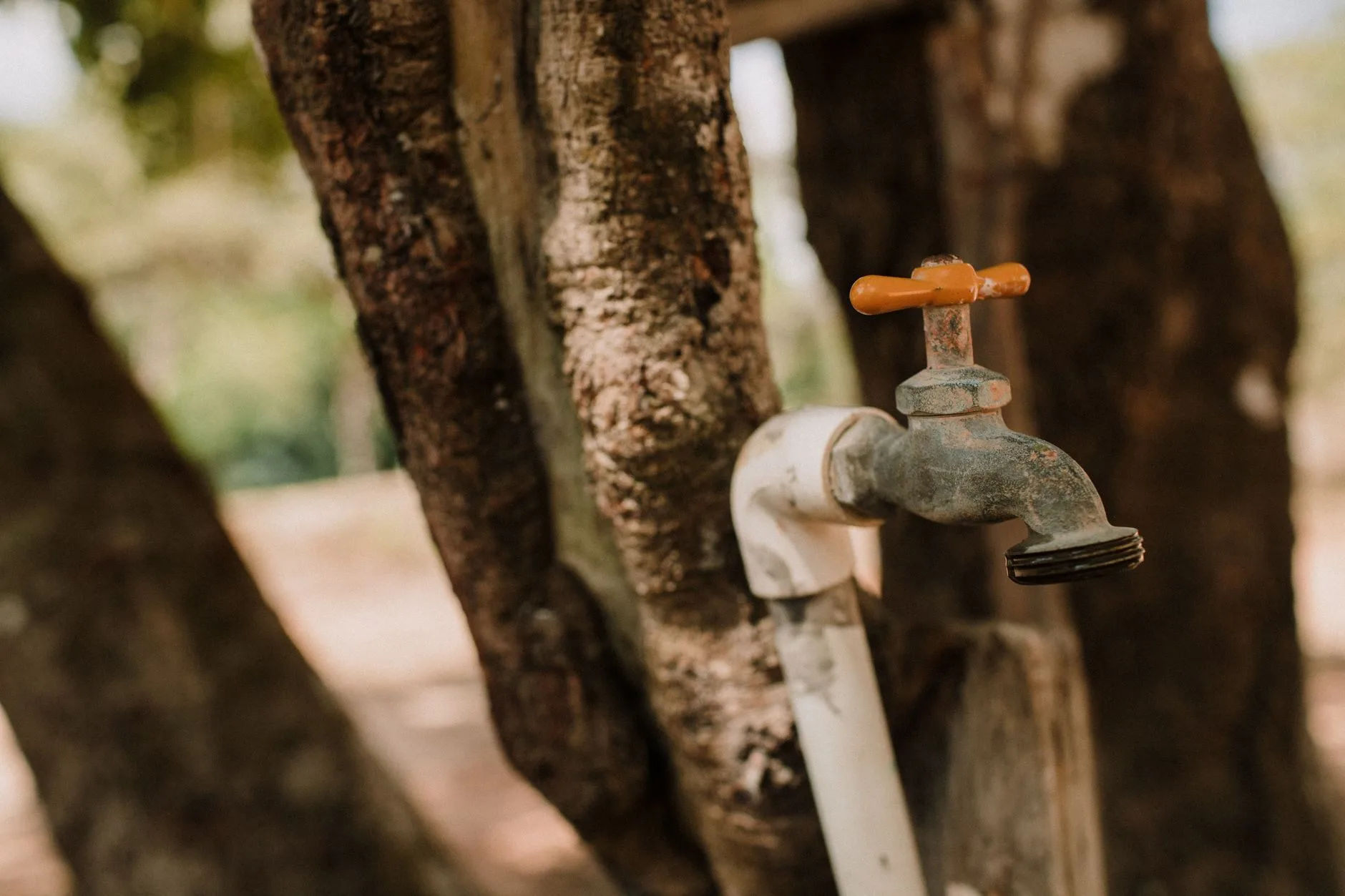
Fittings are where many hose setups fail. The hose itself can be decent, but a poor tap connector or loose spray-gun fitting will leak, pop off or spray sideways. If water is running down your arm, blame the connector before blaming the hose.
Tap connectors
Most UK outdoor taps use a threaded connector, commonly 3/4in BSP, though older or unusual taps can differ. Many hose kits include a universal tap connector, but they are not all equal. Cheap plastic threads can cross-thread or crack if overtightened.
For a normal outdoor tap, I would use a branded plastic connector if the tap is sheltered and a brass connector if it gets knocked, frozen or used heavily. Brass tap connectors from Screwfix, B&Q or Amazon UK are often £5-£12. They are not glamorous. They are just less irritating.
Check the washer too. A missing or flattened washer causes a slow leak that people try to fix by overtightening. That usually makes the next problem worse.
Hose-end connectors
You normally need two hose-end connectors: one at the tap end and one at the spray-gun end. A water-stop connector at the spray-gun end lets you change attachments without turning the tap off. It is worth the extra few pounds.
Useful connector choices:
- Standard connector: Fine for the tap end.
- Water-stop connector: Best for spray guns, lances and sprinklers.
- Repair connector: Joins a cut hose after removing a damaged section.
- Y-splitter: Runs two hoses or a hose plus irrigation timer from one tap.
Our cordless garden tools guide talks about avoiding weak kit at the point of regular handling. Hose fittings are the same. The part you touch every session deserves better than the cheapest plastic.
Spray guns and lances
A basic spray gun costs about £8-£15. A better multi-pattern gun is usually £15-£30. A watering lance can be £15-£35 and is easier for hanging baskets, deep borders and watering at soil level without bending.
For most people, I prefer a watering lance over a flashy spray gun. It is gentler on seedlings, easier around pots, and less likely to blast compost out of containers. A spray gun is better for washing muddy tools, rinsing a patio corner or filling buckets quickly.
If you grow delicate plants, use a rose or shower pattern. A hard jet on seedlings is not watering. It is tiny plant demolition.
Expandable, Flat or Traditional Hose?
Hose format matters as much as material. Traditional hoses are still the most dependable. Expandable hoses are convenient for small spaces. Flat hoses suit storage but can be annoying for everyday watering. The right one depends on how often you use it and where it lives.
Traditional hoses
Traditional round hoses are best for regular use. They work well with reels, carts, sprinklers and lances. They are also easier to repair because standard connectors fit them cleanly.
Choose traditional if:
- You water several times a week.
- You use a sprinkler or pressure washer.
- You drag the hose across paving or gravel.
- You want easy connector compatibility.
- You have somewhere sensible to store it.
The downside is storage. A 30m hose dumped in a heap by the tap will kink, collect dirt and make the garden look unfinished. If you buy a traditional hose, budget for storage at the same time.
Expandable hoses
Expandable hoses are light, compact and genuinely useful in small gardens. They expand when filled with water and shrink as they drain. A decent 30m expandable hose set might cost £25-£45. Cheap versions can be much less, but they often fail at the ends.
They suit patios, balconies, front gardens and occasional watering. They are less convincing for heavy use, rough surfaces, high pressure or leaving connected in full sun. The fabric sleeve can snag, and the inner tube is not as durable as a good reinforced hose.
If you buy one, look for replaceable fittings and a decent guarantee. I would not leave it pressurised after use.
Flat hoses and soaker hoses
Flat hoses save storage space but usually need to be fully unrolled before use. That is fine for occasional jobs and less fine when you just want to water three pots before dinner.
Soaker hoses are different. They seep water slowly along their length and are useful for beds, hedges and rows of veg. They are not general-purpose hoses, but they can reduce waste when used under mulch. The RHS has practical advice on watering plants that explains why slow, targeted watering is usually better than quick surface wetting.
For a vegetable patch, a soaker hose plus timer can beat standing there with a spray gun. For mixed everyday jobs, keep a normal hose as well.
Water Pressure, Flow and Outdoor Taps
A hose does not create pressure. It can only work with what your tap supplies. If the outdoor tap is weak, a premium hose will not magically turn it into a fire hose.
Diameter and flow
Most domestic garden hoses are around 12.5mm internal diameter. Wider hoses can carry more water, but they are heavier and may need matching fittings. For normal watering, 12.5mm is fine. For large gardens, long runs or filling ponds, a wider hose can help if the tap pressure and flow are up to it.
The important distinction is pressure versus flow. Pressure is the force. Flow is how much water moves. A skinny hose can feel sharp at the nozzle but fill a watering can slowly. A wider hose may fill faster but feel less punchy if the spray gun is poor.
Pressure washers and sprinklers
Pressure washers usually need a steady water supply. If the hose is too long, kinked or narrow, the washer may pulse or struggle. A 20-25m reinforced hose is usually fine for washing a patio or car, but check the pressure washer manual. Karcher, Nilfisk and Bosch all publish minimum feed guidance for their machines.
Sprinklers also need decent flow. A cheap oscillating sprinkler may cover a small lawn from a normal tap, but coverage drops when pressure is poor or the hose is very long. If the sprinkler barely reaches the edges, shortening the hose may help more than buying another sprinkler.
For patio jobs, our pressure washer guide is worth reading before pairing hose and washer. The hose feed is not exciting, but it affects the result.
Outdoor tap checks
Before blaming the hose, check the tap:
- Is the tap fully open? Some stiff outdoor taps only open halfway.
- Is the connector washer intact? A leak at the tap steals flow.
- Is the hose kinked near the reel? This is common with wall reels.
- Is there a splitter or timer restricting flow? Cheap timers can reduce output.
- Is the stopcock partly closed? Rare, but it happens after plumbing work.
If you are fitting a new outdoor tap, use proper backflow protection where required and follow UK water regulations. Water Regs UK explains why hose union taps can pose a backflow risk when hoses are left in buckets, ponds or other contaminated water.
Storage, Kinks and Everyday Use
Storage is not an accessory. It is part of the hose. A good hose stored badly will kink, crack, fade and become a muddy trip hazard. A mid-range hose stored properly can last years.
Reels, carts and wall boxes
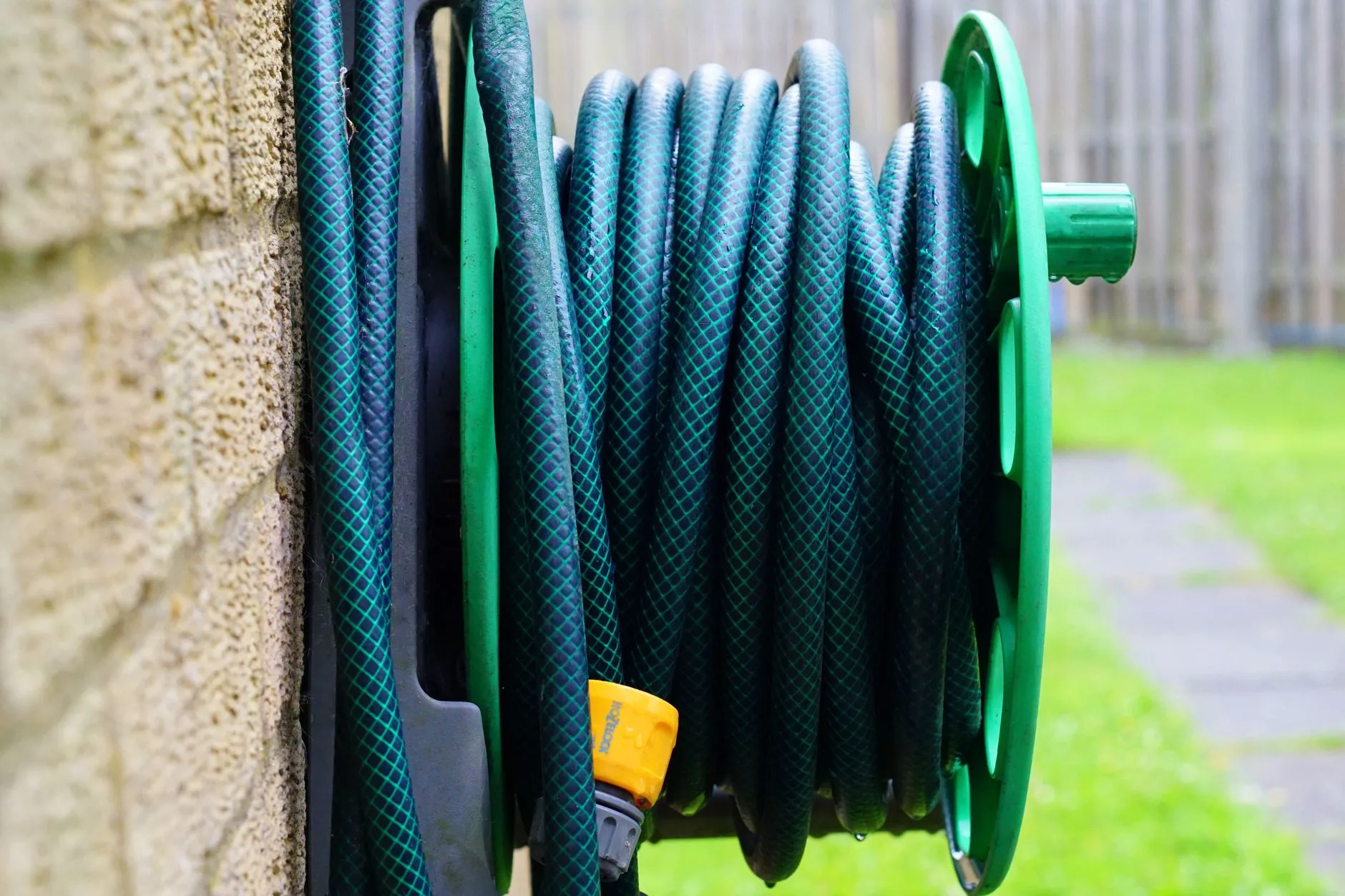
A loose coil is fine for a short hose used occasionally. For 20m or more, use storage. Wall reels are tidy near the tap. Hose carts are better if the tap is awkward or you need to move around a larger garden. Enclosed wall boxes look neat but cost more.
Typical UK prices:
- Basic wall hanger: £5-£15.
- Manual wall reel: £20-£45.
- Hose cart: £30-£80.
- Auto-rewind wall box: £70-£180.
Auto-rewind boxes are lovely when they work. They also need a strong wall fixing and enough clear space for the hose to retract without dragging through a border. On old brick, I would rather fit a sturdy manual reel badly than an auto box badly. Actually, I would rather fit neither badly. Use proper plugs and fixings.
How to stop kinks
Most kinks come from twisting the hose as you pull it out or winding it badly after use. Walk the hose out in the direction it wants to uncoil. Do not yank it round chair legs, planters and table feet. If it twists, stop and untwist it instead of pulling harder.
Good habits:
- Drain after use: It is lighter and less strained.
- Avoid sharp bends: Especially near connectors.
- Keep it off hot paving when possible: Heat makes cheap hoses softer.
- Store out of winter frost: Freezing water can damage hose and fittings.
- Use a reel slowly: Fast winding traps twists.
This is the same principle as storing other garden tools. Our guide to sharpening garden tools is about blades, but the ownership lesson carries across: small maintenance habits stop cheap-looking problems becoming replacement costs.
My final buying rule
Spend money in this order: correct length, reinforced hose, decent fittings, proper storage, then nicer spray attachments. Do not reverse that order because a kit has a fancy-looking gun on the box.
For most gardens, I would rather own a plain 25m reinforced hose on a reel with brass tap fittings than a long expandable set with six nozzle patterns and questionable ends. One works quietly. The other makes watering feel like admin.
Frequently Asked Questions
What length garden hose do I need for a typical UK garden? Most typical UK back gardens suit a 20-30m hose. Measure the real route from the tap to the furthest watering point, then buy the shortest hose that reaches comfortably.
Are expandable garden hoses worth it? Expandable hoses are worth it for small patios, balconies and light watering because they are compact and easy to carry. For heavy weekly use, a reinforced traditional hose usually lasts longer.
Are brass hose fittings better than plastic? Brass fittings are tougher and less likely to crack, especially on exposed outdoor taps. Good branded plastic fittings are fine for light use, but very cheap plastic connectors often leak or split.
Why does my garden hose keep kinking? The hose may be too thin, poorly reinforced, overlong or twisted during storage. Use a reel, drain it after use, avoid sharp bends near connectors and choose a reinforced anti-kink hose next time.
Can I use a garden hose with a pressure washer? Yes, but use a sound reinforced hose with no kinks and check the pressure washer manual for feed requirements. Very long, narrow or leaking hoses can make pressure washers pulse or starve for water.
Should I buy a hose reel at the same time? If the hose is 20m or longer, yes. A reel or cart protects the hose, reduces kinks and makes it much more likely you will put it away properly after watering.