A hedge trimmer is worth buying when your hedges need regular shaping rather than the odd tidy with shears. The right model saves hours, gives a cleaner finish and makes tall or wide growth much safer to manage. The wrong one is heavy, awkward and easy to misuse. This guide breaks down corded, cordless and petrol hedge trimmers, the blade length to choose, the safety kit you actually need and the maintenance habits that keep the tool cutting cleanly.
In This Article
- Do You Actually Need a Hedge Trimmer?
- Types of Hedge Trimmer: Electric, Cordless & Petrol
- Blade Length and Type: What to Choose
- Key Features That Actually Matter
- Best Hedge Trimmers by Budget
- How to Use a Hedge Trimmer Safely
- Trimming Technique: Getting a Clean Finish
- When to Trim: UK Law and Best Practice
- Maintenance and Storage
- Frequently Asked Questions
Do You Actually Need a Hedge Trimmer?
You’re standing in the garden with a pair of shears, halfway through a privet hedge that runs the full length of the property. Your arms ache, the finish looks like a dog chewed it, and you’ve been at it for two hours with another two to go. A hedge trimmer would have done the same job in twenty minutes.
If you have more than about three metres of hedge, a powered trimmer saves enough time and effort to justify the cost. I switched from hand shears to a cordless trimmer four years ago and the difference is ridiculous — what used to be an entire afternoon became a before-lunch job. For short box hedges or a single topiary ball, hand shears are fine. For anything bigger, get a trimmer.
Shears vs Trimmer: Quick Guide
- Under 3 metres of hedge — hand shears work fine. Slower but cheaper and quieter
- 3-15 metres — electric or cordless trimmer. The sweet spot for most UK gardens
- Over 15 metres or thick growth — cordless with a large battery or petrol trimmer for sustained power
Types of Hedge Trimmer: Electric, Cordless & Petrol
Corded Electric
Plug into the mains, unlimited runtime, consistent power. The cheapest option and perfectly adequate for most gardens.
- Price range: £30-100
- Best for: gardens with an outdoor socket within 20-30 metres of the hedge
- Power: typically 400-600W
- Brands to look at: Bosch EasyHedgeCut (about £55), Black+Decker GT5560 (about £50)
The obvious downside is the cable. You’re trailing an extension lead, constantly repositioning it, and genuinely at risk of cutting through it — which happens more often than manufacturers like to admit. An RCD plug (about £15 from Screwfix) is essential, not optional.
Cordless (Battery)
Freedom of movement, no cable risk, increasingly powerful. The market has improved massively in the last three years — modern 18V and 36V cordless trimmers rival corded models for performance.
- Price range: £70-250 (including battery and charger)
- Best for: most UK gardens. The default recommendation for anyone buying new, whether you have a small garden or a large plot
- Runtime: 30-60 minutes on a full charge (enough for a typical garden in one go)
- Brands to look at: Bosch UniversalHedgeCut 18V-55 (about £130), Makita DUH523Z (about £100 bare, £160 with battery), Stihl HSA 56 (about £200)
If you already own cordless garden tools, stick to the same battery system. Bosch 18V batteries fit all Bosch 18V garden tools — including lawnmowers. Same for Makita, DeWalt, and Stihl. Buying into a battery ecosystem saves money long-term.
I’ve been using a Bosch 18V trimmer for three seasons and the battery comfortably handles my 12-metre privet hedge with charge to spare. The only time I’ve run flat was when I tried to do both the hedge and a load of shrub trimming on the same charge.
Petrol
The most powerful option. Unnecessary for most home gardens but invaluable for very long runs, thick growth (laurel, leylandii), or professional use.
- Price range: £150-400
- Best for: large properties, farms, professional landscapers
- Downsides: heavy (4-6kg vs 2.5-3.5kg for cordless), loud, requires fuel mixing, needs more maintenance
- Brands to look at: Stihl HS 45 (about £230), Husqvarna 122HD60 (about £270)
Unless you have fifty metres of leylandii, you don’t need petrol. The weight alone makes it tiring for extended use, and the noise will annoy neighbours.
Blade Length and Type: What to Choose
Blade Length
- 40-45cm — compact, light, easy to control. Good for small hedges and shaping
- 50-55cm — the general-purpose sweet spot. Handles most UK garden hedges efficiently
- 60-70cm — covers more ground per pass but heavier and less manoeuvrable. Better for long, straight runs
- 75cm+ — professional use only. The extra weight causes fatigue quickly
For most gardens, 50-55cm is the right answer. You cover ground quickly without the trimmer feeling unwieldy.
Single-Sided vs Double-Sided Blades
- Double-sided (teeth on both edges) — more versatile. You can cut in both directions without repositioning. Standard on most consumer trimmers
- Single-sided (teeth on one edge) — safer for beginners because the back is flat. Slightly better for cutting against walls and fences. Less common in the UK market
Tooth Gap
The gap between teeth determines the maximum branch thickness the trimmer can handle:
- 16-20mm gap — handles most hedging plants (privet, box, beech, hornbeam)
- 25-30mm gap — tackles thicker growth (laurel, hawthorn, older hedges)
- 35mm+ gap — for heavy-duty work on neglected hedges with woody stems
Key Features That Actually Matter
Anti-Vibration
Long trimming sessions cause hand and arm fatigue. Good anti-vibration systems (rubber mounts between the motor and handles) make a noticeable difference after 20 minutes. Bosch and Stihl do this particularly well.
Rotating Rear Handle
Allows you to angle the blade for vertical cuts (the sides of the hedge) and horizontal cuts (the top) without awkward wrist positions. Almost essential for cutting the top of tall hedges. Look for handles that rotate to at least 90°.
Blade Tip Protector
A plastic guard on the tip of the blade that prevents damage when cutting near walls, fences, or the ground. Cheap trimmers often omit this, and you notice when you nick the fence.
Electronic Brake
Stops the blade within a second of releasing the trigger. A safety feature that should be standard but isn’t always included on budget models.
Weight
Anything over 4kg gets tiring quickly when held at arm’s length. For trimming the top of a tall hedge, weight matters more than power. The best cordless models sit around 2.5-3.5kg.
Best Hedge Trimmers by Budget
Under £60
- Bosch EasyHedgeCut 45 (corded) — about £55. 420W, 45cm blade. Lightweight (2.6kg), reliable, good for small to medium hedges. My recommendation for anyone on a budget who has a garden socket
£100-150
- Bosch UniversalHedgeCut 18V-55 — about £130 with battery. 55cm blade, 2.8kg, part of the Bosch 18V system. The best all-rounder for most UK gardens
- Makita DUH523Z — about £100 bare tool (add £60 for battery/charger). 52cm blade, well-built. Popular with people who already own Makita power tools
£150-250
- Stihl HSA 56 — about £200 with battery. Premium build quality, excellent cutting performance. The brand that professional gardeners use. Heavier than Bosch at 3.4kg but noticeably more robust
- Makita DUH601Z (18V) — about £140 bare. 60cm blade for longer hedges. Needs a Makita battery
Over £250
At this price you’re looking at petrol (Stihl HS 45 at about £230) or premium cordless with large batteries. Only worth it for very large gardens or semi-professional use.
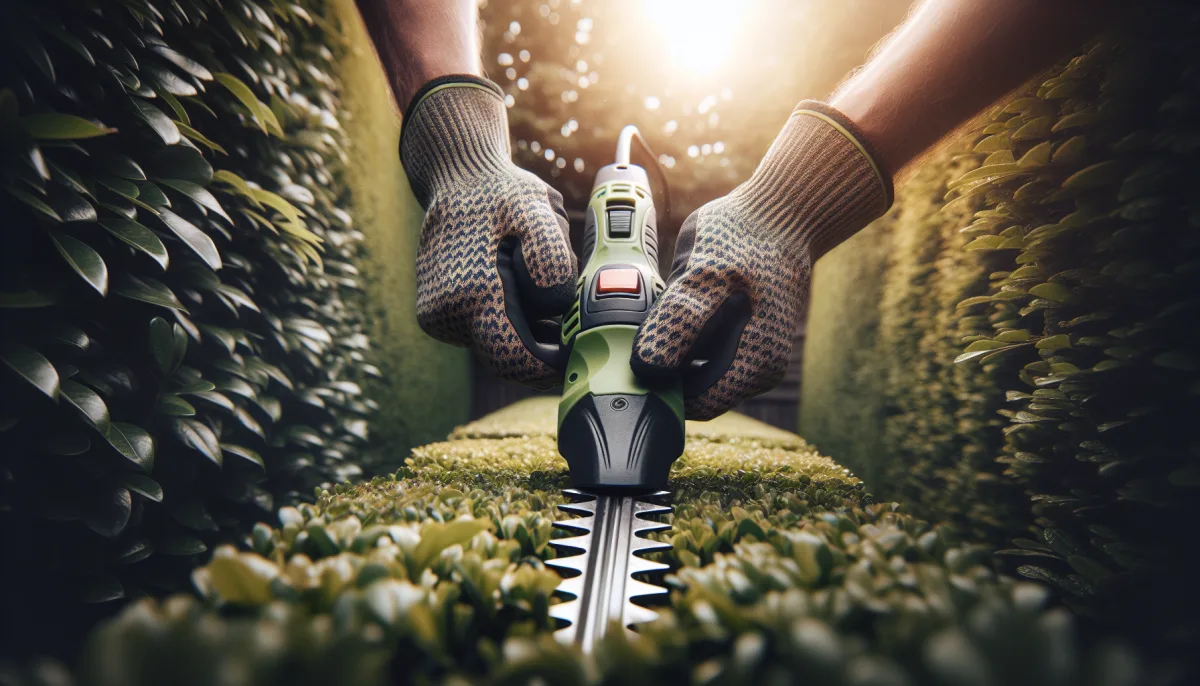
How to Use a Hedge Trimmer Safely
Hedge trimmers cause more garden injuries than almost any other tool. The Health and Safety Executive data shows thousands of emergency department visits from gardening tools annually, with powered cutters among the top causes.
Essential Safety Equipment
- Safety glasses or goggles — not optional. Flying debris is the most common cause of hedge trimmer injuries
- Thick gardening gloves — protect against vibration and stray branches
- Ear protection — for petrol trimmers especially. Cordless models are usually quiet enough without
- Sturdy footwear — not sandals, not wellies. Boots with good grip
- Long sleeves — branches scratch and debris flies
Before You Start
- Check the hedge for hidden objects — wire, string, bird nests (see “When to Trim” below), fence posts
- Clear the base — remove debris, children’s toys, garden furniture, anything the trimmer could catch
- Check the cable route (corded models) — lay it behind you, away from the cutting area. Use an RCD adapter
- Inspect the blade — look for damage, loose bolts, missing teeth
While Trimming
- Keep both hands on the handles at all times — no one-handed trimming
- Start from the bottom and work up — cut material falls away from the blade
- Use a sweeping arc motion — let the blade do the work. Don’t force it into thick branches
- Never trim above shoulder height — if the hedge is taller than you can comfortably reach, use a platform or buy a long-reach trimmer. Stretching with a running blade is how serious injuries happen
- Take breaks — tired arms lead to poor control. Every 20 minutes, stop and rest
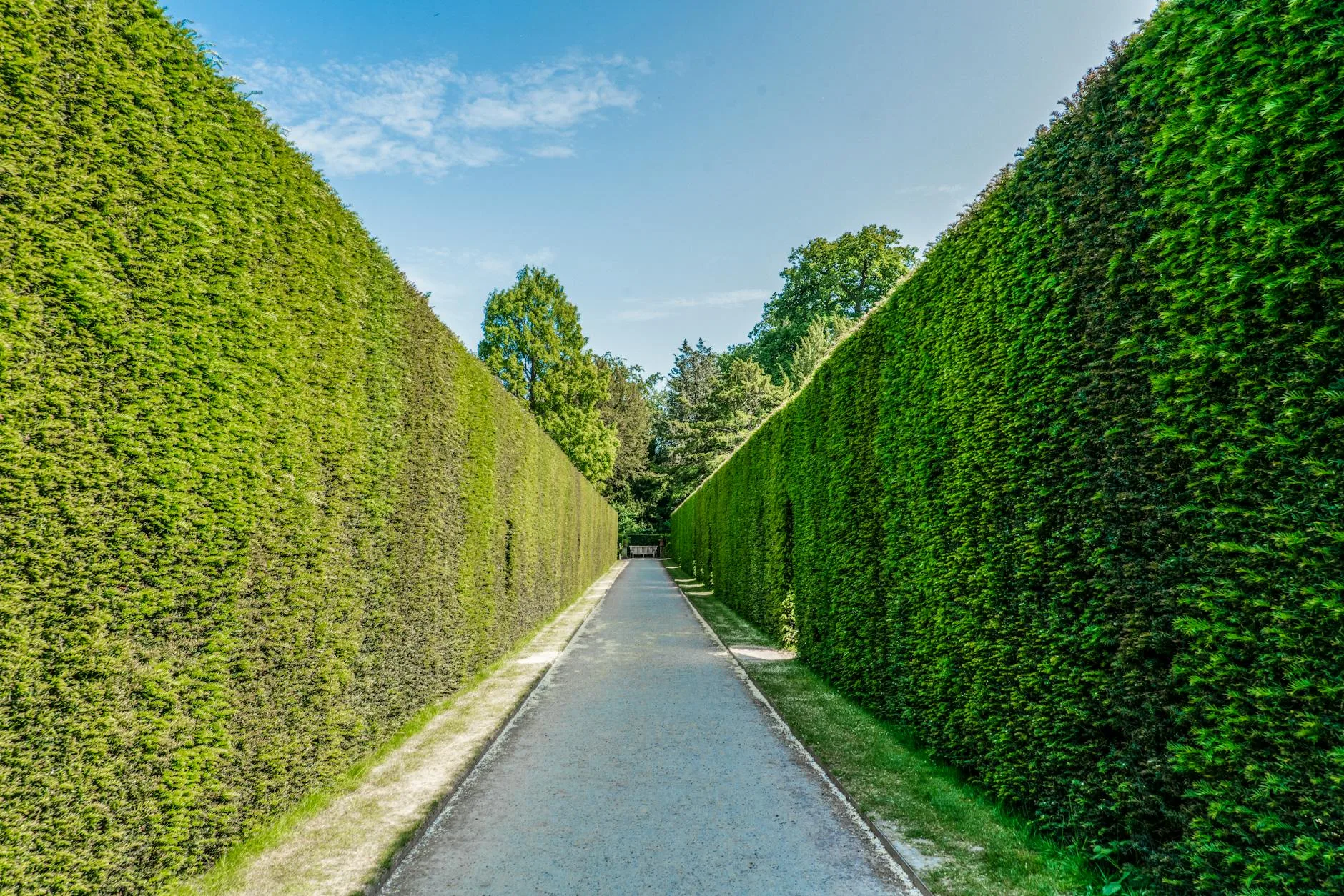
Trimming Technique: Getting a Clean Finish
The Sides
Work from the bottom upward using a wide, sweeping arc. Tilt the blade slightly so the bottom of the hedge is fractionally wider than the top — this ensures sunlight reaches the lower branches and prevents bare patches at the base. Even a 5-10° taper makes a difference. I didn’t do this for the first two years and always wondered why the bottom of my hedge went thin.
The Top
The trickiest part. For a flat top:
- Use a string line — run string between two canes at the desired height and cut to that line. It feels excessive but the result is worth it
- Stand on a stable platform — a hop-up or low scaffold board. Never a ladder
- Hold the trimmer flat — blade parallel to the top surface. Sweep side to side
- Cut the top last — after the sides are done, so debris from the top falls onto already-trimmed sides
Shaping Tips
- Box hedges — trim little and often (4-6 times per year). Box grows slowly, so mistakes take years to fill in
- Privet — the most forgiving hedging plant. Trim hard and it bounces back. 2-3 cuts per season
- Leylandii — never cut into the brown, old wood. It won’t regrow. Only trim the green growth. This is the single biggest mistake people make with leylandii
- Beech and hornbeam — trim once in August. They hold their brown leaves through winter, which looks attractive and provides privacy
When to Trim: UK Law and Best Practice
Legal Requirements
Under the Wildlife and Countryside Act 1981, it’s an offence to intentionally damage or destroy an active bird’s nest. The main nesting season runs from March to August. You’re not banned from trimming during this period, but you must check for nesting birds first. If you find an active nest, leave that section until the chicks have fledged.
Best Timing by Hedge Type
- Formal hedges (box, privet, yew) — first trim in late May/early June after the spring growth spurt. Second trim in late August/September
- Informal hedges (hawthorn, beech, holly) — one trim in late summer (August) is usually enough
- Leylandii and fast-growing conifers — two or three times between May and September. Don’t leave them — they grow fast and become harder to manage
Maintenance and Storage
After Each Use
- Clean the blades — wipe off sap and debris with a cloth. Use WD-40 or a resin solvent if sap has hardened. The same care applies to garden furniture — regular cleaning prevents long-term damage
- Spray with lubricant — a light coating of blade lubricant spray prevents rust and keeps the action smooth
- Check for damage — bent teeth, loose fixings, cracks in the housing
Seasonal Maintenance
- Sharpen the blades annually or when cutting performance drops. Many garden centres and Timpson shops offer this service (about £10-15). You can do it yourself with a flat file but professional sharpening gives a better result
- Check battery health (cordless) — store batteries at 40-60% charge over winter. Don’t leave them fully charged or fully flat for months
Storage
- Fit the blade cover — always. An uncovered blade in a shed is an accident waiting to happen
- Store upright or on a wall hook — keeps the blade off damp surfaces
- Keep batteries indoors — extreme cold reduces lithium-ion battery lifespan. Don’t leave them in an unheated garage or shed over winter
Keep reading on Plot & Patio: How to Choose the Right Wheelbarrow for Your Garden, How to Choose a Garden Shredder, How to Choose a Leaf Blower: Electric vs Petrol vs Battery, Secateurs vs Loppers vs Pruning Saws: Which Do You Need?.
Frequently Asked Questions
Can a hedge trimmer cut thick branches? Most consumer hedge trimmers handle branches up to 15-20mm thick. Branches beyond that should be cut with secateurs or loppers first, then the trimmer used for the finer growth. Forcing thick branches through the blades damages teeth and can stall the motor. If your hedge has a lot of thick growth, clear it with loppers first, then tidy with the trimmer.
Are cordless hedge trimmers powerful enough? Modern 18V cordless trimmers are plenty powerful for typical UK garden hedges — privet, box, beech, hornbeam all cut cleanly. For very thick laurel or neglected hedges with woody stems, a 36V cordless or petrol model gives more grunt. For normal maintenance trimming, 18V is fine and has been for several years now.
How often should I trim my hedge? Most hedges need 2-3 trims per year: once in late May/early June after the spring flush, and once in late August/September. Fast growers like privet and leylandii may need a third trim in July. Slow growers like yew and box need less frequent but more precise trimming. One annual trim in August works for many informal hedges.
Is it illegal to trim hedges in spring and summer? Not illegal, but you must check for nesting birds first. The Wildlife and Countryside Act 1981 protects active nests. The main nesting season is March to August. You can trim during this period as long as you check for nests beforehand and avoid any sections with active nests. The RSPB recommends avoiding major hedge cutting between March and August where possible.
Should I buy a long-reach hedge trimmer? If your hedge is taller than about 1.8 metres (above shoulder height), a long-reach trimmer is safer than using a standard trimmer on a ladder. They add 40-80cm of reach with an articulating head that angles for cutting the top. They are heavier and more expensive (about £150-300) but much safer for tall hedges. For hedges under 1.8m, a standard trimmer is fine.