The best way to protect garden furniture over winter is not to wrap everything in the thickest plastic cover you can find. That is the usual mistake. In a UK winter, the real enemy is trapped damp: wet legs sitting on paving, cushions stored before they are dry, condensation under cheap tarpaulins, and loose covers flapping through the first proper storm.
My rule is simple: clean it, dry it, lift it, cover it only if the cover can breathe, and take the soft parts indoors. If you do those five things, most decent garden furniture will come through winter without the green film, musty smell or rusty surprises that make spring setup miserable.
In This Article
- The Winter Protection Rule That Matters Most
- Clean the Furniture Before You Cover Anything
- Drying Is the Step People Rush
- Use Covers Carefully, Not Automatically
- Get Furniture Off Wet Ground
- Store Cushions Separately
- Winter Care by Furniture Material
- Protecting Furniture on Exposed Patios
- What to Check Through Winter
- Common Mistakes That Damage Garden Furniture
- Frequently Asked Questions
The Winter Protection Rule That Matters Most
Garden furniture does not need to be hermetically sealed for winter. It needs to be kept as dry as practical while still having enough airflow for moisture to escape. That distinction matters. A breathable fitted cover on dry furniture is useful. A thin plastic sheet pulled tight around damp timber is a mould incubator.
For most UK patios, the priority order is:
- Remove dirt and organic matter so algae, bird mess and leaf tannins are not sitting on the surface for months.
- Let the furniture dry fully, especially joints, feet, screw holes, woven sections and cushion seams.
- Raise it away from standing water so legs are not wicking moisture from paving or soil.
- Use a breathable cover or sheltered storage, not a sealed wrap.
- Store cushions, parasols and fabric items separately because they are far less forgiving than frames.
If you only have time for one job, take the cushions indoors. If you have time for two, lift the furniture feet off the patio. Those two changes prevent a surprising amount of winter damage.
Clean the Furniture Before You Cover Anything
Covering dirty furniture just preserves the dirt. Leaves, mud, algae and bird droppings hold moisture against the surface, and they are harder to remove after a cold wet winter. Give the set a proper clean on a dry day before you put it away.
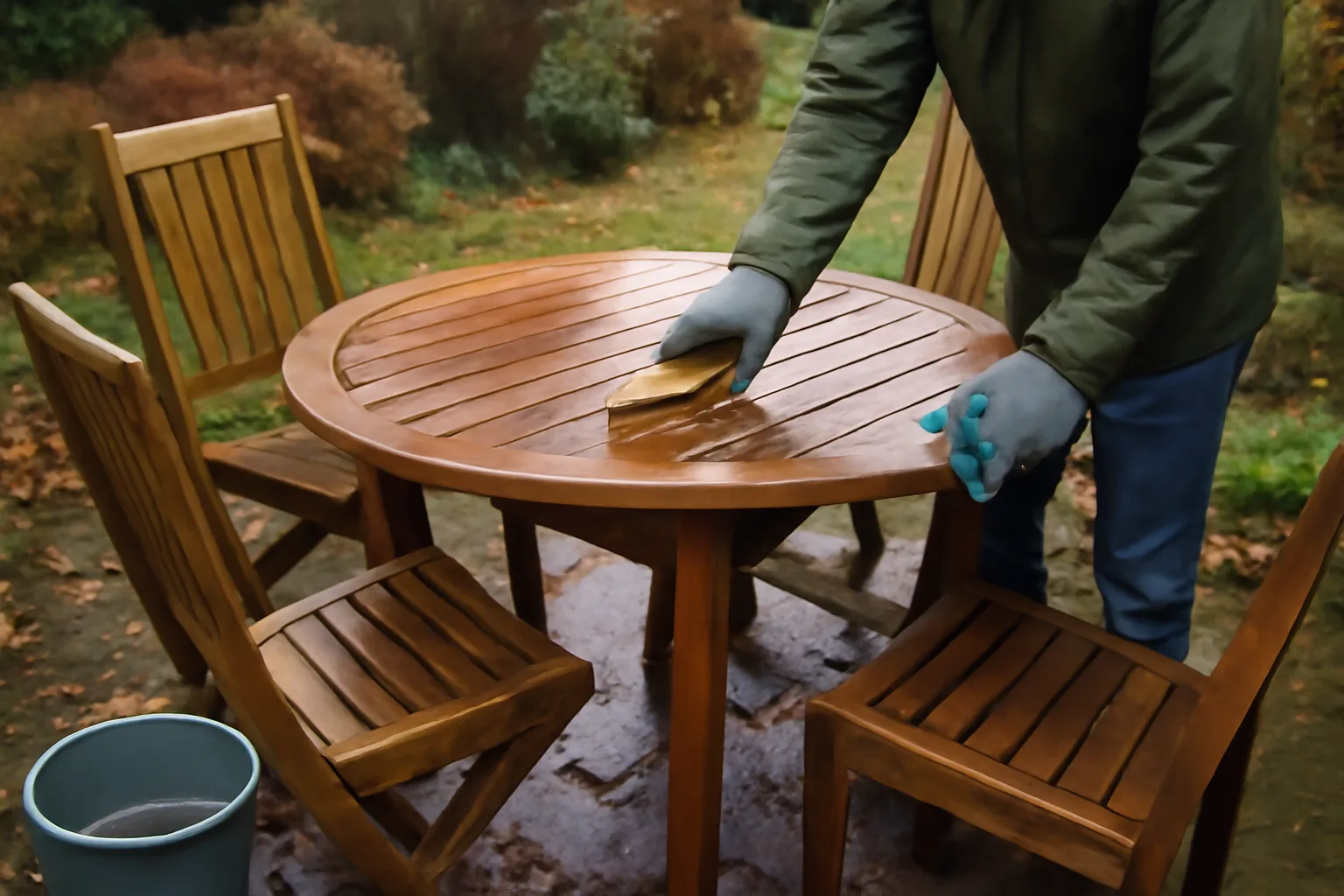
Warm water, a mild detergent and a soft brush are enough for most materials. Avoid pressure washing unless the furniture manufacturer specifically says it is safe; it can force water into joints, lift paint, roughen timber and damage synthetic weave. If the set is badly marked, use the more detailed garden furniture cleaning guide rather than reaching for aggressive cleaners.
Check fixings while you clean. Loose bolts, cracked feet, chipped paint and split timber are all easier to deal with before winter weather gets involved. On metal furniture, touch in paint chips before rust spreads. On wooden furniture, look closely at leg ends and end grain because that is where water usually causes trouble first.
Drying Is the Step People Rush
The drying stage is boring, which is why people rush it. It is also the step that decides whether a cover helps or harms. Furniture should be dry to the touch on the surface and dry in the awkward places: underside rails, screw holes, folded chair hinges, hollow tube ends, woven corners and cushion piping.
After washing, leave the furniture somewhere breezy for at least a full dry day. Tilt chairs so water runs out of joints. Stand tables at a slight angle if water sits on the top. Open parasols briefly to dry the fabric before storing them, then close them only when they are completely dry.
This is also the point to decide what really needs indoor storage. A teak bench can usually cope outside if it is raised and breathable. A cheap softwood chair, a thin steel bistro set, cushions and fabric parasols deserve more shelter if you have it.
Use Covers Carefully, Not Automatically
A good cover is useful. A bad cover is worse than no cover. Look for waterproof, breathable fabric, taped seams, vents, and proper straps or buckles. The cover should sit neatly over the furniture without dragging in puddles or sealing the furniture tight to the ground.
The cover should shed rain but still let damp air escape. That is why I would rather use a properly fitted breathable cover than a bargain tarpaulin tied tightly around the legs. Tarps are fine for a short emergency, but for a whole winter they often trap condensation and rub against corners in wind.
For a dining set, cover the table and stacked chairs as one stable shape only if the cover fits well. For a corner sofa, use a shaped cover over the frame and store the cushions somewhere else. If you are debating whether covers are worth buying, the separate guide to garden furniture covers goes into the buying trade-offs.
Get Furniture Off Wet Ground
Most winter damage starts at the bottom. Chair legs sit in shallow puddles, wooden feet wick water from paving, steel frames rust around caps, and rattan bases stay damp where they touch the patio. Lifting furniture even slightly helps air move underneath and stops water sitting against the same points for weeks.
Use rubber feet, plastic glides, furniture risers or small paving offcuts. The aim is not to make the furniture look pretty in December; it is to stop long-term contact with wet ground. Make sure whatever you use is stable, especially with benches and tables. A wobbly winter setup is not worth the risk.
If the patio itself holds water, clear leaves from drains and channels before winter. Persistent puddles beside furniture are a patio problem as much as a furniture problem, so it may be worth reading the guide to patio drainage solutions for UK gardens if the same area floods after every heavy shower.
Store Cushions Separately
Outdoor cushions are often labelled weather-resistant, but that does not mean they are happy outside from November to March. Weather-resistant usually means they can handle showers and occasional use, not months of damp air under a cover.
Clean cushion covers according to the care label, dry them fully, then store them indoors if you can. A spare room, loft, dry garage or dry cupboard is better than a damp shed. If you have to use a shed, keep cushions off the floor and away from cold walls. Breathable storage bags are better than bin bags because trapped moisture is what creates the musty smell.
Outdoor storage boxes can work, but choose one that keeps rain out and allows at least some ventilation. Do not put even slightly damp cushions into a sealed box and expect them to improve by spring. They will not.
Winter Care by Furniture Material
Different materials fail in different ways, so the right winter routine depends on what the furniture is made from.
Wooden Garden Furniture
Wood needs airflow. Hardwood such as teak can usually stay outside if it is clean, dry, raised and covered with a breathable cover. Softwood is less forgiving and is worth moving into a dry shed or garage if you have space. Do not seal wooden furniture in plastic. Condensation trapped against timber can be more damaging than rain that dries between showers.
Grey teak is not a winter emergency; it is mostly cosmetic. Loose joints, split end grain and rotten feet are more important. If the furniture needs a proper refresh, use the guide to maintaining wooden garden furniture, but do not turn winter prep into a major sanding project unless the surface is already failing.
Metal Garden Furniture
Aluminium is the easiest metal because it does not rust like steel. Steel and iron need closer attention. Look for bubbling paint, orange marks around joints, exposed screw heads and scratches on chair legs. Touch small chips with suitable outdoor metal paint before winter rain gets into them.
Metal furniture can also move in storms, especially lightweight aluminium chairs and bistro sets. Stack only if the furniture is designed to stack, strap the stack together, and keep glass-topped tables out of exposed corners. The teak vs rattan vs metal furniture guide is useful if you are deciding which material is worth buying next time.
Rattan and Woven Furniture
Most modern UK rattan garden furniture is synthetic PE rattan over a metal frame. The weave itself is usually fairly tough, but dirt collects in the gaps and water can sit inside boxy frames. Brush the weave clean, rinse gently, dry thoroughly and cover the frame with a breathable shaped cover.
Natural rattan is different. It should be treated as indoor or very sheltered furniture, not left outside all winter. If you are not sure which type you have, err on the side of shelter.
Plastic Garden Furniture
Plastic furniture will not rot, but it can become brittle, stained and faded. Clean it before storage, keep it out of constant standing water, and avoid stacking it under heavy loads that could warp seats or legs. A UV-resistant cover helps, but indoor storage is still better for cheaper plastic chairs if you have the space.
Protecting Furniture on Exposed Patios
Wind matters as much as rain. A cover that is badly secured can act like a sail, pulling at furniture, rubbing paint from corners and eventually tearing. On exposed patios, fasten covers low, use the built-in straps, and add bungee cords only where they will not cut into the material.
Move lightweight chairs into a sheltered corner, stack them safely, or bring them indoors. Put small tables, parasol bases, plant stands and loose accessories away before the first named storm. The RHS advice on gardening in extreme weather is a useful reminder that unsecured garden items can become a hazard, not just a nuisance.
What to Check Through Winter
Winter protection is not a one-day job you can ignore until April. It is still quick. After heavy rain or strong wind, take two minutes to check that covers are secure, water is not pooling on top, furniture feet are not sitting in puddles, and nothing has blown into a wall or fence.
On a dry mild day, lift covers briefly to let air circulate. If you see condensation, mildew or a sour smell, the furniture was either covered too soon or the cover is not breathing well enough. Dry it again before putting the cover back. For wooden seats and tables, the RHS has a practical maintenance guide for garden seats and tables that is worth using as a reference.
Common Mistakes That Damage Garden Furniture
The most common mistake is covering furniture while it is still damp. The second is using a cheap plastic tarp for the whole winter. The third is leaving cushions outside because they were sold as outdoor cushions. Those three errors account for a lot of spring mould, rust and rot.
Other mistakes are smaller but still costly: leaving chair feet in puddles, forgetting to tighten loose bolts, stacking furniture too high, storing cushions against a damp shed wall, and ignoring covers after storms. None of this needs a complicated routine. It just needs a dry day, a bit of airflow and a refusal to trap moisture where it cannot escape.
If you want the shortest possible version: store cushions indoors, clean the frames, let everything dry, raise the feet, use breathable fitted covers, and check the setup after bad weather. That is the winter protection routine I would trust for most UK garden furniture.
Frequently Asked Questions
Can garden furniture be left outside all winter?
Some garden furniture can be left outside all winter, especially teak, aluminium and good synthetic rattan, but it still needs to be clean, dry, raised off wet ground and protected with breathable covers. Cushions and fabric accessories should be stored separately indoors where possible.
Should I cover garden furniture or put it in a shed?
A dry, ventilated shed or garage is usually better than outdoor covering, especially for softwood, steel, cushions and parasols. If the shed is damp, a breathable outdoor cover on raised furniture may be safer than cramming everything into wet storage.
Are plastic tarpaulins safe for winter garden furniture?
Plastic tarpaulins are useful for short-term protection but are not ideal for a full winter because they can trap condensation. A fitted waterproof and breathable cover is better for long periods.
How do I stop garden furniture covers blowing away?
Use covers with straps, buckles or drawcords, fasten them low, and avoid oversized covers that catch the wind. On exposed patios, move lightweight furniture to shelter or strap stacked chairs together.
What should I do if furniture is already wet before winter?
Do not cover it straight away. Clean off dirt, move it somewhere with airflow, tilt pieces so trapped water drains out, and wait for a dry day before covering or storing it.