Creating a wildflower meadow in a garden is mostly about making grass less dominant. The flowers are the easy bit; the hard bit is stopping a rich, well-fed lawn from smothering everything you sow. If you want a wildflower meadow garden that actually comes back rather than looking pretty for six weeks and vanishing, start with soil, mowing and expectations before you buy a seed packet.
In This Article
- Decide What Kind Of Meadow Your Garden Can Support
- Reduce Grass Strength Before You Sow
- Choose The Right Wildflower Seed Or Plug Plants
- Sow The Meadow At The Right Time
- Look After It In The First Year
- Cut And Clear It Like A Real Meadow
- The Meadow Plan I Would Use In A UK Garden
- Frequently Asked Questions
Decide What Kind Of Meadow Your Garden Can Support
A wildflower meadow is not one thing. A tiny patch around an apple tree, a strip beside a patio, and a full back-lawn conversion all need different levels of preparation and patience. The best result comes from choosing the meadow your garden can support, not the one on the seed packet photo.
For most UK gardens, I would choose one of three versions:
- Mini meadow patch: 1-5 sq m, useful for small gardens or beside paths.
- Meadow strip: a sunny border edge or fence line, usually 5-15 sq m.
- Lawn conversion: a bigger area where you accept a looser, seasonal look.
- Bulb-and-meadow mix: spring bulbs first, then summer wildflowers and grasses.
The smaller patch is not a compromise. It is often the better starting point because you can prepare it properly and keep it looking intentional. A half-prepared full lawn can look like neglected grass by July, which is not the same thing as a meadow.
Sun makes the job easier
Most meadow flowers want sun. Six hours of summer light is a good target. If the area is shaded by fences, trees or buildings, choose a woodland-edge or shade-tolerant mix and keep expectations modest. A shady meadow can still be useful for insects, but it will not have the same poppy-and-oxeye-daisy look as a sunny bank.
If the meadow patch sits in deep shade, you may be better with ferns, foxgloves, hellebores and other plants from our guide to shade-loving plants for UK gardens rather than forcing a meadow mix into the wrong spot.
Fertile soil is the usual problem
Garden lawns are often too fertile for classic wildflower meadows. Years of lawn feed, compost, clippings left in place and general garden enrichment favour coarse grass, docks, nettles and thistles. Many meadow flowers prefer poorer soil where they do not have to compete with a wall of grass.
Do not add compost. Do not add fertiliser. Do not top-dress with rich soil. This feels backwards if you are used to growing border plants, but a meadow rewards restraint. The RHS makes the same point in its guidance on establishing a wildflower meadow: reducing grass vigour and soil fertility is central to success.
Reduce Grass Strength Before You Sow
The fastest way to fail is scattering wildflower seed over thick lawn and hoping. Some annual mixes will flash colour for a season, but perennial meadow plants need light, bare soil and weak grass competition.
If you are converting a lawn, spend most of your effort here. Seed is cheap compared with the time you lose by sowing into the wrong surface.
Choose your preparation method
There are four practical options:
- Remove the turf: best for small patches; hire a turf cutter for larger areas or use a sharp spade.
- Scarify hard: useful when you want a meadowy lawn rather than a full bare-soil reset.
- Cut and collect for a season: slower, but gradually reduces fertility if you stop feeding and remove clippings.
- Use plug plants: good where you cannot fully strip the lawn, but more expensive.
For a 3 sq m patch, I would remove the turf and start again. For a 20 sq m lawn area, I would cut low, scarify hard, remove the waste and create at least 50% bare soil. A basic manual scarifier is about £25-£45 from Screwfix, B&Q or Amazon UK. Electric scarifier hire can be around £25-£40 per day, depending on the local hire shop.
Take away the cuttings
This is non-negotiable. Meadow management works by removing fertility. Every time you cut and leave clippings behind, you feed the grass. Use a mower with a collector, rake thoroughly, or borrow a garden vac if the area is awkward.
If the area is large, a decent metal rake costs £15-£30, and a garden waste bag or pop-up sack is about £8-£20. A wheelbarrow helps once the cuttings get wet and heavy; our guide to choosing the right wheelbarrow covers what matters if you are buying one for more than this job.
Do not bury the seed too deeply
Wildflower seed wants contact with soil and light. After raking, the surface should be crumbly rather than fluffy. You are not digging a vegetable bed. If you loosen 15cm of soil, you may bring weed seeds to the surface and create more trouble than you solve.
For small patches, tread the soil gently after raking. For larger areas, walk over boards or use the back of a rake. The seedbed should feel firm underfoot, not like a freshly dug border.
Choose The Right Wildflower Seed Or Plug Plants
Cheap seed can work, but only if it matches your soil and includes species suited to the UK. Avoid vague “butterfly meadow” mixes with no species list. You want to know whether you are buying annual colour, perennial meadow plants, grasses, or a mix of all three.
For a first wildflower meadow garden, I would buy from a specialist UK supplier such as Emorsgate, Boston Seeds, Meadowmania or a reputable garden centre range, then choose based on soil and sunlight rather than the brightest photo.
Annual mixes give quick colour
Annual meadow mixes often include cornflower, corn marigold, corn poppy and corncockle. They are good for first-year colour, school projects and temporary patches. The downside is that they need disturbed soil to repeat well. If you leave the area as dense grass, many annuals fade after year one.
Small annual seed packets cost around £3-£8 and may cover 1-5 sq m. Larger 100g bags are often £12-£25, depending on the mix. Check coverage rates carefully because meadow seed is usually sown thinly.
Perennial mixes are the better long-term choice
Perennial meadow mixes take longer but feel more natural once established. Look for species such as oxeye daisy, knapweed, birdsfoot trefoil, selfheal, yarrow, red clover and meadow buttercup. A proper perennial mix may also include fine grasses, which help the meadow look settled rather than bare between flower peaks.
Expect to pay roughly £10-£25 for enough quality seed to cover a small garden patch, or £35-£80 for larger 50-100 sq m packs. That is still cheaper than filling the same area with border plants, but only if you prepare the ground properly.
Yellow rattle is useful but not magic
Yellow rattle weakens grass because it is semi-parasitic on grass roots. It is one of the few “tricks” that really can help a meadow settle. The catch is timing: it needs autumn sowing and a cold period to germinate well.
Yellow rattle seed often costs £5-£12 for a small packet, and plug plants can be around £2-£4 each. I would use seed in autumn for larger areas and plugs only where you need targeted help in a small patch.
Plug plants cost more but solve gaps
Wildflower plugs are useful when you have a grassy area that is not bare enough for seed, or when you want to add specific plants after year one. They are not cheap. A tray of 50 mixed native plugs is often £45-£80, and individual 9cm wildflower plants may be £3-£6 each at garden centres.
Use plugs strategically: edges, bare gaps, around trees, or areas where seed failed. Do not try to plant an entire meadow with garden-centre pots unless you enjoy spending money with a trowel in your hand.
Sow The Meadow At The Right Time
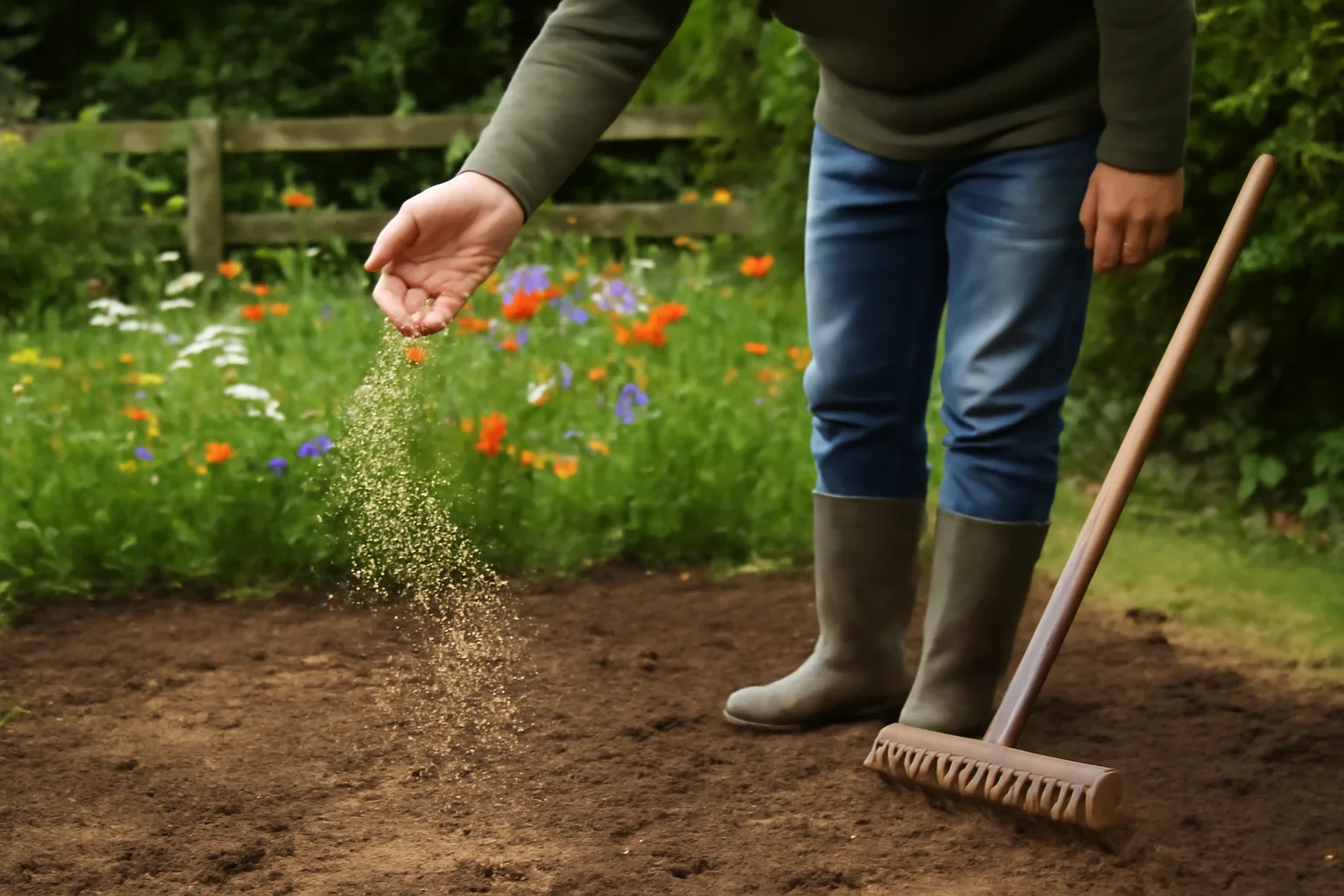
The best sowing window for most UK perennial meadow mixes is early autumn, usually September to October. Soil is warm, rain is more reliable, and yellow rattle gets the cold period it needs. Spring sowing can work too, especially March to April, but you will need to watch dry spells.
I prefer autumn for perennial meadows and spring for quick annual colour. If the ground is frozen, waterlogged or baked dry, wait. Seed is patient in the packet; it is less patient once scattered onto hostile ground.
Sow thinly and evenly
Wildflower seed is tiny, so mix it with dry sand before sowing. This helps you see where you have been and stops you dumping half the packet in the first square metre.
Use this simple process:
- Prepare the ground: cut low, scarify or remove turf, then rake to a firm surface.
- Divide the seed: split it into two equal parts.
- Mix with sand: use dry horticultural sand or silver sand, about a handful per small patch.
- Sow in two directions: one pass lengthways, one pass across.
- Press it in: tread gently or use a board; do not bury it.
- Water if needed: keep spring sowings damp during dry spells.
For a neat edge near a patio or path, define the border before sowing. A half-moon edging tool costs about £20-£35 and makes the meadow look chosen rather than forgotten.
Protect the area from heavy use
For the first few weeks, keep children, dogs and footballs off the patch if possible. A few bamboo canes and twine cost under £10 and are enough to signal “this is intentional”. You do not need ugly orange mesh unless the area is clearly at risk.
If you are working near a patio, sweep seed off paving before it gets wet. Wildflowers in the cracks may sound charming, but our guide to stopping weeds between patio slabs exists for a reason.
Look After It In The First Year
The first year often looks underwhelming, especially with perennial mixes. That does not mean it has failed. Roots are establishing, grass is being weakened, and some plants will wait until year two before giving you the show you hoped for.
The job in year one is to keep grass and weeds from taking over while avoiding the temptation to pamper the meadow like a border.
Cut annual weeds before they seed
If docks, fat hen, thistles or nettles appear, remove them early. Pull by hand after rain or cut them before flowering. Do not let big weeds seed into the meadow. A hand fork is enough for small patches and costs £8-£18.
If you see lots of nettles, that usually means fertility is high. Keep removing cuttings and avoid adding mulch or compost nearby. Over time, the balance can improve, but it is not instant.
Mow new perennial meadows short in year one
This surprises people. Many perennial meadow mixes need cutting several times in the first year to control grass and annual weeds while seedlings establish. Follow the supplier’s instructions, but a common approach is to cut to about 5-7cm whenever growth reaches 10-15cm, then remove the cuttings.
For annual cornfield mixes, let them flower and seed, then cut after the display has finished. For mixed annual/perennial seed, follow the supplier’s advice because management can vary.
Water only when establishment needs it
Once established, a meadow should not need regular watering. In the first few weeks after spring sowing, though, drought can ruin germination. Use a watering can with a rose or a gentle hose setting so you do not wash seed into piles.
If a heatwave is forecast, delay sowing. A £15 packet of seed deserves better than being thrown onto dust because the weekend happened to be free.
Cut And Clear It Like A Real Meadow
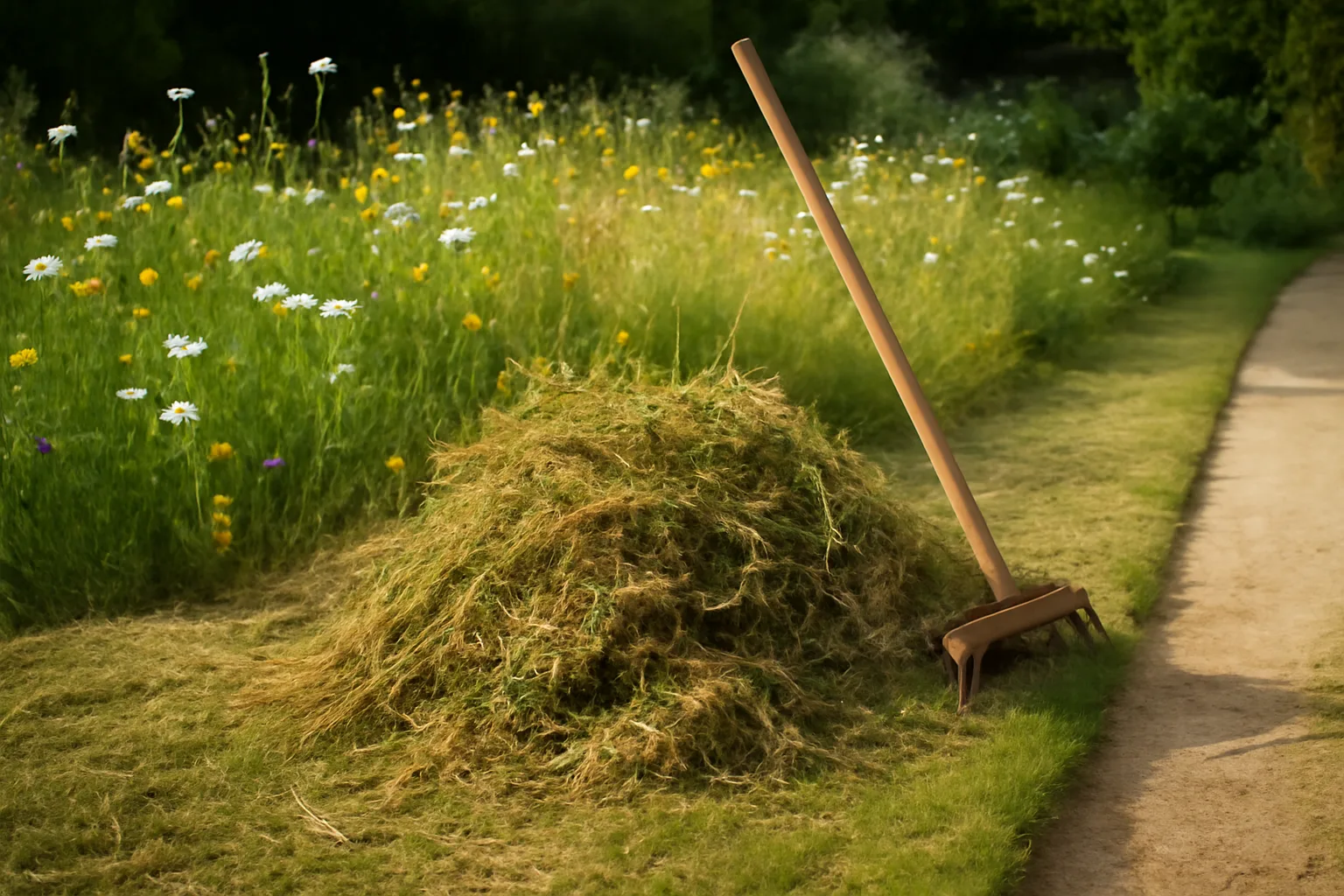
The annual cut is what turns a flower patch into a meadow. Traditional meadows are cut after flowering and seed drop, then the hay is removed. In a garden, you are copying that principle at a smaller scale.
For many UK meadows, the main cut happens in late summer, often August or September, once most flowers have set seed. Leave the cut material for a few days if you can so seed drops back, then remove it.
Use the right tool for the size
For a small patch, shears or a cordless grass trimmer are enough. For a bigger area, a strimmer, scythe or mower set high may be easier. If you already own a cordless strimmer, use that. If not, entry-level cordless models are around £60-£120, while stronger battery systems can be £150-£250.
Our strimmer vs lawn edger guide explains the difference if you are buying for general garden work too. For meadow cutting, a strimmer is usually more useful than a neat edging tool.
Remove cuttings properly
Leave cuttings forever and you feed the grass. Remove them and you slowly lower fertility. That is the boring meadow rule, and it matters more than the seed mix.
If you have council garden waste collection, use it. If not, compost the cuttings separately and avoid dumping them beside the meadow where nutrients can leach back in. GOV.UK’s garden waste collection guidance is useful if you need to check local options.
Keep paths and edges neat
A mown strip around a meadow makes a huge difference. It tells the eye the wildness is deliberate. In small gardens, I would keep a 30-50cm mown edge along paths, patios and seating areas. That gives you the ecological benefit without making the whole garden feel abandoned.
This is also where a meadow can work beautifully with broader zoning ideas. If you are rethinking the whole plot, link the meadow to seating, play or dining areas using the approach in our guide to creating garden zones.
The Meadow Plan I Would Use In A UK Garden
For a normal UK back garden, I would start with a sunny 3-8 sq m patch, not the whole lawn. Remove the turf, avoid compost, sow a perennial native mix in autumn, add yellow rattle if there is grass nearby, and keep the edge mown so it looks designed.
Budget roughly:
- Seed: £10-£25 for a good small-patch mix.
- Yellow rattle: £5-£12 if sowing in autumn.
- Rake or hand tools: £15-£45 if you do not already own them.
- Plug plants: optional, £45-£80 for a tray if you want faster gaps filled.
- Edging or twine: under £10 for a temporary first-year boundary.
That means a credible small meadow can cost £30-£80 if you already have basic tools, or £80-£180 if you buy plugs and a scarifier. Compared with a planted border of the same size, it is good value, but only if you treat the preparation and cutting as part of the project.
If your main goal is wildlife, connect the meadow with water, shrubs, log piles and later-flowering plants rather than expecting one patch to do everything. Our guide to creating a wildlife-friendly garden covers that wider picture. The meadow is one strong piece of the puzzle, not the whole puzzle.
Frequently Asked Questions
Can I just scatter wildflower seed on my lawn? You can, but it usually gives poor results because thick grass outcompetes the seedlings. Cut the lawn very short, scarify hard, remove cuttings and expose bare soil before sowing.
When is the best time to sow a wildflower meadow in the UK? Early autumn is best for many perennial mixes, especially if using yellow rattle. Spring can work for annual colour, but you may need to water during dry spells.
How much does a small wildflower meadow cost? A small garden patch can cost around £30-£80 if you already own basic tools. Add plug plants, scarifier hire or edging tools and the total can rise to roughly £80-£180.
Do wildflower meadows come back every year? Perennial meadow mixes can come back for years if you manage them correctly. Annual mixes often need soil disturbance or re-sowing to keep the same level of colour.
Should I remove grass before making a meadow? For the best small-patch result, yes. Removing turf gives wildflower seed direct soil contact and cuts grass competition. For larger areas, hard scarifying and repeated cut-and-collect mowing can also work.
How often should I cut a wildflower meadow? Established meadows usually need one main late-summer cut, with all cuttings removed. New perennial meadows may need several short cuts in year one to control grass and weeds.