Every garden has that corner. The one behind the shed, the strip along the north-facing fence, the bed under the mature oak where grass refuses to grow and everything you plant there dies within a season. You have tried geraniums, lavender, even supposedly tough ground cover — and they all stretched toward the light, turned yellow, then gave up entirely. The problem is not your gardening skills. You have been planting sun-lovers in shade, and no amount of wishful thinking changes the physics of photosynthesis.
In This Article
- Understanding Shade Types in UK Gardens
- Best Perennials for Full Shade
- Flowering Plants That Thrive Without Sun
- Evergreen Options for Year-Round Structure
- Ground Cover for Shaded Areas
- Climbers for North-Facing Walls
- Shrubs That Flourish in Shade
- Soil Preparation for Shaded Beds
- Common Mistakes in Shade Planting
- Frequently Asked Questions
Understanding Shade Types in UK Gardens
Not all shade is equal. The plants that thrive under a high canopy of deciduous trees will struggle in the dense shadow of a north-facing brick wall. Before choosing anything, you need to identify what type of shade you are working with.
Full Shade
Less than 3 hours of direct sunlight per day, typically year-round. North-facing walls, areas under dense evergreen trees (yew, holly, large conifers), narrow passages between houses. This is the most challenging but far from hopeless — dozens of beautiful plants have evolved specifically for these conditions.
Partial Shade
3-6 hours of direct sun, usually morning or evening rather than midday. East-facing borders get gentle morning sun then shade from noon. West-facing borders are shaded in the morning then catch afternoon sun. Most “shade plants” actually prefer partial shade — they get enough light to flower without being scorched.
Dappled Shade
Filtered sunlight through a tree canopy, creating moving patterns of light and shadow throughout the day. This is the woodland floor condition — the most forgiving shade type and the one where you have the widest plant choice. Think mature deciduous trees with high canopies (oak, beech, birch).
Dry Shade vs Damp Shade
The combination of shade AND dry soil (typically under mature trees where roots compete for moisture, or against walls sheltered from rain) is the hardest gardening challenge. Damp shade is much easier — ferns, astilbes, and hostas love it. Dry shade requires specialist plants like epimedium, cyclamen, and hardy geraniums.
Best Perennials for Full Shade
Hostas
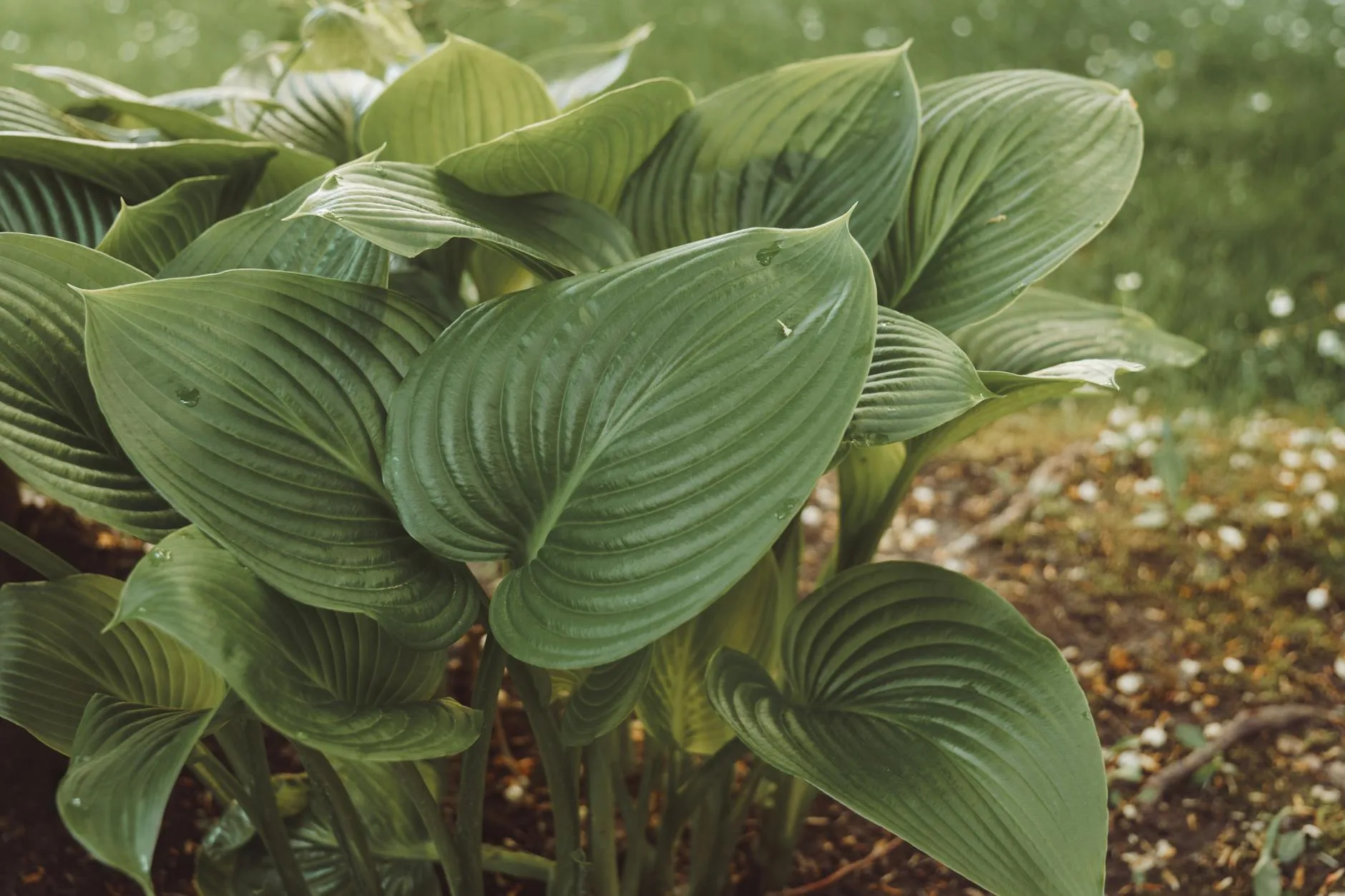
The undisputed queens of the shade garden. Hostas come in hundreds of varieties from tiny 15cm mounds to enormous 90cm clumps. Their foliage is the main event — blue-grey, chartreuse, deep green, or variegated with cream and gold. In damp shade with rich soil, they grow into magnificent specimens within 3-4 years.
The slug problem is real but manageable. Copper tape, wool pellets, nematodes applied in March, or simply choosing thicker-leaved varieties like ‘Sum and Substance’ or ‘Halcyon’ that slugs find harder to chomp through. Do not let slug fear stop you — hostas in shade remain the most reliably dramatic foliage plant you can grow.
Ferns
Nothing says “shaded garden” like ferns. Their architectural fronds bring texture and movement that flowers cannot match. For UK gardens:
- Dryopteris filix-mas (Male Fern) — bulletproof native, 90cm, semi-evergreen, tolerates dry shade
- Polystichum setiferum (Soft Shield Fern) — elegant arching fronds, evergreen, 60cm
- Athyrium niponicum ‘Pictum’ (Japanese Painted Fern) — silvery-purple fronds, stunning but needs damp shade
- Asplenium scolopendrium (Hart’s Tongue Fern) — glossy undivided fronds, loves lime-rich soil, evergreen
Ferns need moisture when establishing but once settled, native species like male fern are drought-tolerant enough to survive under mature trees. Plant them in autumn when rains help establishment.
Brunnera macrophylla (Siberian Bugloss)
Heart-shaped leaves that look like hostas but with delicate sprays of forget-me-not blue flowers in spring. The variety ‘Jack Frost’ has spectacular silvered foliage that lights up dark corners from April to November. Fully hardy, slug-resistant, and spreads gently to fill gaps. One of the most underused shade plants in UK gardens — every garden centre sells them but few people think to buy them.
Epimedium
The toughest plant for dry shade under trees. Delicate-looking heart-shaped leaves and tiny orchid-like flowers in spring (yellow, pink, orange, or white depending on variety). Once established, epimedium forms dense weed-suppressing mats that need almost no attention. Cut back old foliage in February to see the flowers clearly. As recommended by the RHS page for epimedium, they prefer leafy, well-drained soil but tolerate much worse.
Flowering Plants That Thrive Without Sun
Hellebores (Christmas and Lenten Roses)
Flowering from December to April when almost nothing else is performing. Hellebores are shade garden essentials — their nodding flowers in white, pink, purple, green, and near-black bring colour to the darkest months. They seed around once established, creating natural drifts. The newer ‘Wedding Party’ series from Hadlow produces upward-facing flowers so you do not need to lift the stems to see them.
Astilbe
Feathery plumes in pink, red, purple, white, or cream from June to August. Astilbes need damp shade — they sulk in dry conditions. If you have a north-facing border that stays moist, or the edge of a pond in shade, astilbes are spectacular. Group three or five of the same variety for impact rather than one of each colour.
Dicentra (Bleeding Hearts)
Arching stems hung with heart-shaped flowers in spring. Dicentra spectabilis grows to 75cm and looks like something from a fairy tale. It dies back completely by midsummer, leaving a gap — plant ferns or hostas around it to fill the space later. Perfectly happy in partial to full shade with decent soil.
Digitalis (Foxgloves)
Biennial (or short-lived perennial) towers of tubular flowers that thrive in partial shade. Native foxgloves self-seed freely, giving you spires of purple, pink, or white every June without replanting. The perennial variety ‘Illumination’ flowers for months rather than weeks. Keep in mind they are toxic if ingested — not ideal beside paths where very young children play.
Evergreen Options for Year-Round Structure
Shade gardens risk looking barren in winter if everything is deciduous. Evergreen structure prevents that seasonal emptiness.
Fatsia japonica
Glossy, palm-shaped leaves up to 30cm across on a 2-3m shrub. Looks tropical but is fully hardy throughout the UK. Fatsia transforms a dull shaded corner into something architectural and impressive year-round. Grows happily against north-facing walls and produces clusters of white berries in autumn. Combine with ferns at its feet for a lush, layered look.
Sarcococca (Christmas Box)
Evergreen shrub to about 1.5m with insignificant white flowers in January-February that fill the entire garden with an intoxicating honey-vanilla scent. Plant it beside a path or doorway where you pass in winter and the fragrance hits you every time. Utterly reliable in shade, slow-growing, never needs pruning.
Aucuba japonica (Spotted Laurel)
The yellow-speckled ‘Crotonifolia’ variety is a cliché of Victorian shrubberies for good reason — it tolerates deep shade, pollution, drought, poor soil, and neglect. If you need something alive and green in impossible conditions, aucuba delivers. More refined varieties exist with less spotting if the classic look feels dated.
Ground Cover for Shaded Areas
Bare soil in shade invites moss, weeds, and that damp muddy look nobody wants. Ground cover plants carpet the floor, suppress weeds, and transform problem areas into green living surfaces.
Vinca minor (Lesser Periwinkle)
Trailing stems with glossy evergreen leaves and blue-purple flowers from March to June (and sporadically until autumn). Spreads steadily without being thuggish. ‘Ralph Shugert’ has variegated leaves for lighter areas; straight Vinca minor covers ground in deep shade where little else thrives.
Ajuga reptans (Bugle)
Low rosettes of purple-bronze or green foliage with spikes of blue flowers in May. Ajuga spreads by runners and forms dense mats within two seasons. ‘Burgundy Glow’ has pink, cream, and purple variegated leaves that add colour without flowers. Handles damp shade perfectly — less happy in very dry conditions.
Pachysandra terminalis
Evergreen ground cover to 20cm that thrives in dense dry shade where vinca struggles. The plain green version is functional rather than exciting, but ‘Green Carpet’ is tidier and ‘Variegata’ adds cream edges. Slow to establish (2-3 years to fill gaps) but once settled forms an impenetrable mat that nothing penetrates — weeds included.
Climbers for North-Facing Walls
North-facing walls receive no direct sunlight from October to March and minimal even in summer. Most climbers fail here, but a few positively thrive.
Hydrangea petiolaris (Climbing Hydrangea)
Self-clinging climber that covers north and east walls with green heart-shaped leaves and flat white lacecap flowers in June. Slow for the first 2-3 years while it establishes a root system, then grows vigorously — up to 12m eventually. Completely hardy and zero maintenance once established. The winter bare stems have attractive peeling bark.
Clematis montana
The most vigorous clematis — covers a north-facing wall or fence with masses of small pink or white flowers in May. Grows 8-12m in established plants. The scent of var. ‘Elizabeth’ carries metres in still air. Only drawback: it grows fast and can overwhelm small structures. Save it for fences or walls where vigour is an asset, not a problem.
Hedera helix (Common Ivy)
The default north-wall climber. Evergreen, self-clinging, and indestructible. Yes, it is common. Yes, it works. For a more refined look, choose ‘Glacier’ (grey-green with white edges) or ‘Oro di Bogliasco’ (gold-centred). Ivy provides superb habitat for insects and nesting birds — the RHS rates it highly for wildlife gardens.
Shrubs That Flourish in Shade
Hydrangea macrophylla
The classic mophead hydrangeas flower abundantly in partial shade — often better than in full sun where they wilt in summer heat. Blue, pink, or white depending on soil pH and variety. In shade, their flower heads last longer because the sun does not bleach them. Lacecap varieties (‘Lanarth White’, ‘Bluebird’) are more elegant; mopheads (‘Nikko Blue’, ‘Endless Summer’) are more dramatic.
Skimmia japonica
Compact evergreen shrub with leathery leaves, fragrant spring flowers, and bright red berries (on female plants — you need a male for pollination). Perfect for shaded containers or small borders. Needs acid to neutral soil — yellow leaves on chalky ground is the classic sign of an unhappy skimmia.
Mahonia
Architectural evergreen with holly-like leaves and chains of fragrant yellow flowers from November to March — prime flowering time when everything else is dormant. Mahonia aquifolium stays at 1.2m; M. x media ‘Charity’ reaches 3m. Both handle deep shade and dry soil once established. The scent carries impressively for a winter-flowering plant.
Soil Preparation for Shaded Beds
Shade plants generally need different soil conditions than sun-lovers. Getting this right makes the difference between plants that survive and plants that flourish.
The Organic Matter Rule
Most shade plants evolved on woodland floors where annual leaf fall creates deep, humus-rich soil. Replicate this by digging in 5-8cm of well-rotted garden compost, leaf mould, or bark-based soil improver before planting. This improves moisture retention in dry shade and drainage in waterlogged shade — the same material does both.
Dealing with Tree Roots
Planting under mature trees means competing with dense root networks. Do not dig large holes that sever major roots — instead, make smaller pockets between roots and fill with good compost. Choose plants that tolerate root competition: epimedium, cyclamen, low-maintenance ground cover, and native ferns are all evolved for this.
Mulching Matters More in Shade
Annual mulching with bark chippings or leaf mould suppresses weeds, retains moisture, and feeds the soil as it decomposes. In shade, this matters more because bare soil stays damp longer, encouraging moss and liverworts. A 5cm mulch layer applied in spring keeps conditions ideal for shade plants and cuts maintenance time in half.
Common Mistakes in Shade Planting
Planting Too Close to Walls
The 30cm strip directly against a house wall is a rain shadow — the wall shelters it from prevailing weather so it stays bone dry. Plant at least 45cm from walls and lean climbing plants back toward the wall on angled canes. The roots need to reach soil that actually receives rainfall.
Choosing Based on Flower Alone
Shade gardens are foliage gardens. Accept this and your garden design will be far more successful. Plants chosen for leaf texture, colour, shape, and seasonal interest look good for 8-10 months of the year. Plants chosen only for a two-week flowering window look dull for the rest. Build your shade border around hostas, ferns, heucheras, and evergreen structure — then add flowering plants as highlights.
Ignoring Actual Light Levels
Partial shade is not full shade. If your spot gets 4 hours of morning sun, you have far more options than a corner that never sees direct light. Spend a full day watching how the light moves through your garden before choosing plants — what looks shaded at 9am may be in full sun by 2pm in summer.
Forgetting Seasonal Changes
Deciduous tree shade is not present in winter. Plants under bare branches receive full sun from November to April — some shade plants can handle this (hostas, ferns) but others like fatsia or aucuba prefer consistent conditions. Similarly, deciduous trees let spring bulbs flourish beneath them before the canopy leafs out — snowdrops, bluebells, and wood anemones exploit this window brilliantly.
Keep reading on Plot & Patio: Small Garden Ideas: 15 Ways to Maximise a Tiny UK Garden, How to Plan a Garden Layout: A Beginner’s Guide, How to Create a Wildlife-Friendly Garden, How to Create Garden Zones for Different Uses.
Frequently Asked Questions
Can I grow vegetables in shade? Some leafy crops tolerate partial shade: lettuce, rocket, spinach, chard, and kale all produce in as little as 4 hours of direct sun. Root vegetables and fruiting crops (tomatoes, courgettes, beans) need full sun — do not waste time trying these in shaded spots. Herbs like mint, parsley, and chives also manage in partial shade.
Will any lawn grass grow in full shade? No standard lawn grass thrives in less than 4 hours of sun. Shade-tolerant mixtures (containing Poa nemoralis and fine fescues) can manage partial shade but will never form a thick, hard-wearing lawn. For full shade, accept ground cover plants or bark mulch rather than fighting a losing battle with grass seed every autumn.
How do I stop slugs eating my hostas? Layer your defences: apply nematodes (Nemaslug) in March when soil reaches 5°C, use wool pellets or copper tape around individual plants, water in the morning rather than evening, and choose thick-leaved varieties. No single method eliminates slugs entirely, but combining biological control with physical barriers keeps damage manageable.
What grows under a conifer hedge? Very little, and it is best to accept that. Conifer shade is dense, dry, and acidic — the toughest combination. Cyclamen hederifolium, Epimedium, and ivy are your best options. Even these may struggle directly under the drip line where conditions are most extreme. Alternatively, mulch with bark and accept it as a low-maintenance zone.
Do shade plants need feeding? Most shade plants in well-prepared soil with annual mulching need no additional feeding. Over-feeding encourages soft growth that is more susceptible to slugs and diseases. If plants seem pale or stunted after 2-3 years, a light application of fish blood and bone in spring provides gentle nutrition without forcing growth.