The best artificial grass UK buyers should shortlist in 2026 is not the brightest green roll in the shop. It is the one that looks slightly imperfect, drains properly, feels soft enough under bare feet, and does not turn a small garden into a plastic carpet that screams fake from the kitchen window.
In This Article
- Best Overall Artificial Grass For UK Gardens
- What Realistic Artificial Grass Should Cost
- Best Artificial Grass Options Compared
- How To Choose Pile Height Density And Backing
- Installation Drainage And Edge Checks
- Where Artificial Grass Makes Sense And Where It Doesn’t
- Bottom Line
- Frequently Asked Questions
Best Overall Artificial Grass For UK Gardens
My pick for most UK gardens is a mid-to-premium 30-38mm grass with mixed green and beige fibres, good drainage holes, and a backing that feels substantial rather than papery. In named-product terms, LazyLawn Cre8 35mm at about £26.27 per m2 is the best balance I have seen for a realistic look without jumping straight to luxury pricing. If you want something softer and more premium, LazyLawn Wonder Yarn is about £35.03 per m2. If the budget is tight, B&Q marketplace 35mm rolls around £8.25-£15 per m2 can work for a small, low-risk area, but choose carefully because the cheaper rolls often look shinier.
Artificial grass is one of those products where a sample is worth more than a dozen product photos. I would not buy a full lawn from a web image alone. Order samples, put them outside for a few days, and look at them in morning light, dull weather and late afternoon sun. The fake-looking ones usually fail in bright light because the fibres are too glossy and too evenly green.
The quick shortlist
- Best overall: LazyLawn Cre8 35mm, about £26.27 per m2, for a realistic mid-premium garden finish.
- Best premium feel: LazyLawn Wonder Yarn, about £35.03 per m2, if softness and a denser pile matter more than price.
- Best budget roll: B&Q 35mm artificial grass marketplace rolls, often around £8.25-£15 per m2, for small patios, rental-friendly strips and low-wear corners.
- Best pet-focused option: LazyLawn Lazy Supreme 35mm, about £31.74 per m2, because pet-friendly backing is more important than pile height if dogs use the space.
- Best specialist quote option: Easigrass-style 30mm-40mm products, often about £21.99-£34.99 per m2 before fitting, when you want supply and installation from one company.
For a normal back garden, I would avoid very short 7mm budget turf unless it is going on a balcony, display area or temporary strip. It can look tidy from a distance, but underfoot it feels more like an outdoor mat than a lawn.
What Realistic Artificial Grass Should Cost
Artificial grass pricing has three layers: the grass, the base materials and the fitting. Comparing only the roll price is how cheap quotes become expensive.
Supply-only prices
For 2026 UK buying, these are sensible supply-only ranges:
- Budget grass: about £8-£14 per m2. Fine for temporary areas, balconies and low-traffic spaces, but realism varies a lot.
- Mid-range grass: about £15-£25 per m2. This is where most buyers should start looking for gardens.
- Premium grass: about £25-£45 per m2. Better density, softer fibres and more realistic colour mixing.
- Accessories: joining tape, adhesive, weed membrane, kiln-dried sand and pins can add £3-£8 per m2 depending on the area.
The B&Q marketplace regularly shows artificial grass around £8.75-£18 per m2, including Blooma-style rolls around £13-£18 per m2 and budget 7mm rolls around £10.48 per m2. LazyLawn sits higher, from about £8.99 per m2 for its sale/value roll to £35.03 per m2 for Wonder Yarn. Easigrass supply prices are often in the £21.99-£34.99 per m2 range before fitting.
Installed prices
For a properly prepared garden, expect supply-and-fit to land around £45-£80 per m2. Small gardens can cost more per m2 because the installer still has travel, waste disposal, sub-base preparation and edging time. A 12m2 courtyard might not be half the price of a 24m2 lawn.
The base matters. A good installation usually includes:
- Excavation: removing existing turf, weeds and soft topsoil.
- Sub-base: compacted MOT Type 1 or granite dust depending on drainage and use.
- Edging: timber, metal, composite or existing paving to hold the grass tight.
- Membrane: weed control below the surface, used in the right layer.
- Finishing sand: kiln-dried sand where the product calls for it.
If a quote looks cheap, ask what happens to the waste, how deep the base is, and whether edging is included. A bargain roll laid over uneven soil will look good for a fortnight, then show every dip, seam and dog-dug corner.
A simple budget example
For a 20m2 small lawn:
- Budget DIY: grass at £10 per m2 plus accessories could be around £260-£350 if you already have tools.
- Better DIY: grass at £25 per m2 plus base materials and accessories could be around £650-£850.
- Professional install: at £45-£80 per m2, expect roughly £900-£1,600 depending on ground prep and access.
That is why I would put most of the budget into ground preparation and a believable mid-range grass, not the longest pile you can find.
Best Artificial Grass Options Compared
The right product depends on where it is going. A balcony, dog toilet corner and family garden do not need the same grass.
Best overall: LazyLawn Cre8 35mm
Cre8 35mm is the option I would start with for most back gardens because it sits in the useful middle: long enough to avoid the mat look, not so deep that it flattens into a shaggy green blanket, and priced below the premium showcase products. At about £26.27 per m2, it is not a cheap punt, but it is a better bet than buying the lowest-cost roll twice.
It suits patios, child-friendly lawns and small rectangular gardens where you want a tidy finish year-round. The colour mix is the key thing to check in a sample. If it looks slightly varied and muted, good. If it looks like a snooker table, walk away.
Best premium: LazyLawn Wonder Yarn
Wonder Yarn is the one I would choose if the garden is small enough that the total cost stays sensible and you care about the feel underfoot. At about £35.03 per m2, it adds up quickly, but a premium roll can make sense in a 10-15m2 courtyard because the material upgrade might be only £100-£200 over a mid-range grass.
The downside is that premium grass does not fix poor installation. A dense pile over a lumpy base still looks wrong. Spend on the base first, then the grass.
Best budget: B&Q 35mm rolls
B&Q marketplace rolls around £8.25-£15 per m2 are the budget option I would consider for smaller spaces. The reason I would choose the 30-35mm style over ultra-short turf is simple: it has a better chance of looking like a garden rather than a green doormat.
The risk is inconsistency. Marketplace stock changes, and two products with the same pile height can feel very different. Order a sample if available. If there is no sample and the returns process looks awkward, I would not use it for a main lawn.
Best for pets: pet-backed 35mm grass
For dogs, pile height matters less than drainage, backing and maintenance. LazyLawn Lazy Supreme 35mm at about £31.74 per m2 is the kind of product I would shortlist because the backing is part of the promise. With cheaper grass, urine can sit in the pile or backing and smell in warm weather.
Even with pet grass, budget for enzyme cleaner at about £10-£20 per bottle and plan a rinse point. If the garden has poor fall or clay-heavy ground, fix drainage first. Artificial grass over bad drainage is not low-maintenance; it is just hidden maintenance.
How To Choose Pile Height Density And Backing
Do not choose artificial grass by pile height alone. Retailers know people equate longer pile with luxury, but density, colour and backing usually matter more.
Pile height
For UK gardens, I would use:
- 7-20mm: balconies, displays, temporary strips and very low-maintenance utility areas.
- 25-30mm: tidy modern gardens, play spaces and smaller lawns where you want a clipped look.
- 30-38mm: the best all-round range for realistic domestic gardens.
- 40mm plus: softer and fuller, but can look overly plush if the density and colour are wrong.
For the best artificial grass UK gardens can carry off, 30-38mm is the safe zone. It has enough depth to soften the surface without looking like a sports pitch or a showroom rug.
Density and colour
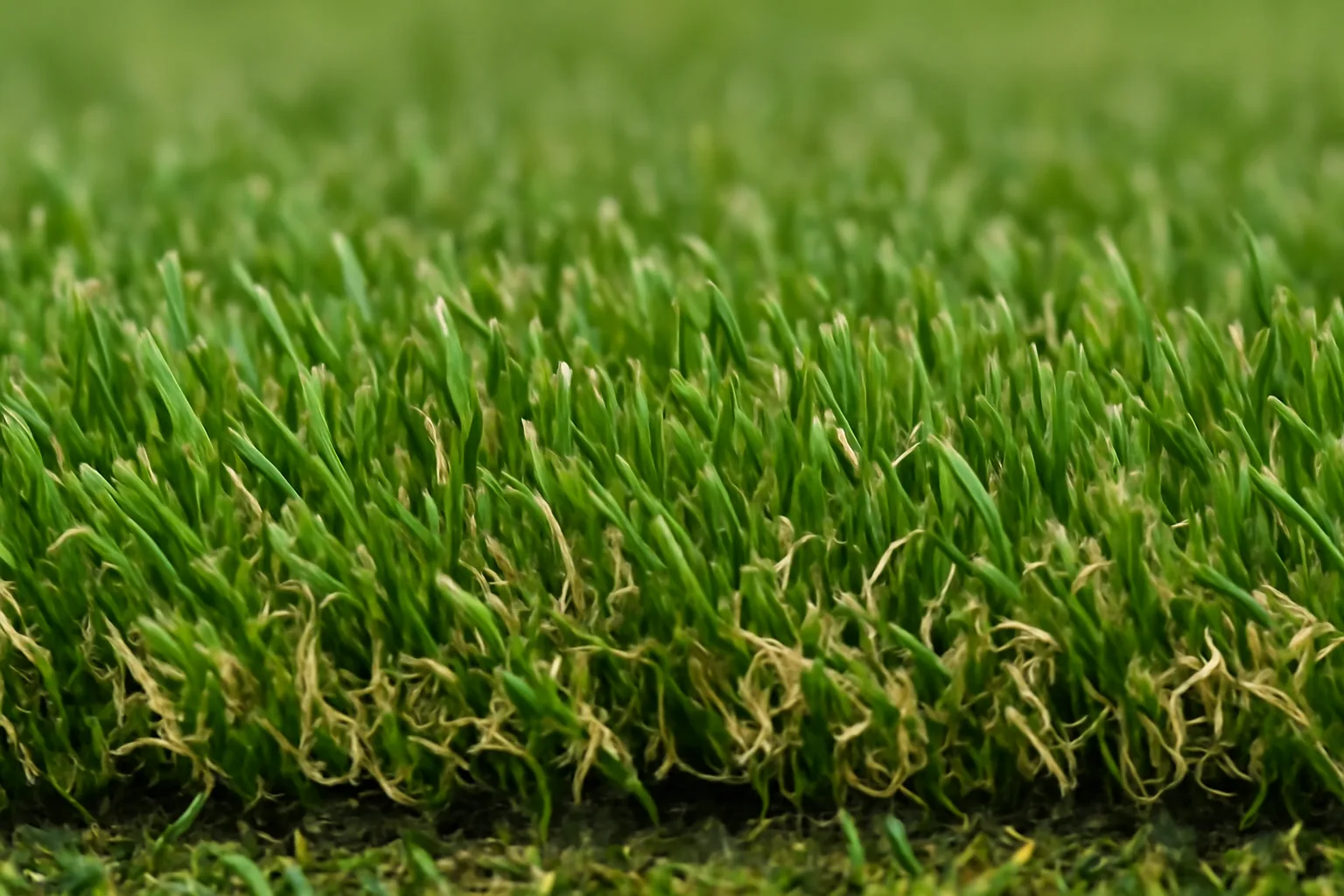
Look for a mixed yarn: at least two greens, ideally with beige or brown thatch low in the pile. Real lawns are not one colour. A little beige in the base makes artificial grass look less fake, especially in winter when the rest of the garden is muted.
Density is harder to judge online. Bend the sample back on itself. If you can see a lot of backing through the fibres, the lawn may look thin once fitted. Rub your palm across it both ways. Better grass springs back; cheap grass stays flattened for longer.
Backing and drainage
Backing should feel firm and well-punched for drainage. For pets and wet UK gardens, this is non-negotiable. Ask for drainage rate if it is supplied, and check whether the product is sand-filled, non-sand-filled or pet-specific.
If you have clay soil or a garden that puddles after rain, artificial grass will not magically solve it. You may need a deeper sub-base, drainage channel or different surface. The patio drainage guide is relevant if the artificial lawn sits beside paving and water has nowhere to go.
Installation Drainage And Edge Checks
Installation decides whether artificial grass looks expensive or temporary. I care more about the edge detail than the headline pile height.
Edge quality
Good artificial grass has tight, clean edges against paving, beds, fences and steps. Bad installs curl, wrinkle or expose the backing. If you are using a professional installer, ask how the edge will be fixed and what material will hold the perimeter.
Common edging options include:
- Timber battens: affordable and easy to work with, but use treated timber and expect eventual replacement.
- Composite edging: neater and more rot-resistant, often dearer upfront.
- Metal edging: crisp and durable, good for modern gardens.
- Existing paving: works well if the levels are right and the grass is fixed cleanly.
If the garden is for children, check transitions from grass to patio. A raised lip at the edge is a trip point. The related guide on child-friendly garden design is worth reading if the lawn is mainly a play surface.
Joins and direction
Artificial grass has a pile direction. Lay two pieces in opposite directions and the join will glare at you forever. Ask where joins will fall and what direction the pile will face. Usually you want the pile leaning towards the main viewpoint, often the house.
Avoid unnecessary joins. If a 4m-wide roll covers the area with less waste than two narrow strips, use the wider roll. The roll may cost more upfront, but it can save a visible join and fitting time.
Ground preparation
For DIY, the job is not just rolling out turf. You need to remove organic material, compact the base, check levels, and avoid trapping weeds or soft patches underneath. If that sounds like too much, pay for fitting or choose another surface.
For a very small area, a DIY install can make sense. For a main garden, I would get at least two installer quotes and ask for photos of gardens they fitted two or three years ago, not just day-one shots. Day-one artificial grass almost always looks tidy.
If you are comparing surface choices more broadly, garden paths materials and costs is useful because many of the same base and drainage choices apply.
Where Artificial Grass Makes Sense And Where It Doesn’t
Artificial grass has a place, but it is not the default answer for every low-maintenance garden. Be honest about the trade-off.
WWF warns that artificial grass is plastic-based and can affect soil, wildlife and microplastic pollution. That does not mean nobody should ever use it. It does mean you should use it deliberately, not as a lazy replacement for every living surface.
Where I would use it
Artificial grass can make sense for:
- Small shaded lawns: areas where real grass constantly fails and becomes mud.
- Balconies and roof terraces: places where real turf is impractical.
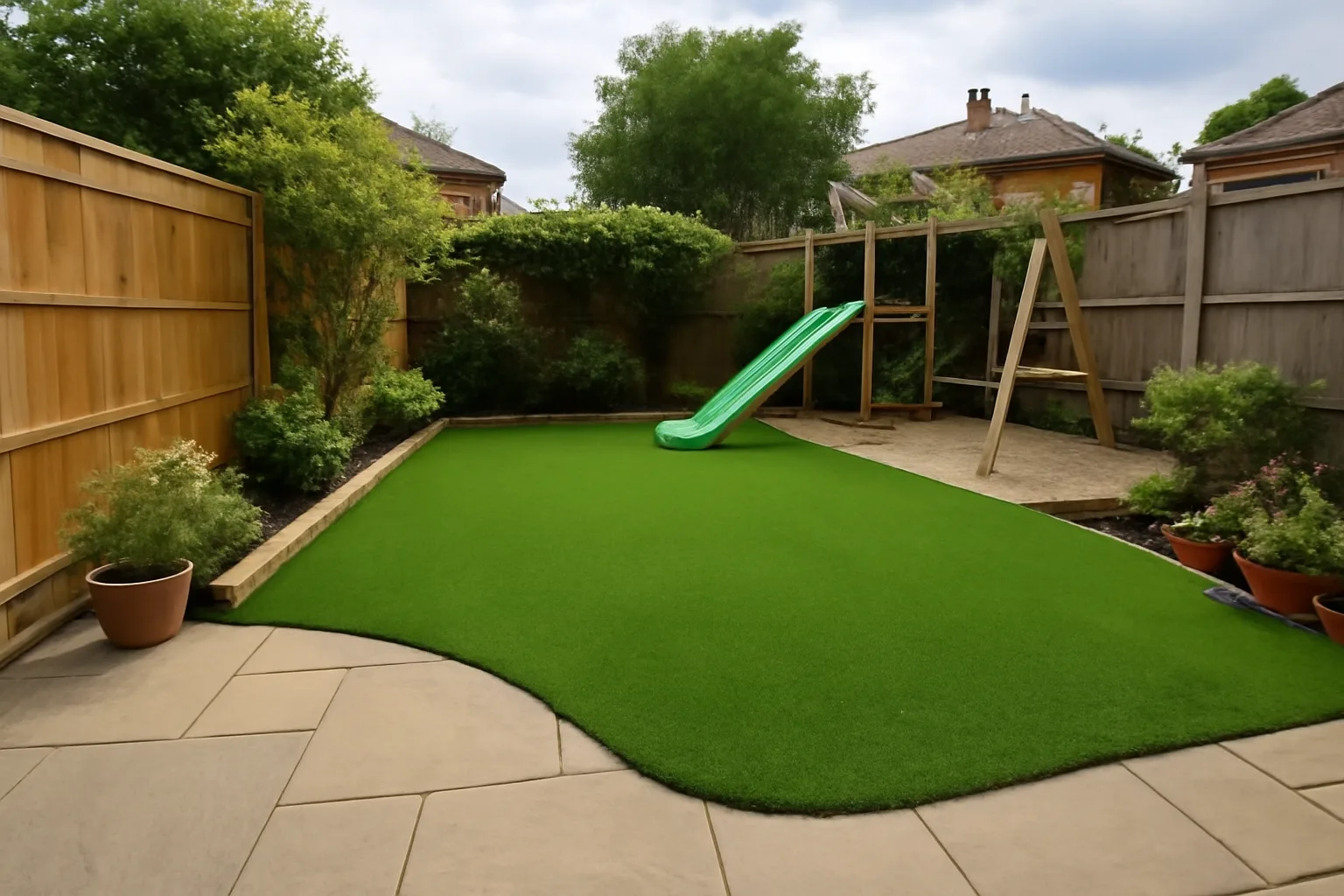
- Play corners: especially where a soft, even surface is more useful than a struggling lawn.
- Rental-friendly refreshes: only where the surface can be removed without damaging drainage or structure.
- Dog toilet areas: provided drainage and cleaning are designed in from the start.
Where I would avoid it
I would avoid artificial grass over a healthy lawn just because mowing is annoying. I would also avoid it in hot, exposed south-facing gardens where children sit on the surface in summer. Artificial turf can become much hotter than real grass in direct sun.
It is also a poor fix for a garden with drainage problems. If water already pools, covering the soil with synthetic turf can hide the issue while making the root cause harder to inspect.
If the goal is low maintenance rather than a fake lawn specifically, compare alternatives: gravel with planting pockets, porcelain paving, bark play areas, clover-heavy lawns, creeping thyme between pavers, or a small meadow strip. The low-maintenance garden guide covers better options for many gardens, and RHS low-maintenance garden advice also suggests that small gardens do not always need a lawn at all.
Maintenance is still real
Artificial grass still needs brushing, leaf removal and cleaning. If pets use it, rinsing and deodorising become part of the routine. If trees overhang it, moss and debris can still settle into the pile. If furniture sits on it, the fibres can flatten.
You may also want an outdoor rug or a planted border to soften the look. A rectangle of artificial grass with no planting around it is where the plastic effect is most obvious.
Bottom Line
For most UK gardens, the best artificial grass is a realistic 30-38mm mid-range product, not the longest or cheapest roll. LazyLawn Cre8 35mm is my first shortlist pick at about £26.27 per m2. If you want a softer premium feel, LazyLawn Wonder Yarn at about £35.03 per m2 is the upgrade. If you are on a tight budget, B&Q 35mm rolls around £8.25-£15 per m2 can work, but only after checking samples for shine and thin backing.
Do not spend the whole budget on the grass. Spend enough on the base, drainage and edges. A mid-range product fitted well will beat a premium product fitted over lumpy soil.
My buying rule is simple: use artificial grass for problem spaces, small play areas, balconies and gardens where real grass has repeatedly failed. If you already have a living lawn that mostly works, improve it, shrink it or replace part of it with planting before covering the whole thing in plastic. Your garden will usually look better for it.
For adjacent design decisions, compare small garden ideas and how to choose the right size dining set for your patio before you finalise the layout. The grass only works if the whole garden plan works.
Frequently Asked Questions
What is the most realistic artificial grass for UK gardens? Look for 30-38mm pile, mixed green and beige fibres, dense stitching and a non-shiny finish. LazyLawn Cre8 35mm at about £26.27 per m2 is a strong mid-premium starting point.
How much does good artificial grass cost in the UK? Budget grass is usually around £8-£14 per m2, mid-range grass around £15-£25 per m2, and premium grass around £25-£45 per m2. Professional supply-and-fit often lands around £45-£80 per m2.
Is 35mm artificial grass better than 20mm? For a garden lawn, usually yes. A 35mm pile looks softer and more natural than a 20mm utility grass. For balconies, temporary strips or very low-wear areas, 20mm can still be practical.
Is artificial grass suitable for dogs? Yes, but choose pet-friendly backing, build proper drainage and expect to rinse and clean it. Budget grass over poor drainage can smell in warm weather, especially in a small enclosed garden.
Can I lay artificial grass myself? You can DIY a small, simple area if you are comfortable excavating, compacting a base and fixing clean edges. For a main lawn, professional fitting is usually worth pricing because poor base prep shows quickly.
Is artificial grass bad for wildlife? It is less wildlife-friendly than living lawn or planting because it replaces habitat and covers soil. If you use it, keep planted borders, trees, pots or meadow areas elsewhere in the garden.