You know the point in a British summer evening: the plates are cleared, the patio is finally dry, and everyone starts doing that quiet calculation of whether it is too chilly to stay outside. The best outdoor fire pit UK buyers can choose in 2026 is not simply the one with the biggest flame. It is the one that fits your patio, your neighbours, your storage space and the kind of evenings you actually have.
In This Article
- Quick Verdict: Which Outdoor Fire Pit Should You Buy?
- Best Outdoor Fire Pits UK 2026 Shortlist
- Wood, Gas or Bioethanol: Which Fuel Is Best?
- Best Wood-Burning Fire Pits
- Best Gas Fire Pits
- Best Bioethanol Fire Pits
- What Size Fire Pit Do You Need?
- Safety, Smoke and Neighbour Rules
- Where to Place a Fire Pit on a UK Patio
- What to Buy With Your Fire Pit
- Frequently Asked Questions
Quick Verdict: Which Outdoor Fire Pit Should You Buy?
For most UK gardens, I would buy a medium steel wood-burning fire pit with a spark guard and removable cooking grill, then spend the saved money on a decent cover, heatproof gloves and properly dried logs. It gives the best mix of heat, atmosphere and value, especially if you want a real centrepiece rather than a decorative flame.
Gas is better if you hate smoke, want push-button control, or have a smart patio setup where convenience matters more than crackle. Bioethanol is best for balconies, small courtyards and tabletop ambience, but it is not the right choice if you mainly want heat.
The simple version:
- Best all-round choice: medium wood-burning steel bowl, about 60-80cm wide
- Best low-smoke option: gas fire pit table with hidden LPG bottle storage
- Best for tiny patios: tabletop bioethanol burner
- Best for cooking: fire pit bowl with grill plate or plancha ring
- Best for renters: portable fire bowl with stand and protective mat
- Best to avoid: very cheap thin steel bowls with no guard, no drainage and no cover
If you already own a BBQ, the fire pit does not need to do everything. Pair it with one of the stronger options from our best BBQs for UK gardens guide and let the fire pit handle warmth and seating-area atmosphere.
Best Outdoor Fire Pits UK 2026 Shortlist
These are the types I would look at first. Exact stock changes constantly at B&Q, Argos, Amazon UK, Garden Trading, Homebase and specialist outdoor retailers, so treat the models as shopping anchors rather than the only acceptable choices.
Best Budget Wood Fire Pit: Charles Bentley or La Hacienda Steel Bowl
Budget steel fire pits usually sit around £45-90. The better ones have a proper stand, a mesh spark guard and a poker included. They will not last forever if you leave them uncovered through winter, but they are hard to beat for first-time buyers.
Look for:
- Bowl width: 55-70cm for a small to medium patio
- Guard: mesh spark screen, not just an open bowl
- Drainage: small drain holes or a design that does not trap rainwater
- Finish: black powder-coated steel is normal, but expect it to weather
This is the sensible buy if you want to see how often you use a fire pit before spending serious money.
Best Mid-Range Wood Fire Pit: Cast Iron Bowl or Plancha-Style Pit
At about £120-250, you start seeing heavier bowls, cast iron designs and fire pits that double as casual cooking kit. Cast iron holds heat well and feels more permanent, but it is heavy and needs better care.
Plancha-style fire pits are worth considering if you like the idea of cooking sausages, flatbreads or vegetables around the outer ring while logs burn in the middle. They are more social than a normal BBQ, though less precise.
If cooking outdoors is a big part of the plan, compare this route with a dedicated outdoor pizza oven or BBQ before you buy. A fire pit grill is fun; it is not always the easiest way to feed six hungry people.
Best Premium Choice: Smokeless or Designer Fire Pit
Premium fire pits, including smokeless double-wall designs and heavier designer bowls, usually sit from £250 to £700+. The appeal is less smoke, stronger build quality and a cleaner patio look.
The catch is that “smokeless” does not mean smoke-free. It usually means the fire burns more efficiently once hot, with secondary combustion reducing visible smoke. Damp logs, overloading and poor airflow will still ruin the evening.
Pay premium money if the fire pit will live in a visible seating area all season. If it will come out four times a year, keep the spend lower.
Best Gas Fire Pit Table: LPG Table with Lid
Gas fire pit tables usually cost £250-900, with most decent garden-centre options around £350-600. The best ones hide a 5kg or 13kg patio gas bottle inside the base and include a lid so the table works as normal when the flame is off.
They suit people who already have outdoor sofas, a pergola edge, or a dining setup where smoke would be annoying. They also work well if you have spent money on outdoor dining furniture and do not want ash blowing across the cushions.
Check the gas bottle size before buying. Some compact tables look neat online but leave you with an exposed bottle next to the seating area, which rather kills the mood.
Best Bioethanol Fire Pit: Tabletop Burner
Bioethanol tabletop fires usually cost £30-150. They are small, clean and simple: pour in the fuel, light it safely, and enjoy a visible flame without logs, ash or a gas bottle.
The trade-off is heat. A small bioethanol flame adds atmosphere more than warmth. It can take the edge off a still evening at arm’s length, but it will not warm a whole patio.
For a balcony-style setup, tiny courtyard or renter-friendly garden table, bioethanol makes sense. For “everyone gather round the fire” evenings, it is the weakest fuel.
Wood, Gas or Bioethanol: Which Fuel Is Best?
This is the decision that matters most. The shape, colour and brand are secondary.
Wood: Best for Heat and Atmosphere
Wood gives you the proper fire-pit experience: crackle, smoke smell, glowing embers and real heat. It is also the most flexible if you want to cook over the fire.
Wood suits:
- Larger patios: enough room to keep chairs and fences back from the flame
- People who enjoy tending a fire: adding logs, managing airflow, waiting for embers
- Cooking: grills, skewers, Dutch ovens and plancha plates
- Cooler evenings: stronger radiant heat than most small gas or bioethanol units
The drawbacks are ash, smoke, storage and neighbour sensitivity. Use kiln-dried logs rather than damp offcuts. Damp wood smokes, spits and makes your clothes smell like you slept in a bothy.
Gas: Best for Control and Clean Use
Gas is the easiest option to live with. Turn the dial, light it, adjust the flame, switch it off. No ash bucket, no log store, no waiting for embers to die down.
Gas suits:
- Outdoor sofas: cleaner around cushions and throws
- Modern patios: especially porcelain, composite decking and neat dining areas
- Short evening use: 45 minutes after dinner without the faff
- Smoke-sensitive neighbours: less likely to annoy next door
The drawbacks are price, running cost and bottle storage. You also need to respect the appliance instructions, hose condition and ventilation. The UK government’s outdoor fire safety advice says to turn the gas supply off first after cooking on gas equipment, then the appliance control, which is a useful habit for outdoor gas kit generally: fire safety outdoors guidance.
Bioethanol: Best for Small Spaces and Ambience
Bioethanol is the cleanest-looking option. No smoke, no ash, no bulky fuel bottle. It is good for a small table flame, not a roaring garden fire.
Bioethanol suits:
- Balconies and compact patios: where a wood pit would be too much
- Decorative use: flame as a visual feature
- Renters: easy to store and move
- Occasional evenings: no fuel storage beyond the liquid bottle
The drawbacks are lower heat and careful refuelling. Never top up a hot burner. Wait for it to cool, keep the fuel bottle away from the flame, and follow the manufacturer’s fill line. This is not the place for “that’ll do” energy.
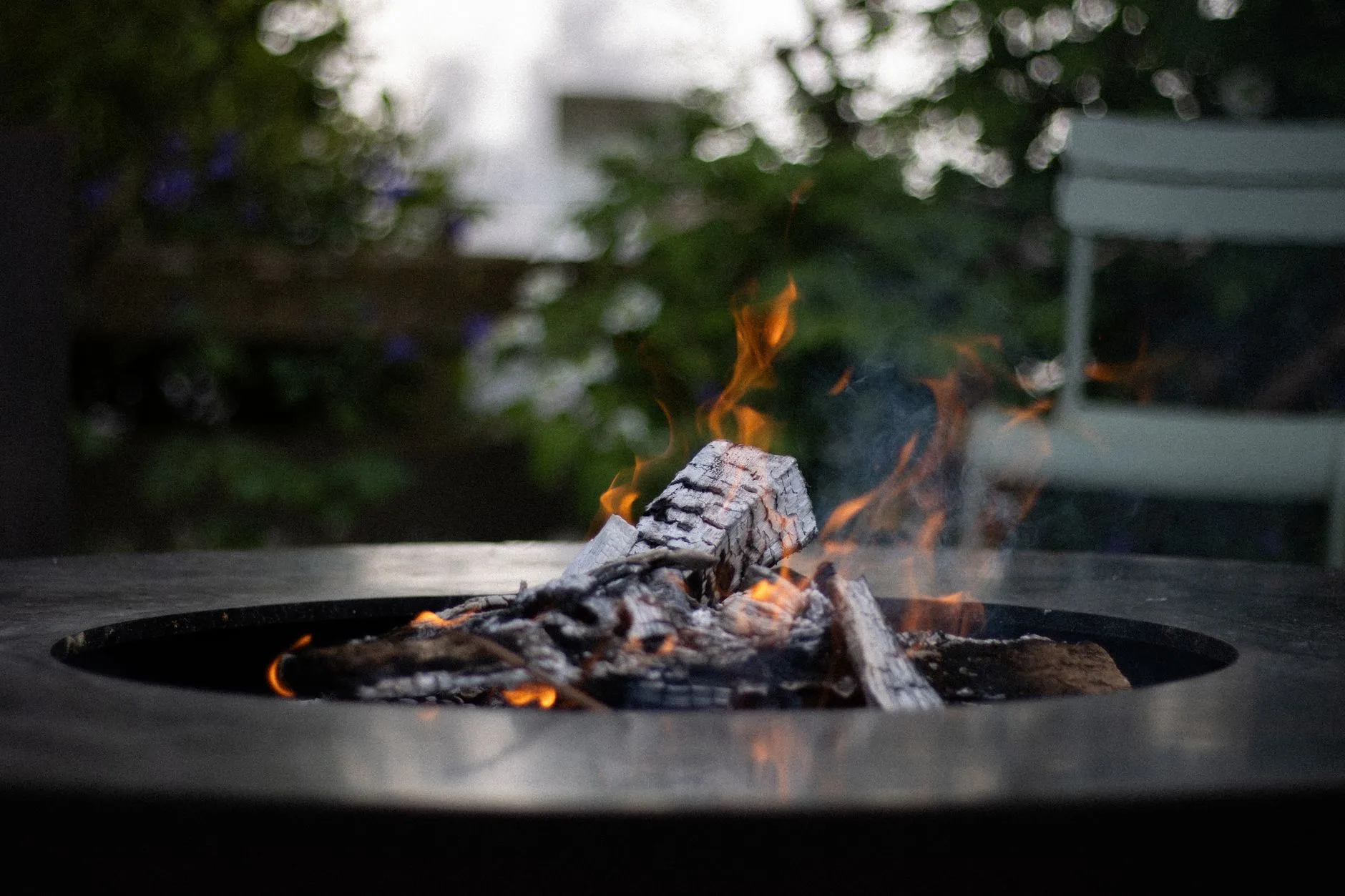
Best Wood-Burning Fire Pits
A good wood fire pit is simple: stable base, thick enough metal, sensible airflow and a guard that stops sparks landing on your jumper.
What to Look For
Choose steel if you want value and easy movement. Choose cast iron if you want weight and heat retention. Choose corten steel if you like the rusted architectural look and accept that it will mark pale paving if you are careless.
Useful wood fire pit features:
- Spark guard: reduces escaping embers, especially with softwood kindling
- Poker: lets you move logs without leaning over the bowl
- Cooking grill: worth having, even if you only use it occasionally
- Ash access: removable tray or bowl that is easy to tip out
- Cover: protects the pit from rain and slows corrosion
Avoid shallow bowls that sit low to the floor. They throw less heat at seated people and can scorch grass or decking if used without protection.
Best Uses
Wood is best for social seating circles. Place the pit in the middle, keep chairs far enough back for people to move safely, and let the heat do its thing.
It also works well with rustic patios, gravel seating areas and larger gardens where smoke can drift without causing drama. If your garden is narrow, terraced and overlooked on both sides, be honest about how tolerant your neighbours are.
Downsides
Wood needs patience. You need dry fuel, kindling, somewhere to store logs, and a safe way to dispose of ash once cold.
Do not burn treated timber, painted wood, pallets of unknown origin or garden waste. Apart from being antisocial, it creates unpleasant smoke and residue. Dry hardwood logs are boring in the best possible way.
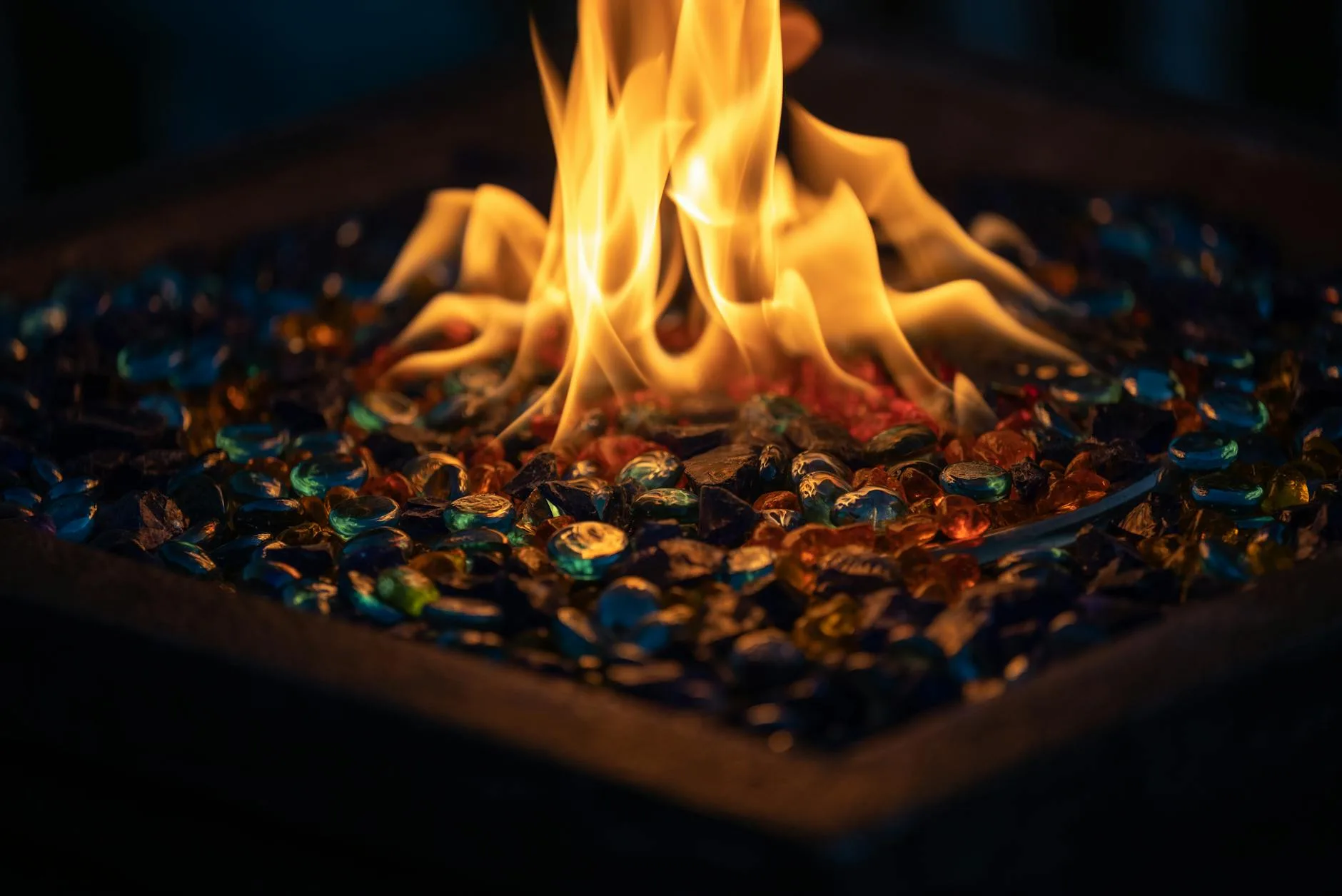
Best Gas Fire Pits
Gas fire pits are the grown-up neat-freak option. Less romance, more reliability.
What to Look For
Check the heat output, bottle storage, ignition system and weather cover. Some cheap models look smart in photos but have weak flames or awkward bottle arrangements.
Good gas fire pit features:
- Integrated bottle storage: keeps the patio tidy
- Electronic ignition: easier than fiddling with a long lighter
- Lava rock or glass media: spreads the flame and protects the burner
- Table lid: turns the fire pit into usable surface space
- CE/UKCA marking: basic safety and compliance signal
Also check the manufacturer’s clearance requirements. Do not tuck a gas fire pit under a low canopy because it looks nice in a brochure. Heat needs somewhere to go.
Best Uses
Gas is excellent for patios with sofas, pergolas, dining tables and outdoor kitchens. It works well if you want the evening to feel polished rather than campfire-ish.
It is also a strong choice if you already own a patio heater but want something lower, more social and better integrated into seating.
Downsides
Gas is not cheap. The appliance costs more, the bottle needs refilling, and the flame can feel less satisfying than logs. You also lose the cooking flexibility unless the unit is specifically designed for it.
For most buyers, gas is about convenience rather than value.
Best Bioethanol Fire Pits
Bioethanol is the right answer for a smaller group of buyers, but for that group it is very useful.
What to Look For
Choose a stable, heavy base with a proper snuffer tool. Glass shields help protect the flame from breezes, but they need cleaning and can get hot.
Look for:
- Wide stable base: less likely to tip on a garden table
- Snuffer included: safer than improvising
- Clear fill line: prevents overfilling
- Outdoor suitability: not every decorative burner is built for patio weather
- Easy fuel access: refilling should not require dismantling half the unit
Bioethanol fuel is usually sold by the litre. Running cost depends on burner size, but expect it to cost more per hour of useful heat than logs.
Best Uses
Use bioethanol for close-range ambience: a table for two, a sheltered courtyard, a balcony-style terrace, or a garden coffee table where a full fire pit would dominate the space.
It is also a neat companion to small-space design. If your patio is more bistro set than outdoor lounge, look at our small patio ideas before buying anything oversized.
Downsides
Bioethanol flames are exposed, the fuel is flammable, and refuelling while hot is dangerous. The Scottish Fire and Rescue Service gives specific outdoor heating safety advice for ethanol and bioethanol burners, including following the manufacturer’s instructions and handling fuel carefully: outdoor heating safety.
The other downside is expectation. If you want warmth for four adults in jumpers at 9pm, buy wood or gas.
What Size Fire Pit Do You Need?
Most buyers should start with the seating area, not the product photo.
For a small patio with two chairs, a 40-55cm tabletop or compact bowl is enough. For four chairs, aim for 60-75cm. For a proper seating circle with five or six people, 80-100cm feels more balanced.
Size Guide
- Under 45cm: tabletop ambience, balcony-style spaces, very small patios
- 45-60cm: two-person seating, renters, occasional use
- 60-80cm: best all-round garden size for four people
- 80-100cm: larger patios, stronger visual centrepiece, more log capacity
- 100cm+: statement piece, heavier, harder to store, overkill for many UK gardens
Bigger is not always better. A huge fire pit on a tight patio makes everyone sit too close, and then nobody relaxes.
Height Matters Too
Low bowls look stylish but can send heat at your shins rather than your torso. Table-height gas pits feel more sociable around outdoor sofas. Raised bowls are easier to tend and usually kinder to paving.
If the fire pit will sit near garden furniture, measure the whole layout. Leave proper walking room, not just enough space for the product footprint.
Safety, Smoke and Neighbour Rules
Outdoor fire pits are allowed in many UK gardens, but “allowed” does not mean “use however you like”.
The main things are smoke nuisance, fire risk and common sense. GOV.UK explains that outdoor barbecues, chimineas, fireplaces and pizza ovens can be used in smoke control areas, but you still need to follow bonfire and nuisance rules: smoke control area rules.
Practical Safety Checklist
- Use level ground: no wobbly paving slabs or soft grass under a loaded pit
- Keep clearances: away from fences, sheds, hedges, parasols and low branches
- Protect surfaces: use a heatproof mat on decking, porcelain or delicate paving
- Watch the weather: avoid windy nights where sparks can travel
- Keep water or sand nearby: not tucked in the garage
- Let ash cool fully: embers can stay hot for hours
- Store fuel safely: dry logs covered, gas upright, bioethanol away from flame
Never use an outdoor fire pit inside a conservatory, shed, gazebo or enclosed garden room unless the appliance is specifically designed and approved for that setup. Carbon monoxide risk is not worth a cosy photo.
Smoke Etiquette
Use dry, clean fuel and avoid smoky startup methods. If smoke is blowing directly into next door’s washing, bedroom window or barbecue, call it. Nobody wins a neighbour war over two more logs.
If you live in a terrace or a dense estate, gas or bioethanol may be the more realistic choice. You can still have flame without becoming the evening’s local talking point.
Where to Place a Fire Pit on a UK Patio
The best placement is usually central to the seating area but not central to every route through the garden.
A fire pit wants air, space and a non-combustible surface. Stone, gravel, brick and concrete are easier than decking. Porcelain paving can cope with garden use, but hot ash and metal feet can still mark surfaces, so use a proper base.
Good Placement
- On a level paved or gravel area: stable and heat-resistant
- At least a few metres from fences and sheds: especially with wood
- Away from overhanging plants: sparks and dry leaves are a bad mix
- Near seating but not blocking movement: people need to stand up safely
- Downwind of the house if possible: keeps smoke away from open doors
Poor Placement
Avoid placing a fire pit under a parasol, inside a pergola with fabric shade, on artificial grass, tight against rattan furniture, or in a narrow alley between house and fence.
If your patio layout already feels cramped, fix the layout before adding flame. Our patio drainage guide is also worth checking if water pools where you plan to put the fire pit, because leaving metal sat in damp conditions will shorten its life.
What to Buy With Your Fire Pit
The accessories are not exciting, but they are what make the fire pit easier to live with.
Useful Extras
- Weatherproof cover: the easiest way to stop a steel bowl rusting quickly
- Heatproof gloves: better than oven gloves from the kitchen drawer
- Long lighter: safer than matches in windy weather
- Poker or tongs: essential for wood fires
- Ash bucket: metal, lidded, kept outside
- Spark guard: if not included
- Heatproof mat: important on decking, grass or pale paving
For fuel, buy kiln-dried hardwood logs if you are burning wood. Avoid bags that feel damp or smell musty. For gas, check whether the fire pit uses propane/patio gas and what bottle size fits inside the base. For bioethanol, buy proper fire fuel rather than improvising with anything else.
What Not to Waste Money On
You probably do not need scented fuels, novelty colour-changing flame sachets, or a giant accessory kit on day one. Start with safety basics and decent fuel. Add cooking gear only once you know you actually want to cook over it.
Frequently Asked Questions
What is the best outdoor fire pit UK gardens can use?
For most UK gardens, the best outdoor fire pit is a medium wood-burning steel or cast iron bowl with a spark guard, cover and optional grill. It gives better heat and atmosphere than bioethanol, costs less than most gas fire pit tables, and works well for four-person patio seating.
Are gas fire pits better than wood fire pits?
Gas fire pits are better for clean, quick, smoke-light use. Wood fire pits are better for heat, atmosphere and cooking. If you have close neighbours or expensive outdoor cushions, gas is easier. If you want a proper campfire feel, wood wins.
Can I use a fire pit in a smoke control area?
GOV.UK says outdoor barbecues, chimineas, fireplaces and pizza ovens can be used in smoke control areas, but you still need to follow rules on bonfires, nuisance smoke and safe fuel use. Check your local council if you are unsure, especially in dense urban areas.
Are bioethanol fire pits warm enough?
Small bioethanol fire pits are usually warm enough for close-range ambience, not whole-patio heating. They suit small tables, balconies and sheltered courtyards. If you want to warm four adults sitting outside for an evening, choose wood or gas instead.
Can you put a fire pit on decking?
You can only use a fire pit on decking if the manufacturer allows it and you use a suitable heatproof protective base with enough clearance. Wood fire pits throw sparks and heat downwards, so decking is higher risk than stone, concrete or gravel.