Kamado BBQ running costs in the UK are mostly about charcoal, accessories and how often you cook, not the ceramic grill itself. A good kamado can last for years, but the real value depends on whether you use its fuel efficiency for slow cooks, roasting and regular weekend meals rather than treating it as a £1,500 burger machine.
In This Article
- What Kamado BBQ Running Costs UK Actually Include
- Charcoal Costs Per Cook
- Accessories That Pay Back Over Time
- Cleaning, Storage and Wear Costs
- Kamado vs Gas and Standard Charcoal BBQ Costs
- How to Keep Costs Down Without Spoiling the Cook
- Bottom Line
- Frequently Asked Questions
What Kamado BBQ Running Costs UK Actually Include
Kamado running costs start with fuel, but they do not end there. The first year is usually the expensive one because most buyers discover quickly that a ceramic grill needs a few extra pieces to do the jobs it was bought for: low-and-slow smoking, indirect roasting, pizza, searing and steady heat control.
For most UK owners, the real cost buckets are:
- Charcoal: usually about £18-£30 per 9-12kg bag, depending on whether you buy supermarket lumpwood, Big K-style restaurant charcoal or branded kamado charcoal.
- Firelighting: natural firelighters cost about £4-£8 per box from B&Q, Amazon UK or specialist BBQ shops, and a chimney starter is usually £15-£35.
- Heat management accessories: deflector plates, charcoal baskets, half-moon grates and grill expanders can add £40-£250 if they were not included in your bundle.
- Cleaning and protection: ash tools, grill brushes, covers, drip pans and replacement gaskets usually add £25-£100 over time.
- Replacement wear parts: gaskets, firebox components, thermometers and grates are not weekly expenses, but they matter over a five-year ownership view.
That sounds gloomy until you compare it with the food value. If a kamado replaces takeaway pizza, Sunday oven roasts and a few pub garden meals, the running costs look very different. If it comes out twice in August and then sits under a cover, the maths is brutal.
The other big point: kamados reward people who cook properly on them. A cheap open charcoal barbecue can burn through fuel fast because most of the heat escapes. A ceramic kamado holds heat in the dome and body, so a long cook can use less fuel than people expect once the grill is hot and stable.
For safety, keep the cost conversation tied to proper use. London Fire Brigade says barbecues should be placed on level ground, away from flammable items such as sheds, fences and trees, and never used indoors or on balconies. That matters because some “cost saving” habits, like squeezing a hot grill into a covered corner during rain, are not savings at all: they are bad risk management.
If you are still choosing between models, read our Weber vs Kamado Joe vs Big Green Egg comparison before getting too lost in charcoal costs. A £25 fuel saving makes no sense if you buy the wrong grill for your space.
Charcoal Costs Per Cook
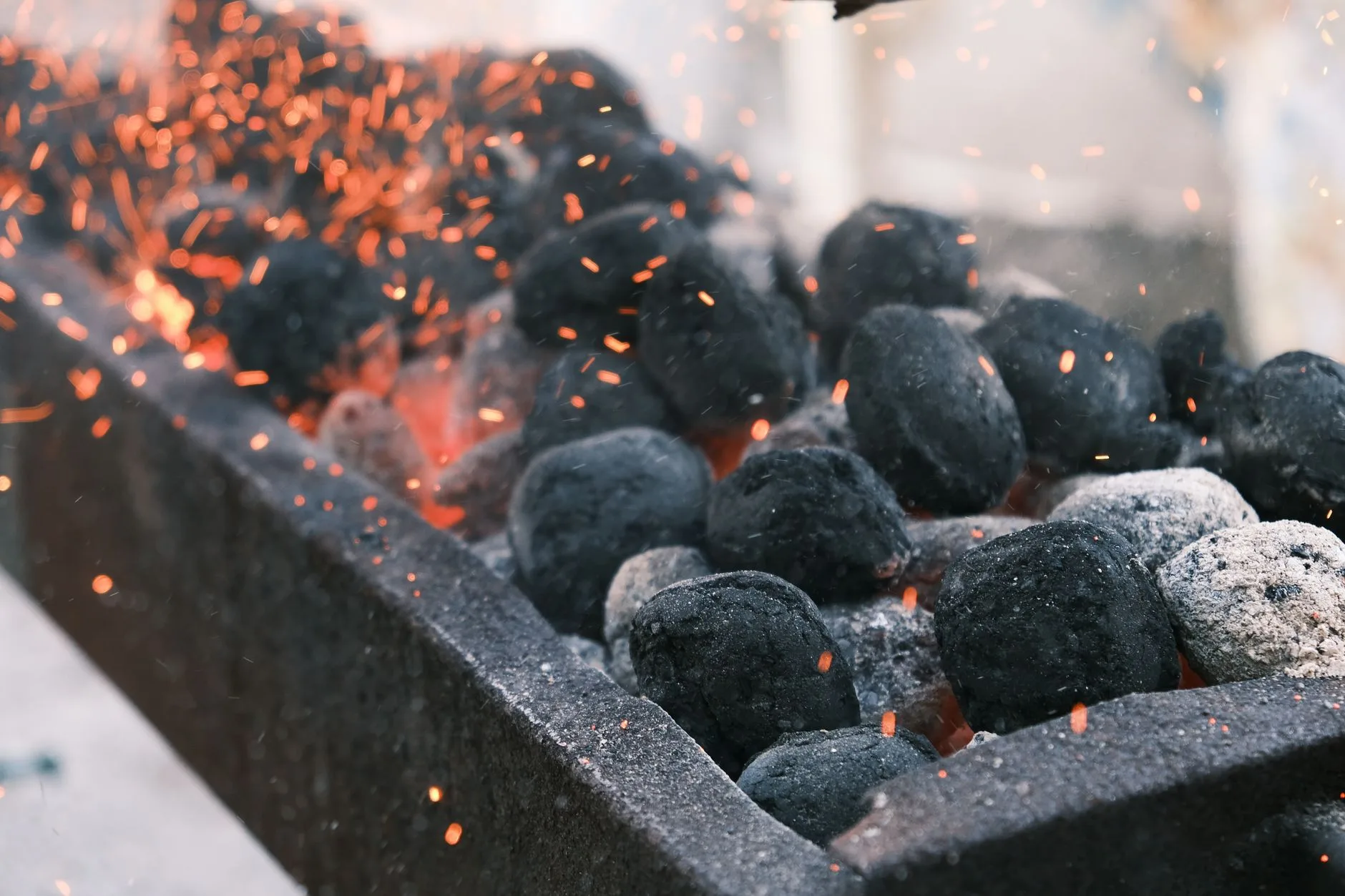
Charcoal is the running cost people notice first because you keep buying it. Branded kamado lumpwood is not cheap: Kamado Joe Big Block 9kg is commonly around £26-£28 from UK BBQ specialists, while Big Green Egg premium lump charcoal often sits around £26 for a bag. Restaurant-grade lumpwood or Big K-style alternatives can be cheaper per kg, often around £18-£25 for larger bags when bought from catering or BBQ suppliers.
The awkward bit is that bag price alone does not tell you much. A dusty cheap bag that blocks airflow and leaves half the bottom as unusable fines can be false economy. A cleaner hardwood lump that relights well can work out cheaper over a month of cooks.
Quick grilling
For burgers, sausages, chicken thighs or veg skewers, expect to use roughly £2-£4 of charcoal once you know your grill. You are lighting enough lumpwood to get the firebox hot, then controlling airflow rather than filling the basket like a bonfire.
The first few cooks are usually more expensive. New kamado owners tend to overshoot the temperature, open the vents too far, then burn through more fuel than needed. After a few runs, you learn that a ceramic dome does not need much air once it is moving.
Low-and-slow smoking
For pork shoulder, ribs, brisket-style cooks or overnight lamb shoulder, a long session might use £5-£10 of charcoal, sometimes more in cold or windy weather. That still compares well with running a large oven for hours, especially if you are cooking enough food for leftovers.
Kamado Joe says its Big Block charcoal can burn for up to 18 hours per bag and be reused up to three times, which matches what owners usually find in practice: the unburnt lump left after shutting the vents is valuable. Do not throw it away unless it is damp, crumbling into dust or contaminated with grease.
Pizza and high-heat cooks
Pizza burns hotter and can be less economical. Getting a ceramic grill up to 350-400°C takes fuel, and holding that heat while the dome, stone and deflector system stabilise is different from cooking six burgers at 200°C. Budget about £4-£8 of charcoal for a proper pizza session.
That still can work if you are making six pizzas instead of ordering delivery. It makes less sense if you are firing the grill for one supermarket pizza and then calling it done. No judgement, but that is not the kamado showing off.
Reusing charcoal properly
The cheapest charcoal is the lump you already paid for. After cooking, close the top and bottom vents fully, let the fire die, then reuse the remaining pieces next time. Put the larger unburnt chunks at the bottom, add a little fresh lump on top, and clear ash so airflow is not choked.
Based on owner experience, the biggest waste is not buying premium fuel. It is leaving the vents open after dinner and letting £5 of good charcoal burn itself into ash while everyone goes inside.
Accessories That Pay Back Over Time
Kamado accessories are where running costs get messy because some are indulgences and some make the grill cheaper to use. The right accessory can stop you wasting fuel, burning food or replacing parts early. The wrong one becomes a heavy metal circle in the shed.
If you already read our Kamado BBQ Accessories You Actually Need UK guide, treat this section as the cost angle rather than another shopping list.
The accessories worth buying early
The best value accessories are the ones that widen what you can cook without making each session more wasteful:
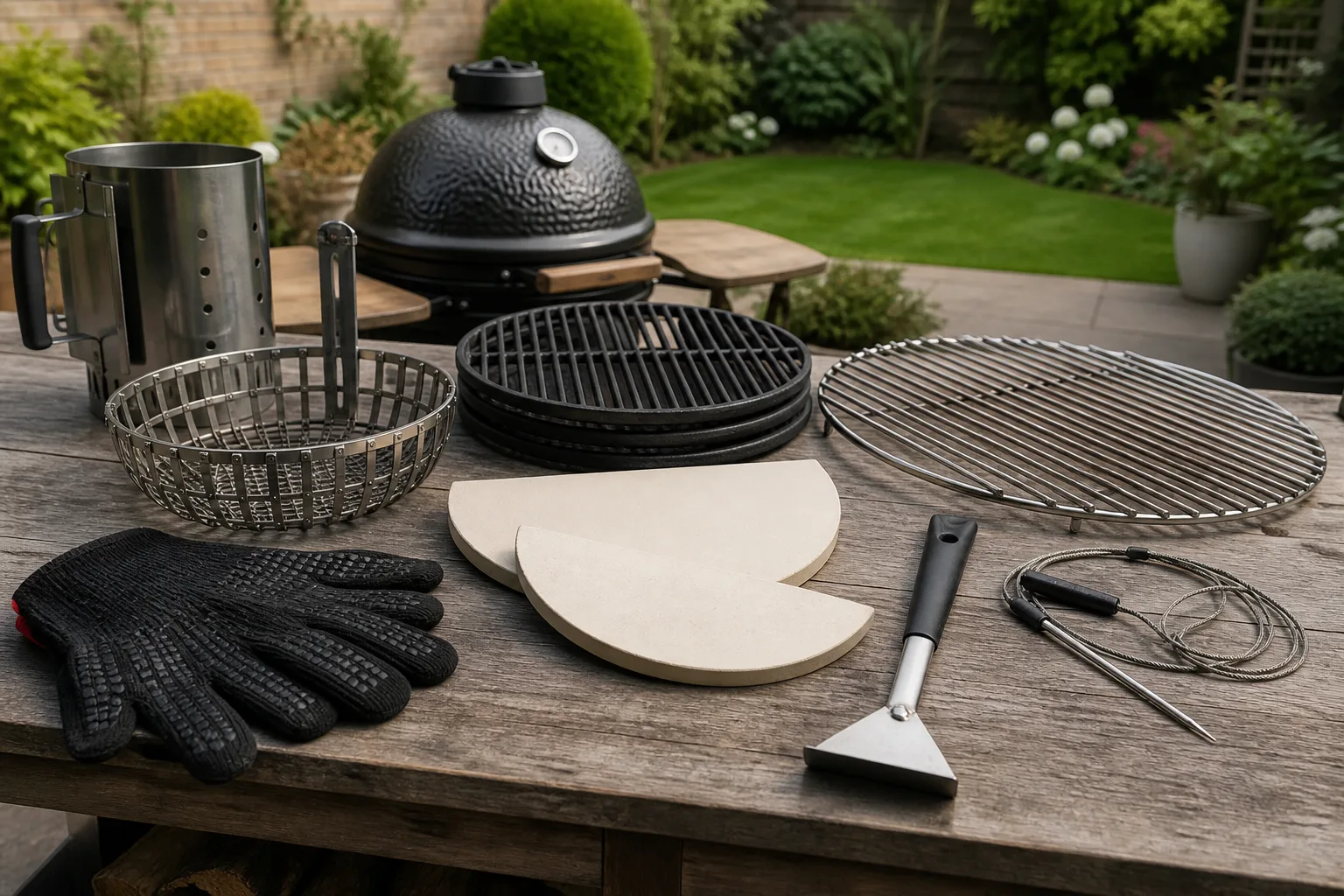
- Heat deflector plates: usually £45-£100, and essential for indirect roasting, smoking and avoiding burnt bottoms on larger joints.
- Charcoal basket: often £45-£90, useful because it improves airflow and makes ash clean-out quicker.
- Good heat gloves: about £15-£35 from Amazon UK, BBQ shops or garden centres, and not optional if you move grates or deflectors mid-cook.
- Digital probe thermometer: roughly £20-£80, with Thermapen-style instant-read models and wired probes both useful for avoiding ruined meat.
- Drip pans and foil trays: about £5-£15 per pack, boring but they reduce clean-up and protect deflectors from baked-on grease.
My favourite early buy is a charcoal basket, even though it feels less exciting than a pizza stone. It makes the grill easier to run, reduces ash faff and helps you reuse lumpwood cleanly. That is running-cost value, not gadget value.
The accessories to delay
Pizza stones, rotisserie kits, grill expanders, cast-iron planchas and branded tool racks can all be useful. They are not all first-month essentials.
A rotisserie kit can cost £180-£300. A premium pizza setup can easily add £60-£150 once you include the stone, spacers and a peel. Those are fair buys if you will use them, but they do not automatically improve the economics of owning a kamado.
The sensible order is:
- Stabilise normal cooks first. Learn charcoal loading, vent control and indirect cooking.
- Buy the accessory that fixes a real problem. If chicken burns before it cooks through, buy deflectors. If clean-out is painful, buy a basket.
- Add speciality kit only when the habit is there. A pizza stone pays back only if pizza night becomes a routine.
Bundle value
Some premium kamados include stands, shelves, deflectors or multi-level cooking systems. That can make a £1,500-£2,200 grill look expensive but still better value than a cheaper body plus £400 of later extras.
For example, a Big Green Egg Large is listed by Big Green Egg UK at about £1,495 for the base grill size, while a Kamado Joe Classic III bundle is commonly around £2,000-£2,200 from UK BBQ retailers. Those numbers are not directly interchangeable because bundles differ. Compare the ready-to-cook package, not just the headline grill body.
Our Big Green Egg Large review covers this in more detail because the Egg can be great value for long-term owners, but the accessories change the first-year bill.
Cleaning, Storage and Wear Costs
Kamados are low-maintenance compared with many outdoor cooking setups, but they are not maintenance-free. The ceramic body is tough, the metal parts still live outside in UK rain, and gaskets take a beating if you cook hot too often.
Cleaning costs
You do not need a cupboard full of chemicals. In most cases, the useful cleaning kit is:
- Ash tool or rake: about £10-£25.
- Grill brush or scraper: about £8-£25, depending on quality.
- Drip trays: about £5-£15 per pack.
- Microfibre cloths and mild cleaner: about £5-£10, mainly for shelves and exterior surfaces.
Avoid aggressive cleaning inside the ceramic body. A kamado is not meant to look new inside. Burn off residue, brush the grates, clear ash and keep airflow open. Chasing a showroom interior wastes time and can damage parts.
Covers and storage
A decent cover usually costs £40-£100. It is not glamorous, but it is cheaper than replacing rusty fittings, swollen wooden shelves or weather-damaged side tables. In a sheltered garden, a mid-range cover is enough. In an exposed coastal or hilltop spot, buy a heavier one and check straps so it does not turn into a sail.
If your patio is tight, also think about where the grill will live before buying it. A ceramic kamado can weigh 70kg or more. Dragging it around wet paving is annoying, and damaged castors or cracked shelves are not cheap to sort.
That is one reason the Weber Master-Touch vs Weber Summit Kamado comparison matters for some buyers. A lighter kettle-style barbecue may be better value if you need to move it often.
Gaskets and wear parts
Replacement gaskets are usually around £20-£50, depending on brand and size. Thermometers can cost £15-£40. Stainless grates and cast-iron parts vary widely, but a replacement cooking grate can be £40-£120.
Most owners will not replace these every year. The problem is heat abuse. Regular pizza temperatures, slamming the dome, grease fires and storing the grill damp all shorten part life.
Based on UK owner reports, the cheapest maintenance habit is simple: keep the grill dry, clear ash once cool, and do not run it at furnace temperatures just because the dial can get there.
Kamado vs Gas and Standard Charcoal BBQ Costs
A kamado is rarely the cheapest barbecue to buy. It can be cheap to run for what it does, but only if you use the ceramic heat retention and cooking range.
Against a gas BBQ
Gas is predictable. A 13kg patio gas bottle can cost roughly £35-£50 for a refill, plus the cylinder arrangement if you are starting from scratch. For quick weeknight cooking, a gas BBQ may cost less per simple cook because there is no charcoal warm-up and less leftover fuel management.
Kamado wins when the cook is longer, hotter or more varied: smoking, roasting, pizza, whole chicken, pork shoulder, reverse-seared steaks and proper charcoal flavour. If most of your cooking is sausages after football training, a good gas BBQ may be the lower-cost tool.
Against a standard charcoal BBQ
A kettle or barrel charcoal BBQ costs far less upfront. A Weber Master-Touch, for example, is usually a few hundred pounds rather than well over £1,000. For occasional summer cooking, that makes more sense.
The kamado fights back on retained heat. It can hold steady temperatures for hours, shut down to save charcoal, and cook in cooler UK weather without burning through fuel as quickly as a thin metal grill. The gap grows if you cook all year.
Read our Best BBQs 2026 UK guide if you are still choosing the barbecue type. Running costs should sit behind cooking style, storage and budget.
Against eating out or takeaway
This is where kamados can look better than expected. A family takeaway pizza order can easily hit £35-£55. A pizza night on a kamado might use £5 of charcoal plus dough, toppings and a bit of prep. A smoked pork shoulder can feed people for days for less than one pub meal round.
That does not mean a kamado pays for itself automatically. It means the economics improve if it changes how you cook, not just where you cook.
How to Keep Costs Down Without Spoiling the Cook
The best way to reduce kamado BBQ running costs UK buyers face is to stop wasting heat. Do that and you can still buy decent charcoal without feeling punished every time you light the grill.
Use the right amount of charcoal
Do not fill the firebox for every cook. For quick grilling, a smaller load is fine. For low-and-slow, build a clean, stable fuel bed with larger pieces and good airflow. More charcoal is not the same as better control.
Shut down properly
Close both vents fully as soon as cooking is done. Let the grill cool naturally. Once cold, remove ash and keep the usable lump for next time. This single habit probably saves more money than hunting for a £2 discount on a charcoal bag.
Cook more than one meal
If the grill is hot, use it. Roast extra veg, cook tomorrow’s chicken thighs, smoke a second tray, or bake flatbreads after the main cook. The expensive part is getting a ceramic grill hot; the cheap part is using retained heat well.
Buy charcoal by value, not brand loyalty
Branded charcoal is often consistent, but do not assume it is the only sensible choice. Look for:
- Large, clean pieces: less dust, better airflow and easier reuse.
- Natural hardwood lumpwood: avoid chemical smells and cheap briquette-style fillers in a kamado.
- Reliable UK supply: a good local garden centre or BBQ shop can beat online delivery costs.
- Dry storage: damp charcoal is miserable, even if it was cheap.
Avoid false economy accessories
Cheap gloves that make you nervous around hot ceramics are not a saving. A flimsy cover that tears in winter is not a saving. A no-name thermometer that is 8°C out can ruin a £30 joint of meat. Buy boring reliability for safety and control; skip novelty accessories until you have a real use for them.
Keep safety non-negotiable
Do not move a hot kamado under a pergola because rain starts. Do not cook on decking unless the setup is properly protected and clear of combustible materials. Do not use petrol or paraffin to light it. The London Fire Brigade advice on keeping barbecues away from flammable items is not theoretical; UK gardens often have fences, sheds, furniture covers and dry planting within a few steps.
Bottom Line
A kamado BBQ is good long-term value in the UK if you cook on it often and use it for more than basic grilling. Expect charcoal to cost about £2-£4 for quick cooks, £5-£10 for long smoking sessions and £4-£8 for high-heat pizza nights. Add perhaps £150-£350 of useful first-year accessories if your bundle is bare.
The strongest value case is for someone who cooks outside most weekends, likes slow roasts and wants one grill for searing, smoking, roasting and pizza. The weakest case is the occasional summer burger cook. That buyer is usually better served by a kettle BBQ or gas grill.
My practical take: spend less energy chasing the cheapest bag of charcoal and more energy learning vent control, charcoal reuse and batch cooking. A kamado can be economical, but only when you treat heat as something to manage rather than something to waste.
Frequently Asked Questions
How much does a kamado BBQ cost to run in the UK? For most owners, fuel costs are about £2-£4 for quick grilling, £5-£10 for a long low-and-slow cook and £4-£8 for a hot pizza session. First-year accessories can add £150-£350 if your grill bundle is basic.
Is kamado charcoal more expensive than normal BBQ charcoal? Branded kamado charcoal often costs about £26-£30 for a 9kg bag, which is more than many supermarket options. It can still be better value if the pieces are larger, cleaner and reusable after shutting the vents.
Can you reuse charcoal in a kamado BBQ? Yes. Close the top and bottom vents after cooking, let the grill cool fully, then reuse the unburnt lumpwood next time. Clear ash first so the old charcoal does not block airflow.
Which kamado accessories save money? A charcoal basket, heat deflectors, a reliable thermometer and a proper cover are the best value buys. They improve control, reduce wasted fuel and help protect the grill from UK weather.
Is a kamado cheaper to run than a gas BBQ? Not always. Gas can be cheaper and easier for quick weeknight grilling. A kamado makes more financial sense for longer cooks, charcoal flavour, pizza, roasting and all-year weekend use.
Is a kamado BBQ worth it for occasional use? Usually not. If you cook outdoors only a few times each summer, a good kettle BBQ or gas grill will be cheaper overall. A kamado earns its keep when it becomes a regular cooking tool.