The best climbing plant for a fence or wall depends first on light, available support and the mature size you can manage. The Suttons Star Jasmine in a 2L pot is our best overall choice for a sheltered sunny or partly shaded position because it combines evergreen foliage, summer flowers and a useful established pot size without the sheer scale of wisteria.
There is no honest universal winner. Honeysuckle is a better fit for partial shade, Clematis montana gives faster seasonal cover, and a climbing rose earns its place where flowering display matters more than evergreen screening. The six live plants below cover those different decisions. Fixed prices are omitted because plants and delivery offers change quickly.
In This Article
- Best climbing plants UK: our direct answer
- The best climbing plants at a glance
- Our six climbing plant recommendations
- Match the plant to light and space
- Support options for fences and walls
- Planting and first-year care
- Climbers to handle with care
- The Bottom Line
- Frequently Asked Questions
Best Climbing Plants UK: Our Direct Answer
Choose Suttons Star Jasmine for a sheltered sunny wall or sturdy fence where evergreen foliage matters. It arrives in a 2L pot rather than a tiny plug, and the named species, Trachelospermum jasminoides, makes the purchase easier to assess than a generic “jasmine” listing. It still needs wires or trellis because the stems do not cling directly to masonry.
Choose Lonicera Graham Thomas for scented summer flowers and partial shade, or Clematis montana Mayleen for vigorous spring cover where there is enough room. New Dawn climbing rose suits a sunny ornamental wall, while Passiflora caerulea is the more exotic-looking option for a warm sheltered position.
Wisteria sinensis Prolific is included only for a substantial masonry wall or strong pergola with permanent support. It is not a sensible purchase for a lightweight fence panel. Mature size and pruning commitment matter more than the appealing product photograph.
The Best Climbing Plants at a Glance
| Plant | Best for | Aspect | Foliage | Supplied size | Main compromise |
|---|---|---|---|---|---|
| Suttons Star Jasmine | Best overall | Sun / part shade | Evergreen | 2L pot | Sheltered site and support |
| Clematis montana Mayleen | Best fast seasonal cover | Sun / part shade | Deciduous | 7cm pot | Very vigorous; needs space |
| New Dawn Climbing Rose | Best flowering rose | Sun | Deciduous | 4L pot | Tying, feeding and pruning |
| Lonicera Graham Thomas | Best for partial shade | Sun / part shade | Deciduous | 9cm pot | Can outgrow small supports |
| Passiflora caerulea | Best exotic flowers | Sheltered sun | Semi-evergreen varies by site | 9cm pot, 20–30cm | Cold exposure and vigour |
| Wisteria sinensis Prolific | Best for substantial structures | Sun / light shade | Deciduous | 2L pot | Heavy long-term framework |
The comparison separates supplied size from eventual behaviour. A 9cm pot can contain a vigorous climber, while a larger 4L rose may still need several seasons to cover a broad wall. Check the named variety, not merely the pot size.
Our Six Climbing Plant Recommendations
1. Suttons Star Jasmine — Best Overall

This is the most balanced choice for a sheltered UK wall or sturdy fence. Star jasmine is valued for glossy evergreen foliage and scented white summer flowers, and this exact Suttons plant is supplied in a 2L pot. It can be trained over trellis, wires, an obelisk or an arch, but it needs tying in while young because it does not attach itself directly like ivy.
The word “hardy” needs context. Star jasmine is more convincing on a warm, sheltered wall than in an exposed frost pocket, and evergreen performance can vary with winter conditions. It also takes longer to create dense cover than a rampant clematis. Give it free-draining soil, protect the root area from drying out and leave room for air behind the support.
- Buy it if: you want evergreen structure and scented flowers in a sheltered position.
- Skip it if: the site is exposed, deeply shaded or lacks a proper support.
- Main compromise: more year-round interest, but slower establishment and less cold tolerance than hardier deciduous choices.
2. Clematis montana Mayleen — Best Fast Seasonal Cover

Mayleen is the quickest route here to broad spring coverage. The named Clematis montana variety produces scented pink flowers and bronze-flushed young foliage, and the product is supplied as one plant in a 7cm pot. Its small arrival size should not be mistaken for a small mature climber: montana types are vigorous and can spread across long fences or sheds when supported.
This is a poor choice for a narrow panel you want to keep neat with minimal pruning. Growth can overwhelm flimsy trellis, gutters and neighbouring shrubs if it is not directed. Plant with the root area shaded or mulched, keep the stems in light and install support before growth accelerates. Flowering timing and performance still depend on establishment, site and weather.
- Buy it if: you have a long sturdy boundary and want generous spring cover.
- Skip it if: space is tight or the support is weak.
- Main compromise: fast, attractive coverage comes with regular control and a large eventual footprint.
3. New Dawn Climbing Rose — Best Flowering Rose

New Dawn is supplied as a freshly potted plant in a 4L container, giving it a more established starting point than the 7–9cm plants in this guide. The seller describes pale pink scented blooms and growth to around 3m. It suits a sunny wall, arch or strong trellis where you want a recognisable flowering rose rather than blanket evergreen screening.
Climbing roses need their main stems tied and trained; they do not twine around supports unaided. Horizontal or gently fanned training encourages flowering side shoots, but do not force stiff stems around sharp corners. Roses also ask more of the gardener through feeding, watering in dry periods, pruning and monitoring for common rose problems. A 4L pot improves supplied size, not instant wall coverage.
- Buy it if: summer flowers and a larger supplied plant matter more than low maintenance.
- Skip it if: you want evergreen privacy or cannot maintain ties and pruning.
- Main compromise: a stronger initial plant and showier bloom, with more ongoing care.
4. Lonicera Graham Thomas — Best for Partial Shade

Graham Thomas is the useful compromise for a boundary that gets some sun but is not baked all day. This named honeysuckle is sold in a 9cm pot and described with creamy-yellow scented summer flowers. Twining stems suit trellis, wires, arches and pergolas, while the flowers can add interest near a seating area where fragrance is more likely to be noticed.
Partial shade does not mean deep, dry shade beneath a dense tree canopy. Flowering can be weaker where light is poor, and a young 9cm plant needs reliable watering while its roots establish. Honeysuckle can become woody and congested over time, so the support needs enough space for growth and access for pruning. Do not rely on it to hide a fence immediately.
- Buy it if: the site receives partial shade and scented summer flowers appeal.
- Skip it if: the position is deeply shaded or very dry.
- Main compromise: adaptable light tolerance, but a small supplied plant and eventual woody growth.
5. Passiflora caerulea — Best Exotic Flowers

Blue passionflower brings the most distinctive flowers in this group. The exact plant is supplied in a 9cm pot at roughly 20–30cm and is described as semi-evergreen. It climbs by tendrils, so it needs fine wires, mesh or trellis that those tendrils can catch. A warm south- or west-facing wall gives it a better chance than an open, wind-scoured fence.
The seller lists a very large potential size, which is another reason to plan support and pruning rather than treating it as a small decorative pot plant. Semi-evergreen does not guarantee winter foliage in every UK garden; cold and exposure change the result. Flowering and fruiting are not promises, and the ornamental fruits should not be confused casually with shop-bought passion fruit.
- Buy it if: you have a warm sheltered wall and want unusual flowers.
- Skip it if: winters are exposed or space and support are limited.
- Main compromise: striking flowers and rapid growth, with greater sensitivity to siting and cold.
6. Wisteria sinensis Prolific — Best for Substantial Structures

This 2L Wisteria sinensis Prolific is the specialist recommendation for a strong pergola or masonry wall fitted with heavy-duty wires. The seller lists a potential height of 8–12m and recommends pruning in summer and winter. That scale can create a major long-term feature, but it also makes support design and access for maintenance non-negotiable.
Do not attach mature wisteria to a standard lap fence and hope for the best. The woody framework becomes heavy and the stems can work into gutters, rooflines or weak fittings. Flowers may take time and depend on plant maturity, pruning and conditions. All parts of wisteria are harmful if eaten, so it needs careful placement where children or pets may investigate pods or seeds.
- Buy it if: you have masonry or a robust pergola and accept twice-yearly pruning.
- Skip it if: the target is an ordinary fence panel or a low-maintenance small garden.
- Main compromise: exceptional long-term display demands the strongest support and the most disciplined pruning.
Match the Plant to Light and Space
Sunny, Sheltered Walls
Star jasmine, New Dawn rose and passionflower all benefit from good light, but they use it differently. Rose flowering is usually strongest in sun. Star jasmine appreciates shelter as much as warmth. Passionflower needs the most caution in exposed gardens. A bright wall can also create dry soil at its base because eaves and masonry reduce rainfall, so light alone does not make the site suitable.
Partial Shade
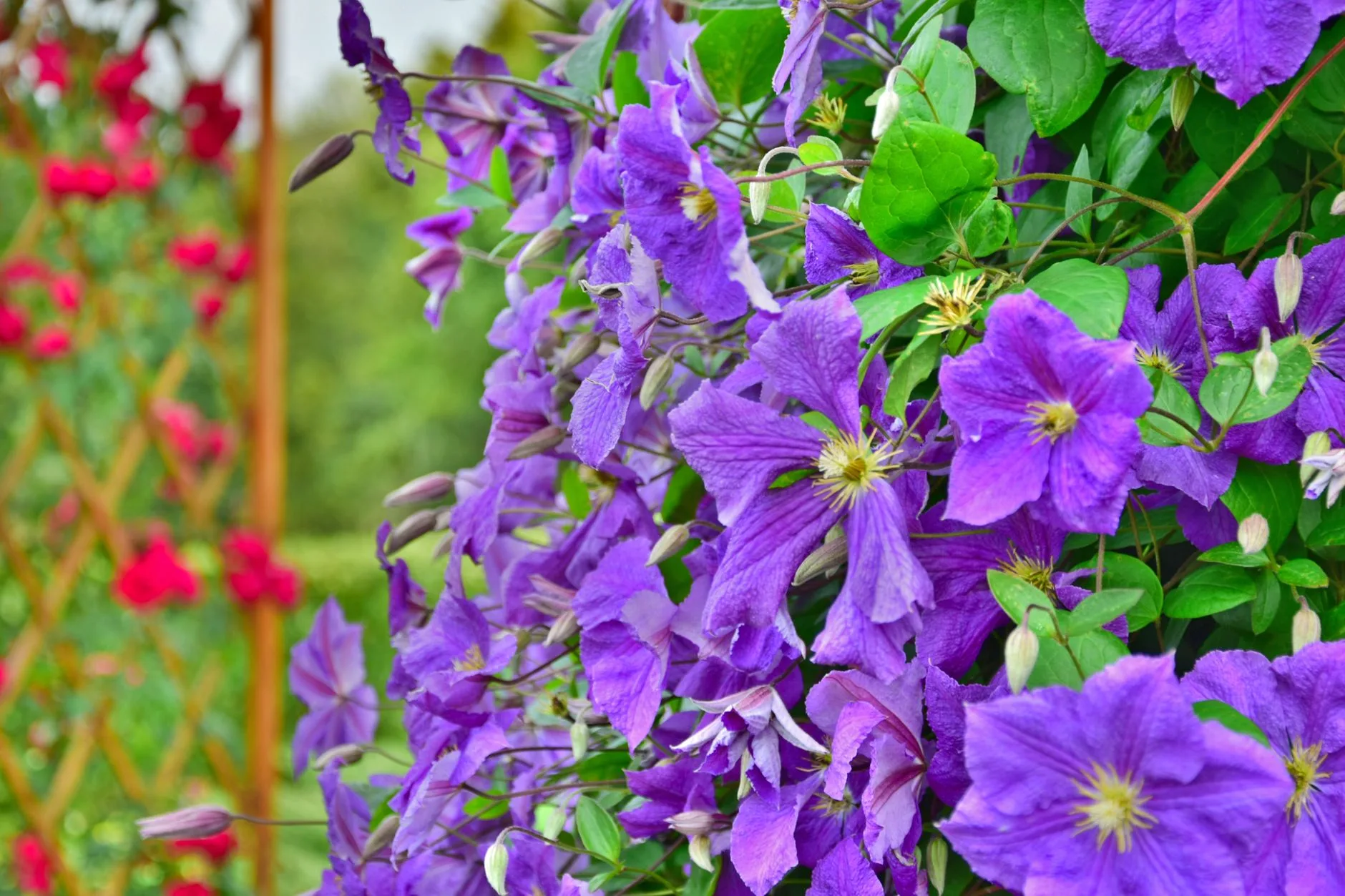
Graham Thomas honeysuckle is the most useful choice in partial shade. Clematis montana can also tolerate some shade while reaching towards light. Deep north-facing shade narrows the options and may reduce flowers; the existing guide to shade-loving plants for UK gardens is a better starting point for very dark areas.
Check Mature Size before Pot Size
The supplied pot describes what arrives, not what the plant will become. Wisteria in a 2L pot can eventually dwarf a 4L rose. Clematis montana in a 7cm pot can outgrow a short fence. Measure the available height and width, note nearby gutters and windows, and choose a plant whose mature framework can be reached for pruning.
For small plots, our small-garden ideas and low-maintenance garden design guide help judge whether a vigorous climber will save space or merely create another job.
Support Options for Fences and Walls
Fences Need Load-Spreading Support
Fix trellis or wires to posts rather than relying on thin feather-edge boards. Spread the load across several fixing points and leave room to inspect the fence. Even a light young climber gains weight when wet and becomes heavier as stems turn woody. If the fence already leans or the posts move, repair it before planting.
Walls Need an Air Gap
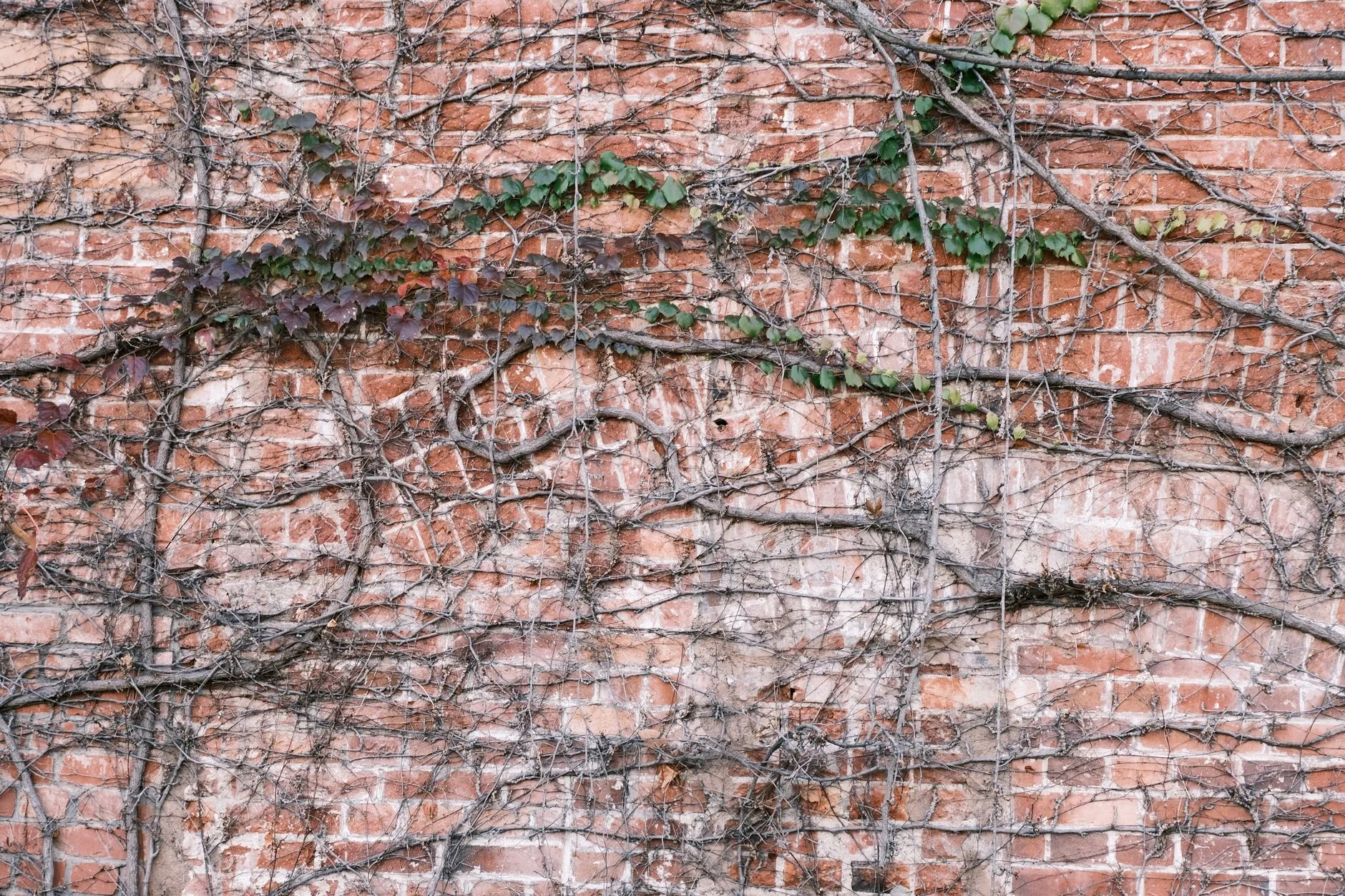
Climbers such as rose, jasmine, honeysuckle, clematis, passionflower and wisteria all need added support. The RHS guidance on training climbers recommends installing supports before planting and setting them away from the wall so stems have room. Choose masonry fixings appropriate to the wall and avoid damaging damp-proofing, services or fragile render.
Match Support to Climbing Method
- Twining stems: jasmine, honeysuckle and wisteria wind around wires or narrow supports.
- Leaf stalks: clematis grips thin mesh, wire or trellis more readily than broad timber.
- Thorny arching stems: climbing roses need tying rather than expecting them to cling.
- Tendrils: passionflower needs fine structures it can grasp.
Our comparison of the best plant supports covers trellis, obelisks and grow frames, while the garden fencing guide helps assess the boundary itself.
Planting and First-Year Care
Plant Away from the Dry Wall Base
Soil immediately against a wall is often dry and compacted. Plant far enough out for the root ball to receive rain, then angle the stems back towards the support. Improve the planting area according to the species and existing soil rather than dropping rich compost into a small isolated hole.
Water the Root Ball, Not Just the Surface
Young climbers need consistent watering during establishment, especially small 7–9cm plants and anything under eaves. Water deeply enough to reach the root ball and check the soil rather than following a rigid daily schedule. Mulch can reduce moisture loss, but keep it clear of the main stem.
Tie In Growth Early
- Install and check the support before planting.
- Guide young stems towards separate sections of wire or trellis.
- Use soft ties loosely enough to allow thickening.
- Recheck ties through the growing season and remove any that constrict stems.
Do not expect a new plant to match its product photograph in the first season. Plants sold in different months may arrive dormant, recently cut back or with limited top growth. Healthy roots and correct establishment matter more than immediate coverage.
Climbers to Handle with Care
Wisteria on Weak Structures
Wisteria is the clearest structural mismatch for ordinary fences. Its mature woody framework needs permanent, accessible support. Use it for a properly engineered pergola or sound masonry wall, not as a quick screen on ageing panels.
Self-Clinging Plants on Unsound Masonry
Ivy and climbing hydrangea can attach directly to surfaces. That can be useful on sound masonry, but it complicates inspection and may exploit existing cracks or weak mortar. This shortlist uses climbers that can be trained on a removable support, giving more control over walls and fences.
Toxic Plants and Household Access
Wisteria is harmful if eaten, and other garden plants can also irritate or cause illness. Check species-specific guidance before planting where children or pets have access, wear gloves for pruning and never assume that attractive berries, pods or fruits are edible.
The Bottom Line
The Suttons Star Jasmine in a 2L pot is the best overall climbing plant here for a sheltered sunny wall or sturdy fence. It offers evergreen foliage and scented summer flowers without the structural demands of wisteria.
Choose Clematis montana Mayleen for fast seasonal cover, New Dawn for a classic climbing rose, Graham Thomas honeysuckle for partial shade, Passiflora caerulea for a warm sheltered feature, and Wisteria Prolific only for a substantial permanent structure.
The biggest mistake is choosing from flower colour before checking mature size, aspect and support. A correctly matched plant on proper wires or trellis will outperform a more dramatic variety planted against the wrong boundary.
Frequently Asked Questions
What is the best evergreen climber for a fence?
Star jasmine is the strongest evergreen option in this shortlist for a sheltered sunny or partly shaded fence with trellis or wires. In exposed or very cold positions, foliage and winter performance may be less reliable.
Which climbing plant grows fastest for privacy?
Clematis montana can provide vigorous seasonal cover once established, but it is deciduous and needs space. Fast growth also means more pruning and stronger support.
Can I grow wisteria on a wooden fence?
A standard fence panel is not a suitable long-term support. Wisteria develops a large, heavy woody framework and is better trained on robust wires fixed to sound masonry or a substantial pergola.
What climber is best for partial shade?
Lonicera Graham Thomas honeysuckle is the clearest partial-shade choice here. Flowering may reduce in deep shade, and young plants still need moisture while establishing.
How far from a wall should I plant a climber?
Plant outside the driest strip at the wall base so the root ball can receive rain, then angle the stems towards supports. Exact spacing depends on the plant, wall and soil conditions.
Do climbing plants damage walls?
Plants trained on separate wires or trellis are easier to manage and inspect. Self-clinging plants can complicate maintenance, particularly where mortar, render or masonry is already unsound.