The best kamado BBQ accessories UK owners can buy first are not novelty racks; they are the bits that help you control heat, light charcoal cleanly, cook indirectly and protect a heavy ceramic grill from UK weather.
In This Article
- Bottom Line: The Kamado BBQ Accessories UK Owners Should Buy First
- Heat Management Accessories Make the Biggest Difference
- Fuel, Fire Starting and Airflow Kit
- Cooking Surfaces Worth Adding
- Cleaning, Protection and Storage
- Accessories I Would Skip or Delay
- How to Build a Sensible UK Accessory Budget
- Frequently Asked Questions
Bottom Line: The Kamado BBQ Accessories UK Owners Should Buy First
If you have bought a Kamado Joe, Big Green Egg, Monolith, Weber Summit Kamado or similar ceramic cooker, the first accessory spend should not be a drawer full of novelty racks. I would start with four things: an indirect heat deflector, a good thermometer, a chimney starter or reliable fire-lighting setup, and a proper cover.
That is the dull answer, but it is the right one. A kamado already sears, roasts and smokes well. The accessories that earn their place are the ones that make those jobs easier to repeat.
My first-month shortlist
For a typical UK garden setup, I would buy:
- Indirect cooking plates or deflectors: about £55 for Kamado Joe Classic plates from BBQ Land, or about £105 for a Large Big Green Egg ConvEGGtor from Big Green Egg UK.
- A chimney starter: around £22-£24 for a Weber Rapidfire from WoWBBQ, Amazon UK or specialist BBQ shops.
- A probe thermometer: about £18-£35 for a basic ThermoPro-style probe, or £70-£120 for a better multi-probe unit from Inkbird, Meater or Thermapen stockists.
- A weather cover: roughly £45-£90 depending on brand and size; do not rely on a thin universal cover if the kamado lives outside.
- Good lumpwood charcoal: about £18-£28 for a 9-10kg bag from Big K, Oxford Charcoal, Kamado Joe Big Block or restaurant-grade UK suppliers.
That is enough to make your kamado useful. It lets you grill burgers, cook chicken without burning the underside, hold low-and-slow temperatures, make pizzas and keep rain out of the hinge, vent and side shelves.
The accessory mistake is buying the exciting bits first. A rotisserie looks brilliant, and a soapstone is lovely for scallops and smash burgers, but neither fixes the basic problems most new owners have: overshooting temperature, cooking everything over direct heat, struggling to clean ash out, and leaving the grill damp through winter.
If you are still choosing the cooker itself, read the Weber vs Kamado Joe vs Big Green Egg comparison first. Brand choice affects which accessories fit, especially deflectors, baskets, covers and cooking grids.
Heat Management Accessories Make the Biggest Difference
Heat control is the point of a kamado. The ceramic body holds temperature beautifully, but it also punishes guesswork. Once the dome is too hot, it takes ages to come back down.
Indirect heat deflectors
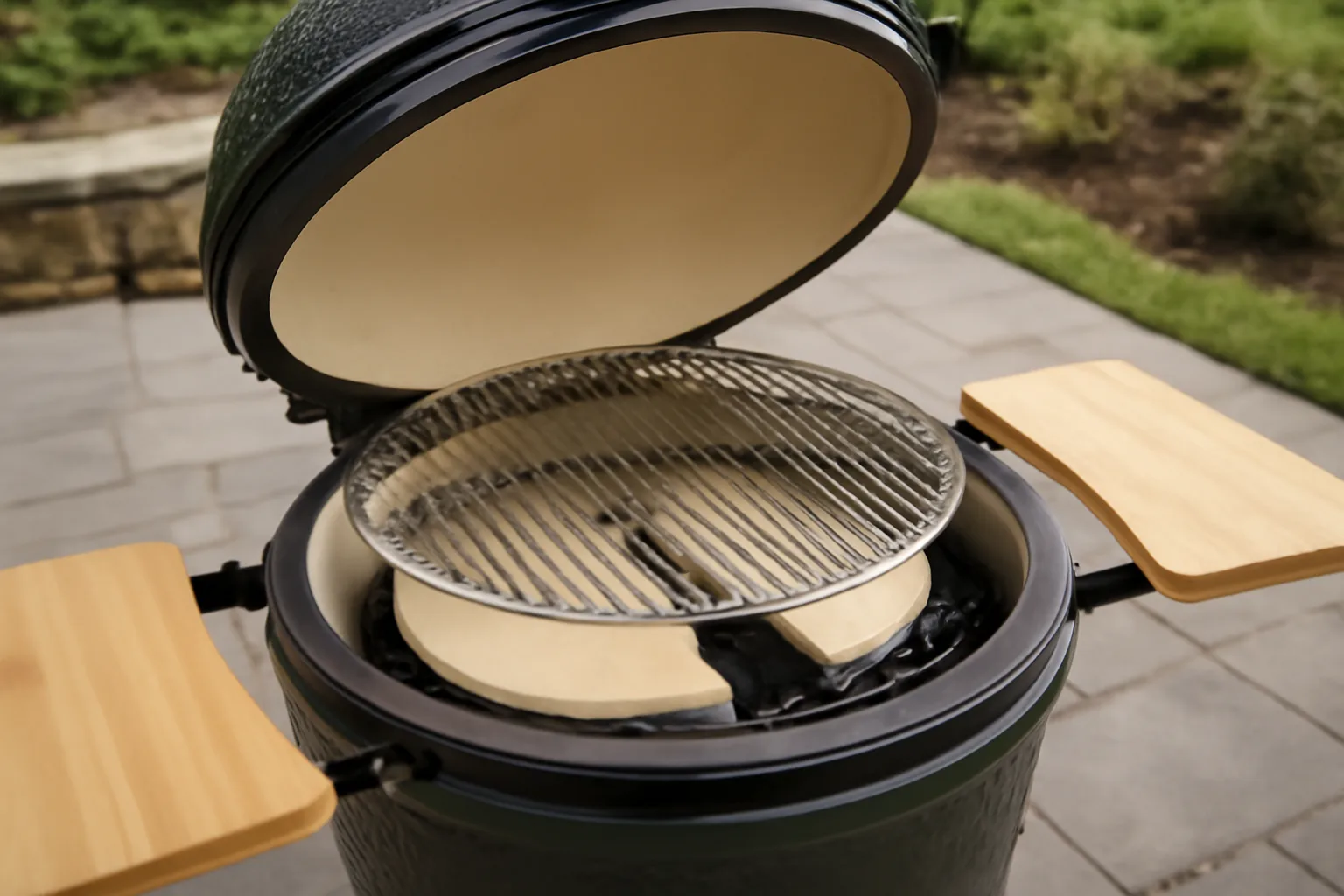
An indirect deflector is the one accessory I would treat as close to essential. It sits between the charcoal and the food, turning the kamado into more of an outdoor oven. Without it, roasting chicken, pork shoulder, brisket, ribs and bread becomes much harder because the underside gets hammered by radiant heat.
Kamado Joe Classic heat deflector plates are currently around £54.90 from BBQ Land for the pair. Big Green Egg’s UK ConvEGGtor is about £105 for the Large size, with smaller and larger sizes priced differently. Those are not cheap bits of ceramic, but they change what the cooker can do.
Big Green Egg describes the ConvEGGtor as the accessory that turns the cooker into a convection-style oven for roasting, smoking and pizza cooking, which is exactly the practical role it plays in real use: Big Green Egg UK ConvEGGtor.
Divide-and-conquer racks
Multi-level racks are useful if you regularly cook for more than four people. Kamado Joe’s Divide & Conquer system is the obvious example because it lets you run one side direct and one side indirect, or stack different surfaces at different heights.
I would not buy a rack system before the deflectors unless your grill came with one. Get used to temperature control first. Once you know how often you cook chicken thighs, steaks, sausages, vegetables and ribs together, the value of a split-level setup becomes clearer.
For a Classic Joe or Large Egg-size cooker, expect official rack or expander accessories to sit roughly in the £50-£130 range. Generic stainless racks can be cheaper, around £25-£45 on Amazon UK, but check diameter carefully. “Fits 18 inch kamado” is not the same as fitting your fire ring, deflector and cooking grid neatly.
Thermometers you can trust
The dome thermometer tells you air temperature near the lid. It does not tell you grate temperature, meat temperature or whether the chicken thighs are safe. I still use the dome gauge, but I would not rely on it alone.
A basic instant-read thermometer at £15-£25 is fine for sausages, chicken and steaks. A leave-in probe is better for pork shoulder, brisket and whole chicken. Inkbird multi-probe units often sit around £35-£70, while Meater and Thermapen options can move into the £80-£120 bracket.
After a few cooks, you learn the personality of your kamado. Mine would rather creep upwards than cool down quickly. A probe thermometer turns that from guesswork into a habit.
Fuel, Fire Starting and Airflow Kit
The accessories in this section do not look glamorous, but they decide how much faff sits between “shall we cook outside?” and food actually hitting the grill.
Lumpwood charcoal
Use proper lumpwood charcoal, not cheap briquettes full of binders. Kamados need airflow, clean heat and controllable burn. Restaurant-grade lumpwood is usually better value than tiny supermarket bags.
For UK buying, sensible options include Big K restaurant-grade lumpwood at about £20-£28 for 10-12kg, Oxford Charcoal at about £20-£30 depending on wood type and bag size, and Kamado Joe Big Block at roughly £25-£35 for a large bag. The premium bags cost more, but they usually have fewer tiny fragments and less dust.
I would rather spend an extra £8 on charcoal than fight a smoky, dusty firebox for an hour.
Chimney starter or natural firelighters
A Weber Rapidfire chimney starter is still one of the best value BBQ accessories around. WoWBBQ lists the Weber chimney starter at about £21.59, while Amazon UK often sits around £23.99. You can buy cheaper unbranded chimneys for £12-£18, but the Weber one feels sturdier and pours lit charcoal more cleanly.
Some kamado owners prefer lighting in the firebox with natural wool firelighters. That works too. A box of natural firelighters is usually £6-£12, and it avoids moving burning charcoal across the patio. For low-and-slow cooks, I often prefer firelighters placed in the charcoal bed because they let the fire spread gradually.
Do not use lighter fluid. It can taint the ceramic, smell awful and make temperature control harder. The London Fire Brigade also gives clear BBQ safety advice around keeping barbecues stable, away from fences and sheds, and never using petrol or accelerants: London Fire Brigade barbecue safety.
Charcoal baskets and ash tools
A stainless charcoal basket is not essential on day one, but it is one of the first upgrades I would consider once you cook often. It improves airflow, makes ash shake-down easier and lets you lift old charcoal out before a fresh cook.
Kamado Joe charcoal baskets often sit around £110-£150 depending on size and retailer. Generic baskets are cheaper, sometimes £45-£80, but fit matters again. A basket that jams in the firebox is not a bargain.
An ash tool is cheaper and more basic: usually £15-£30. If your kamado did not include one, buy one before you buy clever cooking surfaces. Clearing ash from the bottom vent makes low-and-slow cooks easier to control.
If your main interest is premium kamado cooking rather than general charcoal BBQs, the Kamado Joe Classic III review is a useful benchmark because it shows which accessories are bundled with a higher-end package.
Cooking Surfaces Worth Adding
Cooking surfaces are where kamado accessories get fun. This is also where people overspend.
Pizza stones
A ceramic pizza stone is worth buying if you will make pizza or flatbreads more than twice. Expect to pay about £25-£45 for generic stones and £45-£75 for official kamado-sized stones. Measure the internal diameter before buying. A stone that blocks too much airflow can make the base scorch while the top stays pale.
Use the stone with an indirect setup, not directly over raging charcoal. Give it time to heat properly. A kamado can get brutally hot, but pizza is better when the stone, dome and topping heat are in balance.
If pizza is the whole reason you are shopping, compare the kamado route with a dedicated oven in the best outdoor pizza ovens UK guide. A kamado can make excellent pizza, but a gas pizza oven is quicker for midweek cooking.
Cast iron grids and griddles
Cast iron gives better sear marks and heat retention than a thin stainless grid. It is good for steaks, burgers, lamb chops and vegetables. Official half-moon cast iron grids often sit around £45-£80. A full cast iron grid can be £70-£120.
I like cast iron, but I would not put it above a deflector or thermometer. The standard stainless grid is fine for most food. Cast iron earns its keep if you regularly sear meat or want a flat griddle surface for smash burgers, onions or breakfast cooking.
Rib racks, chicken sitters and Dutch ovens
Rib racks are useful if you cook multiple racks at once. They are usually £15-£35 and do a simple job well. Chicken sitters are more debatable. They can work, but a spatchcocked chicken over indirect heat is easier, faster and less fiddly.
A cast iron Dutch oven or smoke pot is more versatile. It can handle chilli, beans, stews, braised meat and side dishes. Prices vary widely: a basic cast iron Dutch oven might be £35-£60 from Amazon UK or kitchen retailers, while branded BBQ-specific pots can be £80-£120.
For most owners, the sensible order is pizza stone first, cast iron second, then racks or pots only when a recipe actually needs them.
Cleaning, Protection and Storage
Kamados are heavy and expensive. Looking after one is less exciting than buying a rotisserie, but it saves money.
Covers
A good cover matters in the UK because the cooker may be sitting through sideways rain, leaf mulch, frost and damp spring mornings. Ceramic can handle weather, but metal bands, hinges, shelves, vents and tables still suffer.
Official covers usually cost about £50-£90. A cheaper universal cover might be £20-£35 from Amazon UK, B&Q or garden centres. The cheap one is fine only if it fits securely and does not flap itself to pieces.
The cover needs to breathe a little. Trapped moisture is not your friend. If the kamado lives in a wooden table, check the table and wheels as often as the cooker.
Brushes, scrapers and drip trays
You do not need an aggressive wire brush. A safer scraper, wooden paddle scraper or coiled stainless brush is enough for most grids. Budget £10-£25.
Drip trays are cheap and useful. Disposable foil trays cost a few pounds, while reusable stainless trays are more like £15-£35. Put one above the deflector during fatty cooks and you will spend less time dealing with burnt grease.
Storage for accessories
Kamado accessories are awkward shapes: half-moon ceramics, grids, stones, racks and probes. Leaving them loose in the shed is how they chip.
A simple garage shelf, lidded storage box or wall hooks are enough. Budget £20-£50 at B&Q, Wickes or Screwfix. If you have a built-in outdoor kitchen, proper drawers are lovely, but not needed for a normal patio setup.
This is where the small patio ideas guide is relevant. A kamado can dominate a compact garden, so storage and working space matter more than another cooking gadget.
Accessories I Would Skip or Delay
Some kamado accessories are good, just not first purchases. Others are solving problems you may never have.
Rotisserie kits
A rotisserie is brilliant for chicken, pork and shawarma-style cooking. It is also usually £180-£300. I would buy one only after you know you use the kamado every week.
If you mostly cook burgers, steaks, sausages, vegetables, chicken thighs and occasional pizzas, spend the money elsewhere first. A spatchcocked chicken over indirect heat gets you most of the way there for no extra kit.
Branded tool sets
Long tongs and a sturdy spatula are useful. A branded three-piece BBQ tool set at £45-£80 is rarely better than buying one good pair of tongs for £12-£20 and a spatula you actually like.
The same applies to novelty claws, branded aprons and oversized forks. They make better presents than essentials.
Too many specialist surfaces
Soapstones, carbon steel woks, paella pans, fish baskets and planchas all have a place. The question is frequency. If you cook the food often, buy the accessory. If you like the idea of being the sort of person who might cook it, wait.
The best accessory is the one that changes next weekend’s cooking, not an imaginary summer menu.
How to Build a Sensible UK Accessory Budget
You can kit out a kamado in stages. That is much better than buying ten accessories on the same day and learning that half of them live in the shed.
Budget setup: about £100-£180
This is enough for a new owner who wants control without overspending:
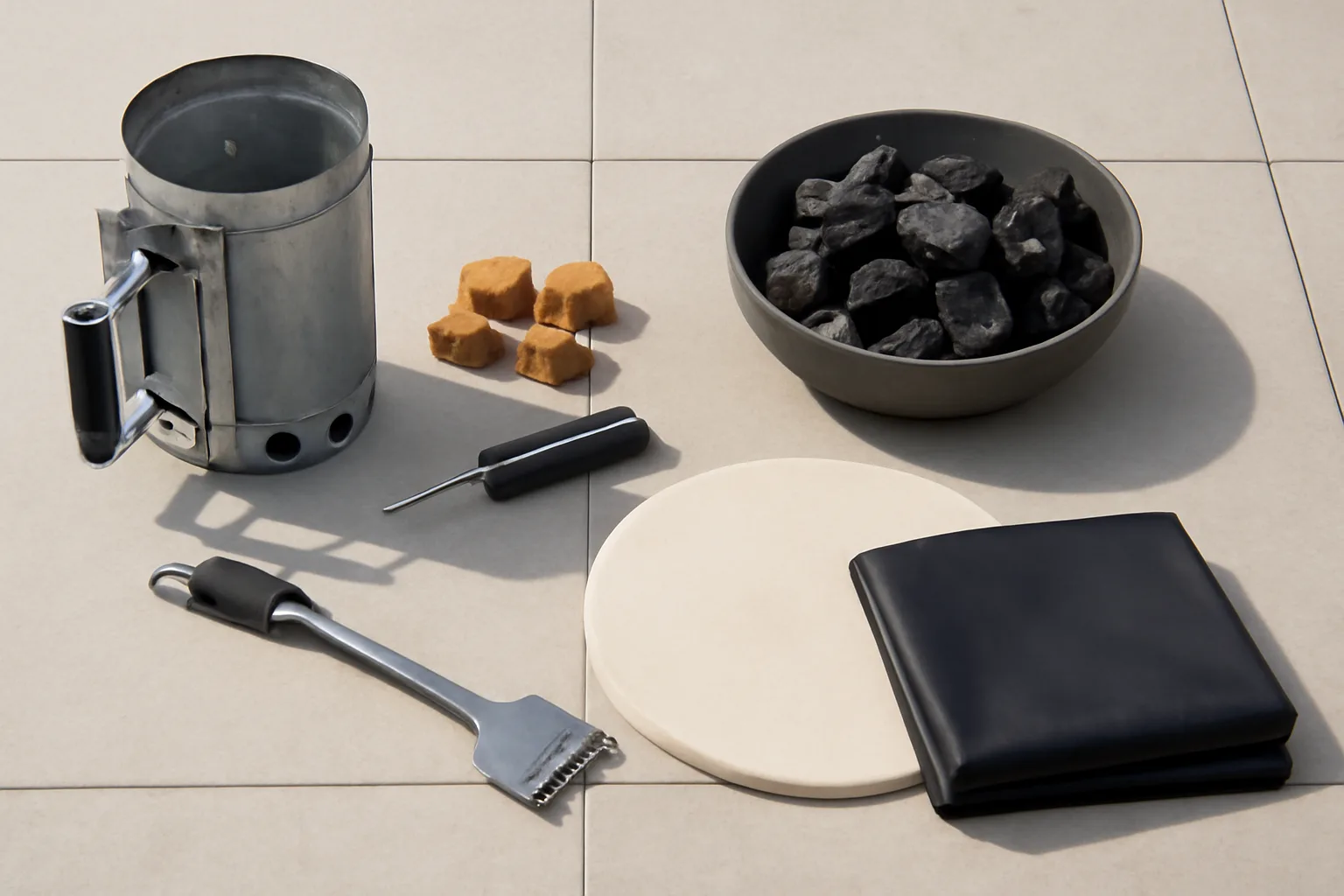
- Chimney starter or natural firelighters: £8-£24.
- Instant-read thermometer: £15-£30.
- Basic cover: £25-£45.
- Good lumpwood charcoal: £18-£28.
- Ash tool or scraper: £15-£30.
The compromise is indirect cooking. If your kamado did not include deflectors, stretch the budget for them as soon as you can.
Mid-range setup: about £250-£450
This is where most owners should land:
- Indirect deflectors: £55-£105 depending on brand and size.
- Probe thermometer: £35-£90.
- Chimney starter and natural firelighters: £25-£35 combined.
- Proper fitted cover: £50-£90.
- Pizza stone or cast iron surface: £35-£90.
- Charcoal basket or ash upgrade: £45-£150.
This setup gives you the big wins: steady indirect cooks, safer chicken, better pizza, easier lighting and less mess.
Premium setup: £600+
Premium spend makes sense if the kamado is your main outdoor cooker. Add a rotisserie, split-level racks, cast iron, soapstone, premium thermometer, fitted cover and proper storage. You can easily reach £600-£900 in accessories before you notice.
That is not mad if you cook outside all year. It is mad if you are still learning how to hold 120°C for ribs.
If you are trying to decide whether the cooker itself was worth the premium price, the Big Green Egg Large review and Weber Summit Kamado E6 review show how much brand ecosystem and included kit affect value.
The buying rule I would use
Buy accessories in this order:
- Control heat: deflectors and thermometer.
- Light and clean properly: chimney, firelighters, charcoal basket or ash tool.
- Protect the cooker: fitted cover and sensible storage.
- Expand recipes: pizza stone, cast iron, racks, rotisserie and specialist surfaces.
That order keeps the spend tied to actual cooking. You will still end up wanting more kit. Everyone does. Just make the early purchases do real work.
Frequently Asked Questions
What kamado BBQ accessories do I actually need first? Start with an indirect heat deflector, reliable thermometer, good lumpwood charcoal, a chimney starter or natural firelighters, and a weather cover. Those make the biggest difference to normal UK cooking.
Do I need a heat deflector for a kamado BBQ? Yes, if you want to roast, smoke, bake or cook low-and-slow. Without a deflector, the food sits over direct radiant heat and is much easier to burn underneath.
Are official kamado accessories worth the money? Official accessories are usually safest for fit, especially deflectors, racks, baskets and covers. Generic tools, thermometers, chimney starters and drip trays can be better value if the size is right.
What is the best kamado accessory for pizza? A ceramic pizza stone plus an indirect setup is the key pairing. Budget about £35-£75 for a suitable stone, and make sure it does not block too much airflow.
Should I buy a kamado rotisserie? Buy a rotisserie only if you already use the kamado often. At roughly £180-£300, it is a strong upgrade for frequent chicken and shawarma-style cooks, but not a first-month essential.
Can I use normal BBQ charcoal in a kamado? Use lumpwood charcoal rather than cheap briquettes. Good lumpwood burns cleaner, allows better airflow and suits kamado temperature control much better.