Most lawnmower problems start with boring neglect: wet grass left under the deck, a blunt blade, tired batteries, stale petrol or loose fixings. Keep those under control and even a modest mower from B&Q, Screwfix, Argos or Amazon UK will usually cut better, last longer and cost less to own.
In This Article
- Lawnmower Maintenance Guide: The Quick Routine
- Clean the Deck, Wheels and Grass Box
- Check and Sharpen the Blade
- Cordless, Electric and Petrol Mower Checks
- End-of-Season Storage and Spring Start-Up
- When to DIY and When to Pay for a Service
- Frequently Asked Questions
Lawnmower Maintenance Guide: The Quick Routine
This lawnmower maintenance guide is built around a simple idea: do the small jobs often, and the expensive jobs rarely. You do not need a workshop full of tools. You need ten minutes after mowing, a proper blade check a few times a season, and a sensible winter storage routine.
The maintenance schedule I would follow
For most UK gardens, this rhythm works:
- After every mow: remove loose grass, check the grass box, wipe the handles and let the mower dry before storage.
- Every 3-4 mows: clean the underside properly, check wheels, check visible cables and inspect the blade edge.
- Mid-season: sharpen or replace the blade if the lawn looks torn rather than cleanly cut.
- Autumn: clean deeply, charge or store batteries correctly, empty or stabilise petrol, and protect the mower from damp.
- Spring: inspect before first use instead of dragging it straight into long wet grass.
The RHS lawn mowing advice makes the same core point on blade condition: clean, sharp mower blades give the best cut. That is not just neatness. A blunt blade bruises grass, leaves ragged pale tips and makes the whole lawn look tired two days after mowing.
What you need
A basic mower maintenance kit costs about £20-£50 if you already own a few household tools. I would keep:
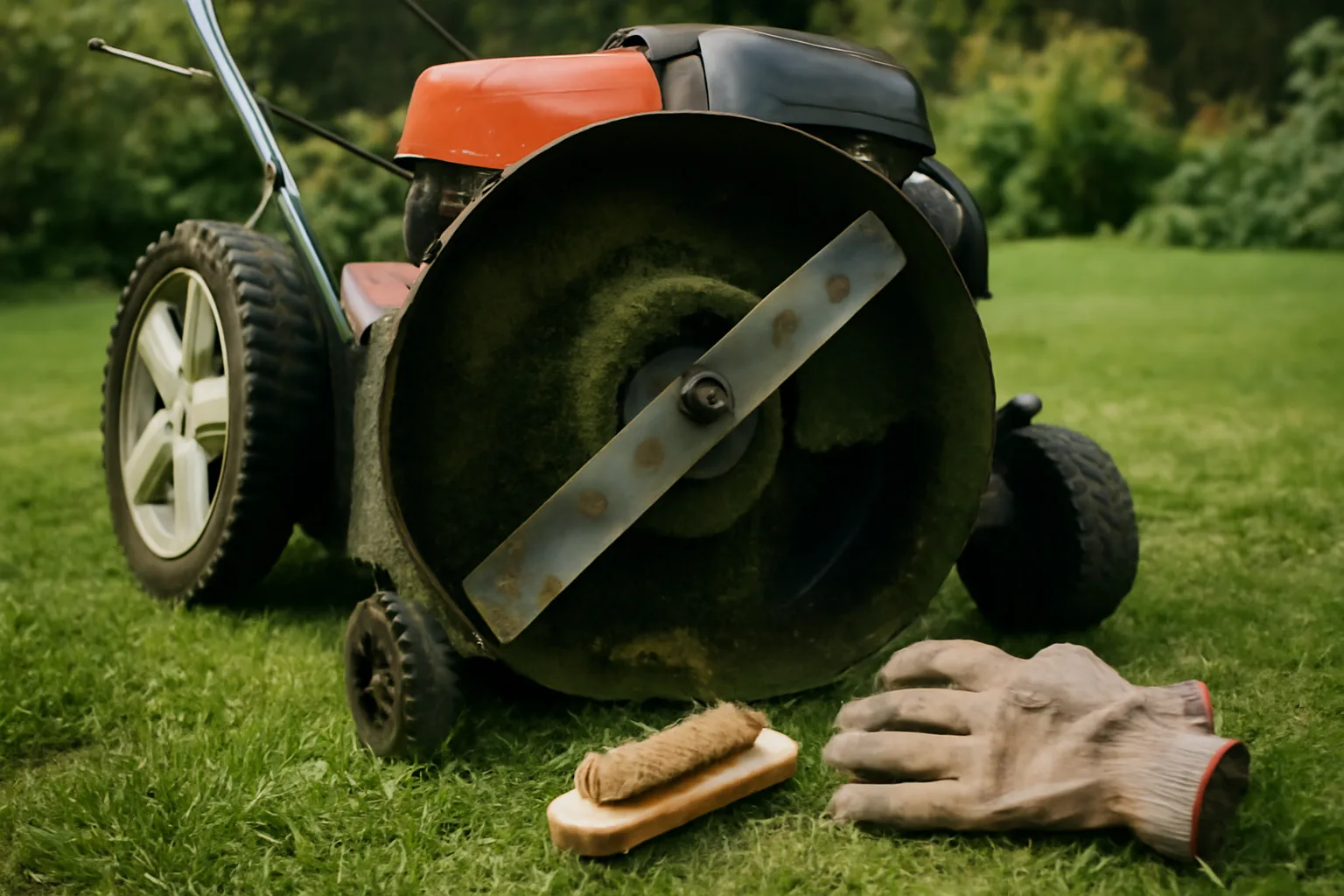
- Stiff hand brush: £4-£8 from B&Q, Screwfix or Amazon UK.
- Plastic scraper: £3-£6, safer than attacking the deck with a screwdriver.
- Work gloves: £5-£15; waterproof gardening gloves are fine for cleaning.
- Socket/spanner set: £15-£35 if you need to remove a rotary blade.
- Blade balancer or cone: about £5-£10 if you sharpen blades at home.
- Light machine oil or spray lubricant: £4-£8 for hinges, height adjusters and corrosion prevention.
Do not spend £80 on gadgets before you have bought a brush and learned how to remove compacted grass. The cheap tools do most of the work, and the safety basics in Garden Power Tool Safety: A Complete Guide are worth reading before you start removing blades or checking cables.
Clean the Deck, Wheels and Grass Box
Cleaning is the maintenance job people skip because the mower still works afterwards. Then, a month later, it starts leaving clumps, the grass box does not fill properly, and the underside smells like a damp compost bin.
After-mow cleaning
Wait until the mower is switched off, unplugged or battery removed. For a petrol mower, take the spark plug lead off before you go anywhere near the blade area. Tip the mower only in the direction recommended in the manual; petrol and oil do not enjoy being sent where they were never meant to go.
The quick clean is simple:
- Remove loose grass from the deck. Use a brush around the wheels, vents and grass chute.
- Empty the grass box properly. Wet clippings left in a fabric bag make it smell and block airflow.
- Scrape the underside lightly. A plastic scraper is enough for fresh clippings.
- Let it dry. Put the mower away dry, especially if it lives in a shed with poor ventilation.
That is enough after a normal dry mow. After a wet mow, I would spend longer. Wet grass sticks under the deck, blocks the chute and can start corrosion on metal parts.
Full underside clean
Every few mows, give the mower a fuller clean. Do not blast an electric or cordless mower with a pressure washer. It is tempting, but water and electrics are not a clever combination. Use a brush, scraper and damp cloth instead.
For cordless and electric mowers, pay attention to the air vents around the motor housing. Dust and dry grass collect there, especially on smaller Flymo, Bosch, Einhell and Mountfield machines. A blocked vent makes the motor run hotter.
For petrol mowers, clean around the deck, wheels and handle pivots. If you use the mower near borders, check for string, plant ties or netting wrapped around the axle. It sounds minor until a wheel stops turning properly halfway through a Sunday mow.
Grass box and chute
A blocked grass box makes even a good mower feel weak. Wash plastic boxes occasionally and let them dry fully. For fabric bags, shake them out and brush the mesh so air can pass through. If the box cannot breathe, clippings will not fly into it properly.
If your mower keeps leaving trails, do not assume the motor is failing. Check the chute first, then the blade, then the grass height. Often the mower is fine; it is just being asked to swallow damp, long grass through a half-blocked chute.
Check and Sharpen the Blade
The blade is where mower maintenance becomes lawn care. A sharp blade cuts. A dull blade tears. Once you have seen the difference, you stop treating sharpening as optional.
Signs the blade needs work
Look for:
- Frayed grass tips: the lawn looks pale or straw-coloured after cutting.
- Uneven finish: high and low patches appear even when the height setting is unchanged.
- Extra vibration: the mower feels harsher than normal.
- Longer mowing time: you need repeat passes over the same strip.
- Visible nicks: stone strikes and patio edges leave dents in the cutting edge.
If you have a small lawn and mow weekly in season, one sharpen a year may be enough. If you hit sticks, stones, raised edging or hidden toys, inspect it more often. No judgement; gardens are where small plastic things go to hide.
Sharpen or replace?
A replacement rotary blade is often £12-£35, depending on brand and width. Bosch, Flymo, Mountfield, Einhell and Hyundai blades are easy to find from Screwfix, B&Q, Amazon UK or specialist mower shops. Sharpening at a local garden machinery shop is commonly £10-£20 if you bring the blade in, or more if they remove it as part of a service.
DIY sharpening makes sense if the blade is only dull. Replace it if it is bent, cracked, badly chipped or heavily corroded. A bent blade can vibrate, damage bearings and leave a poor cut even after sharpening.
Safe blade removal
Before removing a blade:
- Cordless mower: remove the battery and safety key if fitted.
- Electric mower: unplug it completely and keep the cable away.
- Petrol mower: disconnect the spark plug lead and check the manual before tipping.
Wear gloves and wedge the blade with a block of wood rather than your hand. Mark the blade direction before removal if you are not confident. A blade fitted upside down is a classic DIY mistake and gives a dreadful cut.
If that sounds like a faff, pay for it. Saving £15 is not worth fighting a seized blade bolt with the wrong spanner.
Cordless, Electric and Petrol Mower Checks
Not every mower needs the same maintenance. A cordless mower is mostly about battery care and clean airflow. A corded electric mower is about cable safety and keeping moisture away. A petrol mower needs engine attention as well as blade and deck care.
Cordless battery mowers
Cordless mowers are the easiest to live with, which is why they have taken over many small and medium UK gardens. Keep the battery contacts dry, avoid leaving batteries flat for months, and store them somewhere frost-free if the manual recommends it. Replacement batteries are not cheap: expect roughly £45-£90 for smaller 18V packs and £100-£180+ for higher-capacity 36V/40V packs from brands such as Bosch, Ryobi, EGO and Greenworks.
After mowing, remove the battery before cleaning. Wipe contacts with a dry cloth if they look dusty. Do not spray water around the battery bay. If the mower cuts out under load, check grass length, deck blockage and blade sharpness before blaming the battery.
Our Cordless Garden Tools: Are They Powerful Enough? guide is useful if you are deciding whether to keep investing in a cordless platform or move back to petrol for a larger lawn.
Corded electric mowers
Corded mowers are cheap to run and simple, but the cable needs respect. Check for cuts, crushed sections and loose plug strain relief. If you find damage, stop using it. Replacement extension leads rated for outdoor use are about £20-£45, but a damaged mower cable may need a proper repair.
Keep the cable over your shoulder or behind you as you mow, and use an RCD-protected socket. If your garden has awkward corners, trees and raised beds, a corded mower can become annoying enough that you mow badly. That is not the mower’s fault, but it is a real ownership issue.
Petrol mowers
Petrol mowers reward maintenance more than any other type. Check oil level, air filter, spark plug and fuel condition. A replacement spark plug is usually £4-£10, air filters are often £6-£18, and mower oil is around £6-£12 for a small bottle. These are not expensive parts, but ignoring them can make a mower hard to start or smoky.
If the mower hunts, stalls or refuses to start after winter, stale fuel is a prime suspect. Use fresh unleaded petrol, and do not leave old fuel sitting in the tank for months unless the manufacturer says a stabiliser is suitable.
End-of-Season Storage and Spring Start-Up
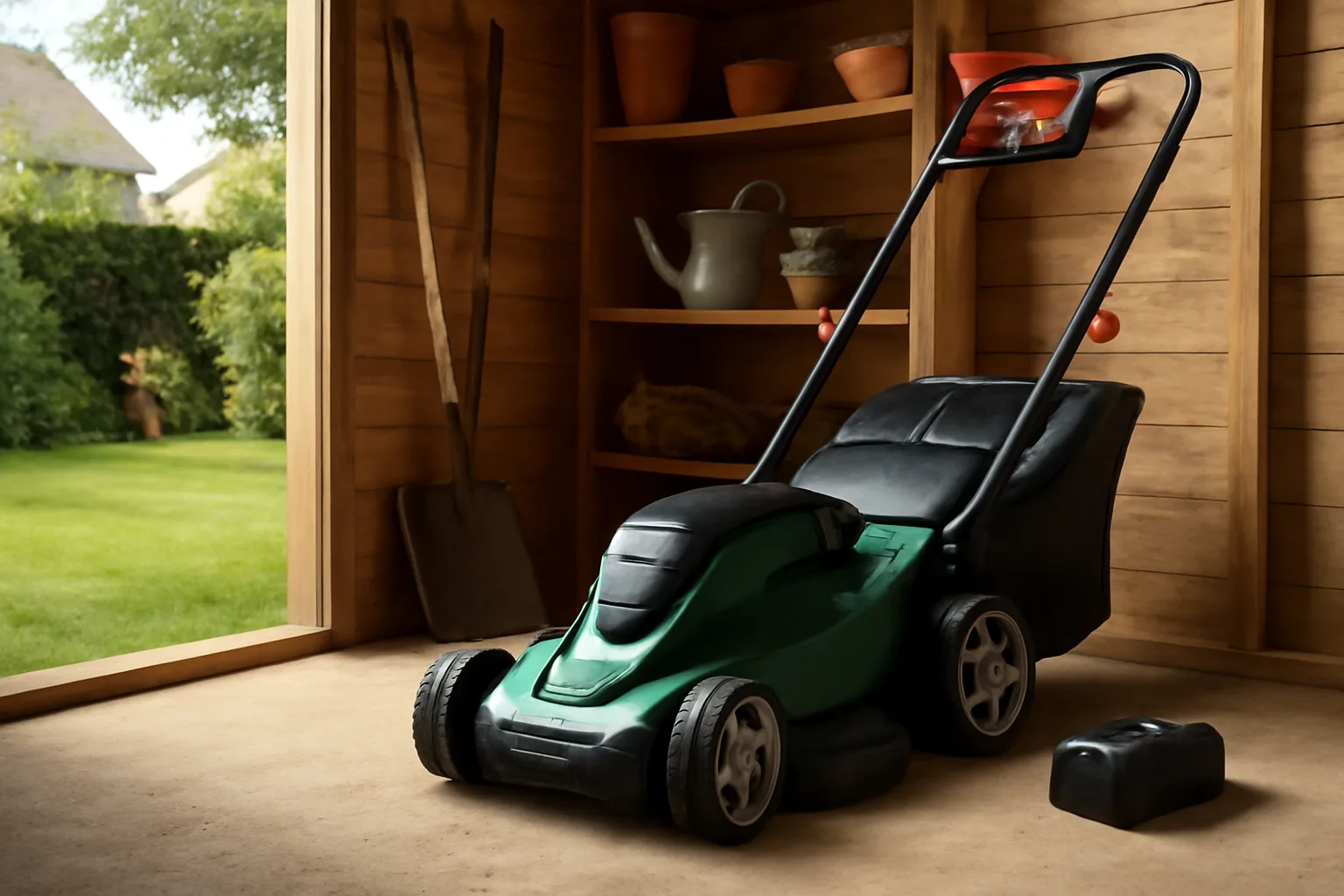
The mower that starts first pull in April is usually the one that was put away properly in October. UK sheds are damp, cold and full of spiders. Your mower needs a bit more care than “shove it behind the barbecue”.
Autumn storage
Before winter:
- Clean the mower properly. Grass left under the deck holds moisture against metal.
- Inspect the blade. Sharpen or replace now if it is obviously damaged.
- Protect bare metal. A light wipe of oil on appropriate metal areas helps prevent corrosion.
- Store batteries correctly. Follow the charger/manual guidance and keep batteries away from freezing, damp sheds where possible.
- Sort petrol fuel. Either run down, drain or stabilise fuel according to the manual.
For cordless mowers, I prefer storing batteries indoors in a utility room, garage cupboard or other dry, cool place rather than leaving them clipped into the mower in a freezing shed. EGO’s UK winter-storage advice for cordless mowers also recommends removing the battery and safety key before cleaning around the deck, which is the right level of caution for any battery mower, not just EGO models: EGO cordless lawn mower winter storage guidance.
Spring start-up
Do not make the first spring job a battle with long wet grass. Check the blade, wheels, height adjuster, cable or battery, then run the mower briefly before mowing. Start on a higher cut if the lawn has grown shaggy over winter.
If the mower sounds rough, vibrates or leaves lines, stop and inspect. Pushing on because “it nearly works” is how small maintenance becomes a replacement mower.
If spring also means sorting the rest of the garden, How to Prepare Your Garden for Spring covers the wider jobs without turning everything into one giant weekend.
When to DIY and When to Pay for a Service
You can do plenty yourself. You should not do everything yourself. The dividing line is safety, confidence and cost.
DIY jobs worth doing
Most owners can handle:
- Deck and grass-box cleaning: free, quick and high impact.
- Visual blade checks: no specialist tools needed.
- Battery contact cleaning: dry cloth only.
- Wheel and height-adjuster checks: tighten obvious loose fixings if the manual allows.
- Basic part replacement: grass boxes, handles, knobs and blades if you are confident and have the right tools.
If you already sharpen garden tools, our How to Sharpen Garden Tools at Home guide pairs well with mower blade care, though mower blades need careful balancing afterwards.
Jobs I would pay for
Pay for help if:
- The blade bolt is seized: rounding it off makes the repair worse.
- The mower vibrates after a blade strike: something may be bent.
- A petrol mower has engine trouble: carburettor, fuel and ignition faults can be tedious.
- Electrical parts are damaged: do not bodge cables, switches or battery contacts.
- You have a cylinder mower: setting and sharpening cylinder blades is specialist work.
A basic UK mower service is often about £60-£120 for a walk-behind petrol mower, with parts extra. Cordless and electric checks may be cheaper, but repairs can become uneconomic quickly on low-cost models. If a £130 mower needs a £90 repair, think carefully.
When replacement is better value
Replace rather than repair if the deck is rusted through, the motor is failing, batteries cost nearly as much as a new mower, or you bought the wrong mower for the garden. A small corded mower fighting a large, uneven lawn will always feel underpowered.
If you are at that point, read How to Choose a Lawnmower for Your Garden Size before buying again. Maintenance helps a good match last. It cannot turn the wrong mower into the right one.
Frequently Asked Questions
How often should I maintain my lawnmower? Clean loose grass after every mow, inspect the blade every few mows, and do a deeper service before winter storage and again before the first spring cut.
Should I clean my lawnmower after every use? Yes, at least lightly. Brush off loose grass, empty the grass box and let the mower dry before storage. A full underside clean can be done every few mows unless you cut wet grass.
How often should lawnmower blades be sharpened? Once per season is enough for many small UK lawns, but sharpen sooner if the grass tips look torn, the mower vibrates, or you have hit stones, edging or debris.
Can I hose down an electric lawnmower? I would avoid it. Use a brush, scraper and damp cloth instead, and keep water away from motors, switches, battery bays and cable connections.
How much does a lawnmower service cost in the UK? A basic walk-behind petrol mower service is often about £60-£120 plus parts. Blade sharpening alone may be around £10-£20 if you remove and take in the blade.
Is it worth repairing an old lawnmower? It depends on the mower value. A £20 blade or £8 spark plug is worth it; a £90 repair on a tired £130 electric mower probably is not.