You glance out the patio doors on a crisp April morning, mug in hand, and notice your lawn looks a bit lacklustre. Patches of moss, muddy puddles, and grass that seems to struggle no matter how much you mow or water. You’ve heard aeration is the answer, but you’re unsure which tools to use, when to do it, or what to do afterwards. This aerate lawn tools timing guide will walk you through everything you need to know for a healthier, greener lawn.
In This Article
- What Lawn Aeration Actually Fixes
- Best Time to Aerate in the UK
- Tools Compared
- Step-by-Step Aeration Method
- Aftercare: Feeding, Sand and Seed
- Common Mistakes
- Frequently Asked Questions
What Lawn Aeration Actually Fixes
Lawn aeration is a key maintenance task for improving the health and appearance of your grass. Over time, soil naturally becomes compacted—especially in gardens that see plenty of foot traffic, pets, or play. Compacted soil restricts the flow of air, water, and nutrients to the grass roots, resulting in poor growth, patchiness, and increased moss or weed problems.
Aeration directly addresses several common lawn issues:
- Compacted soil: By creating holes or removing plugs, aeration loosens up dense soil, allowing roots to grow deeper and stronger.
- Poor drainage: Aeration helps water move through the soil profile, reducing puddling and waterlogging after heavy rain.
- Thatch build-up: Thatch is a layer of dead grass, moss, and organic matter that can smother your lawn. Aeration breaks up this layer, improving airflow and reducing moss.
- Patchy, weak grass: By improving soil conditions, aeration encourages thicker, more resilient grass growth.
If your lawn feels hard underfoot, develops puddles after rain, or has visible moss and thatch, aeration is likely overdue. For more on identifying and solving lawn problems, the RHS lawn problems guide is a valuable resource.
Signs Your Lawn Needs Aeration
- Water pools on the surface after rain instead of soaking in.
- Grass growth is thin and patchy, especially in high-traffic areas.
- Moss and weeds are spreading, outcompeting the grass.
- The soil feels hard, and it’s difficult to push a garden fork into the ground.
- You notice a thick, spongy layer of thatch when you pull back the grass.
Best Time to Aerate in the UK
Getting the timing right is crucial for successful lawn aeration. In the UK, the best periods are early spring (March to April) and early autumn (September to October). These windows coincide with peak grass growth, so your lawn can recover quickly from the disruption.
Why Not Summer or Winter?
- Summer: High temperatures and dry spells can stress the lawn. Aerating during drought can cause the soil to dry out further, hampering recovery.
- Winter: Grass growth slows down, and the soil is often too wet or frozen. Heavy machinery can damage waterlogged ground and create ruts.
If you’re planning a wider garden refresh, consider aerating as part of your seasonal routine—see How to Prepare Your Garden for Spring for more ideas.
Quick Timing Checklist
- The soil is moist but not waterlogged.
- Grass is actively growing (not dormant).
- No frost or extreme heat is forecast in the next week.
- The lawn has been recently mown.
Regional Considerations
- In southern England, spring often arrives earlier, so aeration can start in March.
- In Scotland or northern regions, wait until April or early May, when the soil has warmed up.
- Autumn aeration is ideal after the summer heat has passed but before the first frosts—usually September to early October.
Tools Compared
Choosing the right tool for aeration depends on your lawn size, soil type, and budget. Here’s a detailed look at the main options, with practical advice for UK gardens.
Manual Aerators
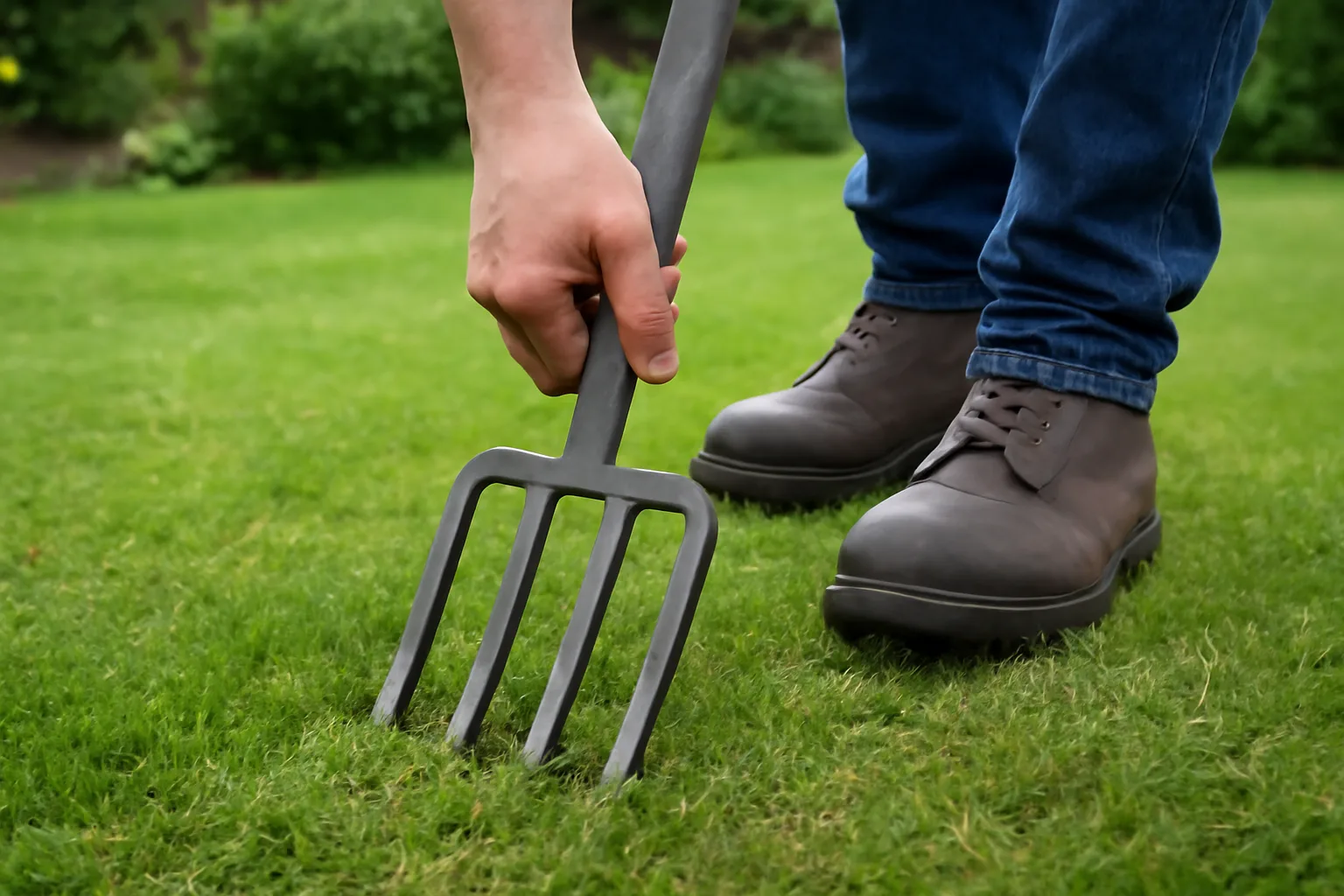
Garden Fork (£15–£30)
- How it works: Push the tines 10–15 cm into the soil and wiggle to open up the holes. Repeat across the lawn.
- Best for: Small lawns (under 100m²) or spot-treating compacted patches.
- Pros: Affordable, widely available, no maintenance.
- Cons: Labour-intensive, can be tiring for large areas, may worsen compaction if simply pushed in and out without wiggling.
Tip: For best results, insert the fork at a slight angle and rock it back and forth to open up the holes.
Hollow Tine Aerator (£30–£50)
- How it works: Removes small plugs of soil (cores) as you push it into the ground, creating channels for air, water, and nutrients.
- Best for: Small to medium lawns, especially those with heavy clay or severe compaction.
- Pros: More effective than a fork, removes thatch, improves drainage.
- Cons: Still hard work for large areas, plugs need to be collected or left to break down.
Buying advice: Look for sturdy steel construction and comfortable handles. Avoid cheap models with thin tines that bend in heavy soil.
Mechanical Aerators
Push Spike Aerator (£40–£100)
- How it works: A rolling drum with spikes punctures the soil as you push it across the lawn.
- Best for: Medium-sized lawns (100–300m²) with light to moderate compaction.
- Pros: Faster than manual tools, covers ground quickly, no fuel or electricity needed.
- Cons: Only creates holes (does not remove soil), less effective for thick thatch or heavy clay.
Practical tip: Water the lawn beforehand to soften the soil, making it easier for spikes to penetrate.
Petrol/Electric Aerator (£150–£500+)
- How it works: Motorised machines with rotating hollow tines or spikes, available as petrol or mains electric models.
- Best for: Large lawns (over 300m²), or anyone wanting to save time and effort.
- Pros: Consistent results, adjustable depth, tackles thick thatch and severe compaction.
- Cons: Expensive, noisy, requires storage space, annual maintenance, and safe handling.
Buying guidance: Petrol models offer more power for tough soils, but electric models are quieter and easier to maintain. Battery-powered aerators are becoming more popular—see Cordless Garden Tools for more on battery options.
Other Considerations
- Lawn size: Manual tools suit small spaces; mechanical aerators are better for larger gardens.
- Soil type: Clay-heavy soils need hollow tines for best results; sandy soils may only need spiking.
- Budget: Manual tools are affordable but require effort; mechanical aerators are an investment but save time.
For more on matching tools to your garden, How to Choose a Lawnmower for Your Garden Size covers similar considerations.
Where to Buy or Hire
- Garden centres and DIY stores: B&Q, Homebase, and local nurseries stock manual and mechanical aerators.
- Online: Amazon, Screwfix, and specialist lawn care retailers.
- Tool hire shops: For large or one-off jobs, hire a petrol or electric aerator from HSS Hire or Jewson for around £40–£60 per day.
Step-by-Step Aeration Method
Aerating your lawn is manageable with the right approach. Here’s a detailed guide for UK gardens:
Preparation
- Mow the lawn to a height of 2–3 cm. Shorter grass allows aeration tools to penetrate more easily and ensures aftercare products reach the soil. For mower guidance, see Best Lawnmowers 2026 UK.
- Water the lawn the day before if the soil is dry. Moist, but not soggy, soil is ideal for aeration.
- Mark obstacles such as sprinkler heads, shallow cables, or pipes with flags or sticks to avoid damaging them.
- Clear debris like sticks, stones, and toys to prevent tool damage or injury.
Aeration Process
- Choose your tool based on lawn size and soil condition.
- Work in a pattern: Start at one edge and move methodically across the lawn, overlapping each pass by a few centimetres for even coverage.
- Manual fork or hollow tine: Push tines 10–15 cm deep, spacing holes 10–15 cm apart. For hollow tines, remove plugs as you go.
- Mechanical aerator: Set the depth according to the manufacturer’s instructions (usually 10-15 mm for spiking, 30-50 mm for hollow tines). Move slowly so the machine has time to punch or remove cores properly.
- Remove soil plugs if using a hollow tine aerator. You can leave them on the surface to break down naturally or rake them up for a tidier finish.
Safety Tips
- Wear sturdy boots and thick gloves to protect your feet and hands from sharp tines.
- Avoid using power tools on steep slopes or waterlogged ground to prevent slips and machine damage.
- Keep children and pets indoors during aeration.
- For petrol or electric aerators, follow all manufacturer safety instructions and check cables or fuel lines before use.
Special Considerations for UK Lawns
- Clay soils: Use hollow tine aerators for best results, and consider top dressing with sand afterwards.
- Sandy soils: Spiking may be sufficient, but avoid over-aerating as sandy soils drain quickly.
- Shaded lawns: Aerate in early autumn to encourage thicker growth before winter.
Aftercare: Feeding, Sand and Seed
Aeration opens up the soil, making it the perfect time to boost your lawn’s health. Proper aftercare ensures you get the most from your efforts.
Feed
- Apply a lawn fertiliser immediately after aeration. Choose a spring formula (high in nitrogen) in March–April, or an autumn formula (higher in potassium and phosphorus) in September–October.
- Granular feeds are easy to spread and provide steady nutrients. Expect to pay £10–£25 for a 10kg bag, enough for most average UK lawns.
- Spreading tips: Use a lawn spreader for even coverage, or scatter by hand for smaller areas. Avoid over-applying, which can burn the grass.
Sand and Top Dressing
- Top dressing improves soil structure and drainage. Use a mix of sharp sand, loam, and compost. For heavy clay soils, increase the sand proportion.
- Application: Spread a thin layer (5–10 litres per m²) over the lawn, then brush it into the holes using a stiff broom or the back of a rake.
- Benefits: Top dressing helps break up clay, smooths out bumps, and encourages new root growth.
Caution: Only apply top dressing when the lawn is dry to avoid smothering the grass.
Overseeding
- Sow grass seed over bare or thin patches immediately after aeration. Use a UK-appropriate seed mix—fine fescues for shade, ryegrass for hard-wearing lawns.
- How to sow: Scatter seed at the recommended rate (usually 25–35g per m²), lightly rake into the soil, and press down with the back of a rake or by walking over the area.
- Watering: Keep the area moist for 2–3 weeks to help seeds germinate and establish.
Tip: For best results, overseed in autumn when soil is warm and rainfall is more reliable.
Watering
- Water the lawn gently after feeding and overseeding.
- Keep the soil consistently moist (but not waterlogged) for 2–3 weeks.
- Avoid heavy foot traffic on the lawn until new grass is established.
For more on low-effort lawn care, How to Design a Low-Maintenance Garden in the UK has practical ideas.
Ongoing Maintenance
- Mowing: Wait until new grass reaches 5–7 cm before mowing, and use a high setting for the first few cuts.
- Weed control: Avoid using weed killers for at least 6 weeks after overseeding, as young grass is sensitive.
- Monitor progress: Look for thicker, greener growth within 4–6 weeks. If patches persist, repeat overseeding as needed.
For in-depth seasonal guidance, the RHS lawn care advice page is a trusted resource.
Common Mistakes
Aeration is a simple process, but a few common mistakes can reduce its effectiveness or even harm your lawn.
Mistakes to Avoid
- Aerating when soil is too dry or too wet: Hard, dry soil is tough to penetrate and can damage tools. Waterlogged soil is easily compacted and may be damaged by heavy equipment.
- Using the wrong tool: Spiking alone can worsen compaction in clay soils. Hollow tines are better for removing plugs and relieving compaction.
- Skipping aftercare: Failing to feed, top dress, or overseed wastes the opportunity to improve your lawn.
- Over-aerating: Aerating more than once a year (except in extreme cases) can stress the lawn and damage roots.
- Ignoring safety: Power tools and sharp tines require careful handling. Always follow safety guidelines and keep children and pets away.
- Neglecting to mark obstacles: Striking hidden pipes or cables can cause injury and expensive repairs.
- Not cleaning tools: Soil and debris left on tools can cause rust and reduce their lifespan. Clean and dry all equipment after use.
Troubleshooting
- Poor results after aeration: Check if the soil was too dry or wet, or if the holes were too shallow. Repeat aeration at the correct time and depth.
- Weeds or moss increase: This can happen if aftercare is skipped. Apply a moss killer or weed treatment before aeration if needed, and always follow up with feeding and overseeding.
Frequently Asked Questions
How often should I aerate my lawn in the UK? Most UK lawns benefit from aeration once a year, typically in spring or autumn. Heavily used or clay soils may need it twice yearly.
Can I aerate my lawn with just a garden fork? Yes, a garden fork works for small areas, but a hollow tine aerator is more effective for relieving compaction and removing thatch.
Should I mow before or after aerating? Mow before aerating so the tines can penetrate easily and aftercare products reach the soil better.
Do I need to remove the soil plugs after hollow tine aeration? You can leave them to break down naturally, but raking them up gives a neater finish and helps with overseeding.
What’s the best weather for aerating a lawn? Choose a mild day when the soil is moist but not waterlogged, and avoid frosty or very hot conditions.