You’re standing in front of an overgrown shrub with a pair of kitchen scissors and a vague sense that this isn’t the right tool. It’s not. But figuring out whether you need secateurs, loppers, or a pruning saw isn’t as obvious as the gardening aisle at B&Q makes it look — they’re all cutting tools, they all look roughly similar from a distance, and the price ranges overlap enough to confuse anyone who isn’t already a confident gardener.
In This Article
- The Simple Rule
- Secateurs Explained
- Loppers Explained
- Pruning Saws Explained
- Head-to-Head Comparison
- Which Tool for Which Job
- Bypass vs Anvil: The Cutting Mechanism
- What to Spend
- Brands Worth Buying
- Maintenance and Sharpening
- Safety Basics
- Building Your Pruning Toolkit
- Frequently Asked Questions
- The Bottom Line
The Simple Rule
It comes down to thickness:
- Secateurs — branches up to 2cm thick (about thumb width)
- Loppers — branches from 2cm to 5cm thick (thumb to wrist width)
- Pruning saws — branches over 5cm thick (anything a lopper struggles with)
That’s it. Everything else — handle length, cutting mechanism, brand — is detail that refines this basic rule. If you remember nothing else from this article, remember the thickness guide.
Secateurs Explained
Secateurs are the most-used tool in any gardener’s kit. They’re handheld, one-handed cutting tools designed for precise work on small stems, shoots, and branches.
What They’re For
- Deadheading flowers — removing spent blooms to encourage new growth
- Light pruning — trimming rose bushes, shaping herbs, cutting back perennials
- Harvesting — cutting stems of flowers, herbs, and small fruit
- Tidying — snipping wayward shoots, cleaning up after heavier pruning work
How They Work
You hold them in one hand and squeeze. The blade passes through the stem cleanly, like scissors through paper. Good secateurs cut with minimal effort on stems up to 2cm — the moment you’re squeezing hard, you’ve exceeded their range and need loppers.
Types of Secateurs
- Bypass secateurs — two curved blades that slide past each other, like scissors. Clean cut, minimal damage to living tissue. The default choice for most gardening
- Anvil secateurs — one sharp blade cuts down onto a flat surface (the anvil). More force for less effort, but crushes stems slightly. Better for dead wood than live plants
- Ratchet secateurs — anvil design with a ratchet mechanism that cuts in stages. Each squeeze advances the blade incrementally. Designed for people with reduced hand strength or arthritis
Size and Comfort
Secateurs come in different sizes — most brands offer a small, medium, and large. This isn’t about cutting capacity; it’s about hand size. A pair of large secateurs in small hands causes fatigue and blisters. A pair of small secateurs in large hands cramps your grip. Try them in the shop if you can. The handle should sit comfortably in your palm with your fingers wrapping naturally around the grip without stretching.
Loppers Explained
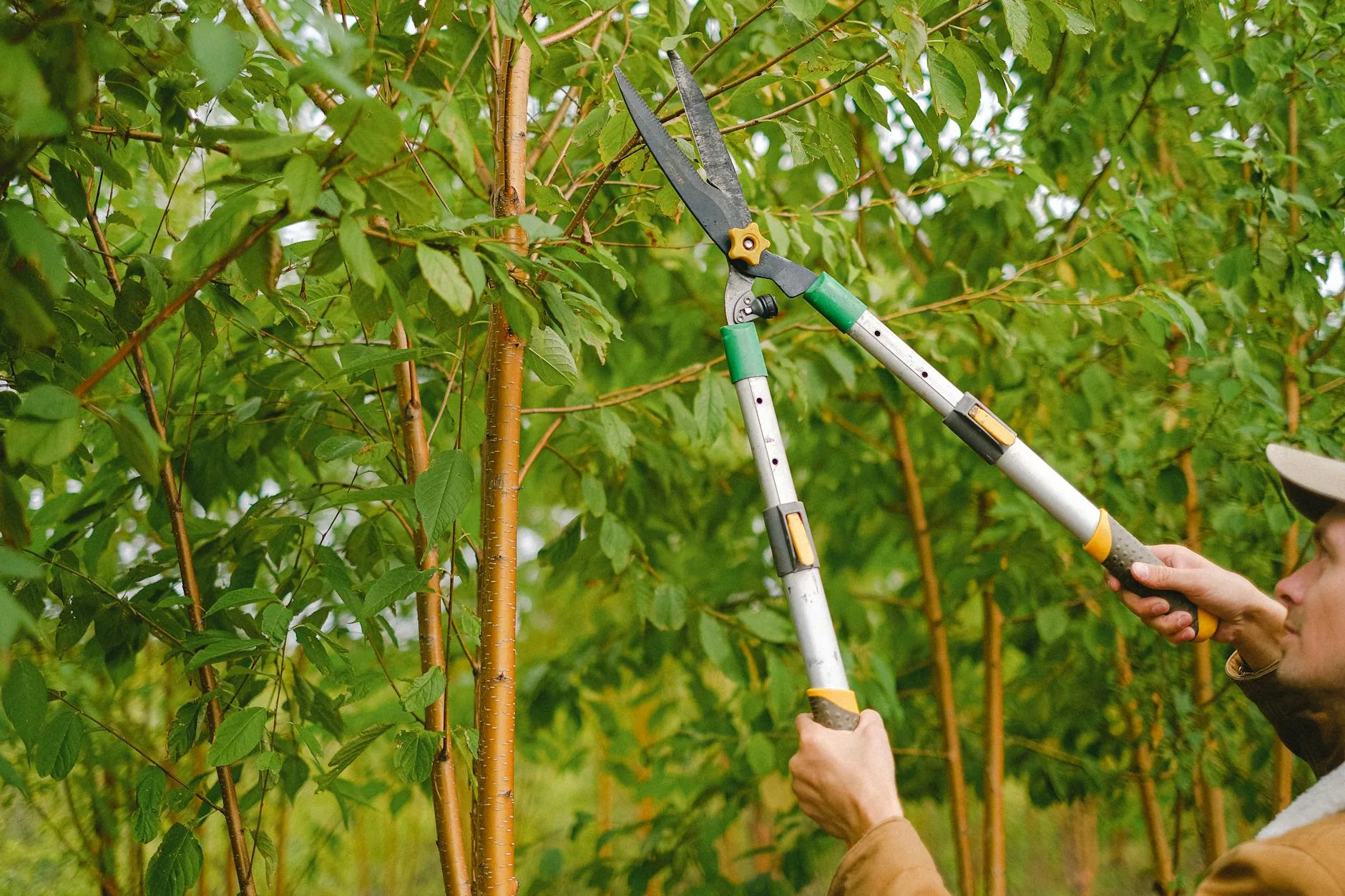
Loppers are essentially secateurs on long handles. The extended reach and leverage let you cut thicker branches and access areas that secateurs can’t reach.
What They’re For
- Medium branch removal — cutting branches from 2-5cm thick on trees and large shrubs
- Overhead work — reaching branches above head height without a ladder (on telescopic models)
- Clearing overgrowth — tackling neglected hedges, brambles, and woody growth that’s too thick for secateurs
- Shaping large shrubs — removing internal branches to improve airflow and light penetration
How They Work
Two hands, one on each handle. The long handles — typically 45-80cm — provide the leverage to cut through branches that would require dangerous force with secateurs. Some models have geared or compound mechanisms that multiply your cutting force further.
Types of Loppers
- Bypass loppers — same principle as bypass secateurs, scaled up. Clean cuts on live wood. The standard choice
- Anvil loppers — one blade against a flat plate. More cutting force with less effort, ideal for dead or dried wood
- Geared/compound loppers — internal gear mechanisms multiply force by 3-5x. Cut through 5cm branches with the effort of cutting 2cm. Heavier and more expensive but transformative for anyone who finds standard loppers tiring
- Telescopic loppers — handles extend from about 45cm to 90cm+. Adjustable reach for overhead work without needing a ladder
Handle Length Matters
Longer handles = more leverage = easier cutting of thick branches. But longer handles are heavier and harder to control precisely. For most garden work, 60-70cm handles hit the sweet spot. Go longer (80cm+) only if you’re regularly cutting overhead or dealing with branches at the top end of the 5cm range.
Pruning Saws Explained
When loppers reach their limit — usually around 5cm branch thickness — a pruning saw takes over. These are purpose-designed saws for cutting live and dead wood on trees and large shrubs.
What They’re For
- Thick branch removal — branches from 5-15cm that no lopper can handle
- Tree pruning — removing side branches, reducing canopy, and crown thinning
- Renovation pruning — cutting back heavily overgrown trees and large shrubs to reshape them
- Storm damage cleanup — removing broken branches safely
How They Work
Pruning saws have aggressive, curved teeth designed to cut on the pull stroke (the opposite of a woodworking saw, which cuts on the push). This design pulls the blade into the wood, making it easier to control with one hand while your other hand stabilises the branch. The curved blade follows the natural arc of your arm motion.
Types of Pruning Saw
- Folding saws — the blade folds into the handle, like a pocket knife. Safe to carry, compact to store. The most popular type for home gardeners. Blade lengths of 15-25cm cover most jobs
- Fixed-blade saws — the blade doesn’t fold. Stronger, more rigid, better for heavy work. Preferred by arborists but overkill for most garden use
- Pole saws — the saw blade attaches to an extendable pole for reaching high branches from the ground. Manual pole saws cost about £30-60; battery-powered versions cost £100-250
When to Use a Chainsaw Instead
If you’re regularly cutting branches over 15cm thick, or removing entire trees, a pruning saw becomes impractical. At that point, you need a chainsaw — or more likely, a qualified tree surgeon. The HSE guidance on tree work recommends that non-professionals avoid using chainsaws above ground level, and for good reason.
Head-to-Head Comparison
- Max branch thickness — Secateurs: ~2cm / Loppers: ~5cm / Pruning saw: 15cm+
- Hands required — Secateurs: one / Loppers: two / Pruning saw: one (sometimes two for stability)
- Precision — Secateurs: high / Loppers: moderate / Pruning saw: lower
- Effort required — Secateurs: low / Loppers: moderate / Pruning saw: moderate to high
- Reach — Secateurs: arm’s length / Loppers: extended arms / Pruning saw: arm’s length (or pole-mounted)
- Weight — Secateurs: 200-300g / Loppers: 700-1,500g / Pruning saw: 200-500g
- Price range — Secateurs: £8-50 / Loppers: £15-70 / Pruning saw: £10-50
Which Tool for Which Job
Roses
Secateurs for everything except thick old stems at the base. Bypass secateurs give the cleanest cut that heals fastest. For mature roses with woody stems over 2cm, reach for the loppers.
Fruit Trees
All three. Secateurs for light shaping and removing small side shoots. Loppers for medium branches when thinning the canopy. Pruning saw for removing larger branches during winter pruning. The RHS pruning guide recommends the three-cut method for any branch thicker than 5cm to prevent bark tearing.
Hedges
Secateurs for formal box hedging where you need precision. Loppers for informal hedges with woody stems. For long runs of formal hedging, a hedge trimmer is faster, but secateurs handle the detail work that trimmers miss.
Perennials and Grasses
Secateurs only. Cutting back perennials in autumn or spring is secateur work — nothing is thick enough to need loppers, and a saw would be absurd.
Large Shrubs
Loppers for most of the structural work, secateurs for fine-tuning the shape. If the shrub has stems thicker than 5cm at the base (common in buddleia, forsythia, and old laurel), bring the pruning saw for those.
Dead Wood
Anvil tools here. Bypass blades can get damaged on dry, hard wood. Anvil secateurs for thin dead stems, anvil loppers for thicker dead branches. The crushing action doesn’t matter on dead tissue — plant health isn’t a concern.
Bypass vs Anvil: The Cutting Mechanism
This is the most important technical choice after deciding which tool type you need.
Bypass — The Default
Two blades slide past each other, creating a clean, scissor-like cut. The cut surface is smooth, which means the wound heals quickly and disease entry points are minimal.
- Use for: All live wood pruning. Roses, fruit trees, shrubs, perennials — anything actively growing
- Downsides: Blades can twist or spring apart on very hard wood. Less effective on dead, dry branches
Anvil — The Alternative
One sharp blade cuts down onto a flat metal plate. The action is more like a chopper than scissors. It crushes the stem slightly as it cuts.
- Use for: Dead wood removal. Dried stems. Tough, woody material that isn’t actively growing
- Downsides: Crushes living tissue, creating a ragged wound that heals slowly and invites disease. Never use on live stems if you care about plant health
The Simple Rule
Live wood = bypass. Dead wood = anvil. If in doubt, buy bypass — it works on both, just with slightly more effort on dead wood.
What to Spend
Secateurs
- Budget (£8-15): Functional but uncomfortable for extended use. Blades dull quickly. Fine for occasional light work
- Mid-range (£15-30): Good steel, comfortable handles, holds an edge. This is where most gardeners should buy. Expect 5-10 years of regular use
- Premium (£30-50): Professional-grade. Replaceable blades, ergonomic handles, superior steel. Worth it if you garden frequently
Loppers
- Budget (£15-25): Adequate for occasional use. Handles may flex under heavy load. Blades are harder to sharpen
- Mid-range (£25-45): Solid construction, comfortable grips, good cutting capacity. The sweet spot
- Premium (£45-70+): Geared mechanisms, carbon fibre handles, replaceable blade heads. For serious gardeners or professionals
Pruning Saws
- Budget (£10-20): Work fine for occasional use. Blades are typically non-replaceable
- Mid-range (£20-35): Better tooth geometry, more comfortable grip, replaceable blades. Good value
- Premium (£35-50+): Japanese-style triple-ground teeth, superior cutting speed. The Silky range is the benchmark
Brands Worth Buying
The Reliable Choices
- Felco — the gold standard for secateurs. Swiss-made, every part replaceable, built to last decades. The Felco 2 (about £45) is the model every professional gardener knows
- Bahco — Swedish brand, excellent loppers and secateurs. Good value for quality
- Spear & Jackson — British brand, solid mid-range tools. The Kew Gardens range is particularly good
- Silky — Japanese pruning saws with exceptional cutting performance. More expensive but cut faster and cleaner than anything else at the price
- Fiskars — Finnish brand, good all-rounders. Their PowerGear loppers with geared mechanism are popular for good reason
- Niwaki — Japanese-inspired garden tools. Beautiful, functional, and backed by excellent customer service
Brands to Avoid
Unbranded tools from market stalls and pound shops. The steel is soft, the handles crack, and the pivot bolts loosen within weeks. A £5 pair of secateurs costs more in frustration than a £20 pair costs in money.
Maintenance and Sharpening
A sharp tool cuts better, requires less effort, and makes cleaner wounds that heal faster. A blunt tool crushes tissue, tires your hands, and damages plants.
After Every Use
- Wipe the blades with a cloth to remove sap and plant residue
- If cutting diseased material, clean the blades with methylated spirits between plants to prevent spreading infection
- Store in a dry place — a tool roll, shed hook, or holster
Monthly During Growing Season
- Sharpen the cutting blade with a diamond file or whetstone. Ten strokes on the bevelled edge at the original angle is usually enough
- Oil the pivot bolt and spring mechanism with light machine oil or WD-40
- Check for loose bolts and tighten as needed
Annual Service
- Disassemble, clean thoroughly, and oil all metal parts
- Replace worn springs, bumpers, and bolts (most quality brands sell spare parts)
- Sharpen both sides of the blade or replace it if the edge is chipped or worn beyond repair
- Rub wooden handles with linseed oil
Safety Basics
Pruning tools are sharp enough to remove fingers. They deserve respect.
General Rules
- Cut away from your body — never pull a blade toward yourself
- Keep tools sharp — blunt tools slip. Sharp tools cut where you aim them
- Wear gloves — leather or thorn-proof gloves protect against thorns, splinters, and the occasional missed cut
- Eye protection for overhead work — sawdust and debris fall directly toward your face when cutting above head height
- Don’t overreach — if you can’t comfortably reach a branch, use a longer tool or a ladder. Stretching with a sharp tool is how accidents happen
- Check for power lines — before using pole saws or telescopic loppers near overhead cables
Working at Height
If a branch can only be reached from a ladder, consider whether it’s a job for a professional. Cutting with one hand while balancing on a ladder is dangerous for amateurs. The spring garden preparation guide covers the seasonal pruning jobs you can safely tackle yourself.

Building Your Pruning Toolkit
The Starter Set (Under £50)
- One pair of bypass secateurs (about £15-25)
- One folding pruning saw (about £15-20)
- Total: about £30-45
This handles 80% of garden pruning. Add loppers when you find yourself struggling with branches too thick for secateurs.
The Complete Set (Under £120)
- Bypass secateurs — Bahco PX-M2 or Felco 2 (about £25-45)
- Bypass loppers — Fiskars PowerGear or Spear & Jackson Kew Gardens (about £25-40)
- Folding pruning saw — Silky Gomboy or Bahco Laplander (about £25-35)
- Total: about £75-120
This covers every pruning job in a typical UK garden, from deadheading roses to removing 10cm branches from an apple tree.
The “Nice to Have” Additions
- Anvil secateurs for dead wood (about £15-25)
- Telescopic loppers for overhead work (about £35-50)
- Ratchet secateurs if you have hand strength issues (about £15-25)
- Pole saw for high branches without a ladder (about £30-60)
Frequently Asked Questions
Can I use secateurs instead of loppers? Only on branches under 2cm thick. Forcing secateurs through thicker branches damages both the tool and the plant. The blade can twist, the pivot bolt loosens, and the crushed stem creates a wound that heals poorly. If you’re squeezing hard, switch to loppers.
Do I need both bypass and anvil secateurs? One pair of bypass secateurs handles most garden tasks. Adding anvil secateurs is useful if you regularly clear dead wood — they cut dried, hard stems with less effort than bypass. But if you’re buying just one pair, make it bypass.
How often should I sharpen my secateurs? Sharpen whenever you notice the cut quality declining — stems tearing instead of slicing cleanly, or needing more force than usual. For regular gardeners, that’s roughly monthly during the growing season. A quick pass with a diamond file takes two minutes and makes an immediate difference.
When is the best time to prune in the UK? It depends on the plant. Deciduous trees and shrubs are best pruned in late winter (January-February) while dormant. Spring-flowering shrubs should be pruned immediately after flowering. Summer-flowering shrubs are pruned in late winter or early spring. Roses are typically pruned in March. Check the RHS website for species-specific guidance.
Are expensive secateurs worth it? The jump from £8 to £25 is worth every penny — better steel, comfortable handles, and a tool that lasts years instead of months. The jump from £25 to £50 gives you replaceable parts and premium ergonomics, which matter if you garden frequently. Beyond £50, you’re paying for prestige or professional durability that most home gardeners don’t need.
The Bottom Line
You don’t need a shed full of pruning tools. A good pair of bypass secateurs and a folding pruning saw handle the vast majority of garden pruning for under £50. Add loppers when branches consistently exceed what your secateurs can manage — which, for most gardens, happens the moment you tackle a mature shrub or fruit tree.
Buy the best secateurs you can afford (they’re in your hand every time you garden), mid-range loppers, and a decent folding saw. Sharpen them regularly, clean them after use, and they’ll outlast several sets of cheap alternatives. The plants will thank you too — clean cuts heal faster than crushed ones, which means healthier growth and fewer disease problems in the long run.
Keep reading on Plot & Patio: How to Choose the Right Wheelbarrow for Your Garden, Hedge Trimmer Guide: How to Choose and Use Safely, How to Choose a Garden Shredder, How to Choose a Leaf Blower: Electric vs Petrol vs Battery.