Small garden design works best when you stop trying to fit a big garden into a small plot. A compact UK garden needs fewer ideas, better edited: one clear purpose, tidy boundaries, layered planting, furniture that fits, and lighting that makes the space usable after work. Get those right and even a narrow terrace garden or new-build patio can feel deliberate rather than squeezed.
In This Article
- Start with the job the garden has to do
- Make boundaries earn their keep
- Use one clear route and one main level change
- Plant in layers, not in scattered pots
- Choose furniture and storage that fit the plan
- Add lighting, privacy and heat without annoying the neighbours
- Build the design in the right order and budget
- Frequently Asked Questions
Start with the job the garden has to do
The best small garden design ideas UK homeowners can use are usually boring at the start. Before buying planters, tiles or a bistro set, decide what the garden is mainly for. One strong answer beats five half-answers.
A 5m x 6m garden cannot be a proper dining area, football pitch, veg plot, hot tub deck, dog toilet, sun terrace and wildlife meadow all at once. It can do two or three jobs well if the design is honest. For most UK homes, the winning mix is one main use, one secondary use and one bit of planting that softens the hard edges.
Pick the primary use
Choose the one sentence that matters most:
- Eating outside: prioritise a table, level surface, shade and route from the kitchen.
- Quiet sitting: prioritise privacy, comfortable chairs, planting around eye level and evening lighting.
- Children: prioritise sightlines, non-slip surfaces, storage and tough planting.
- Growing: prioritise sun, water access, raised beds or large containers.
- Low maintenance: prioritise permanent structure, fewer pot sizes and plants that do not sulk.
If you want a deeper family-safe version, our child-friendly garden guide owns that topic. If maintenance is the real driver, use the low-maintenance garden design guide before spending on decorative extras.
Measure before moodboarding
Measure the width, depth, door positions, drain covers, steps, fence height and sunniest patch. Then mark the fixed annoyances: bins, side returns, inspection covers, awkward manholes and the neighbour’s window. Small gardens punish vague planning because one wrong table can block the whole route.
I like the cardboard test. Put flattened boxes or masking tape on the patio where furniture would sit. Leave 75-90cm for the main walkway if you can. Around dining chairs, allow about 60cm behind the chair for pulling out, more if the route passes behind it. It is not glamorous, but it beats discovering in June that nobody can get past the barbecue.
Make boundaries earn their keep
In a small garden, the boundaries are the room. Fences, walls, trellis and side returns occupy more of your view than the planting bed, so treating them as background is a mistake. They need to carry privacy, structure and sometimes storage.
Paint is the cheapest transformation. A 5L tin of decent exterior wood paint from B&Q, Wickes or Cuprinol is usually around £20-£35 and can change a cramped orange fence into a calmer backdrop in a weekend. Dark green, charcoal, soft black and muted stone colours make plants stand out. Brilliant white can work in Mediterranean-style courtyards, but in a damp UK winter it shows every splash and algae mark.
Use height carefully
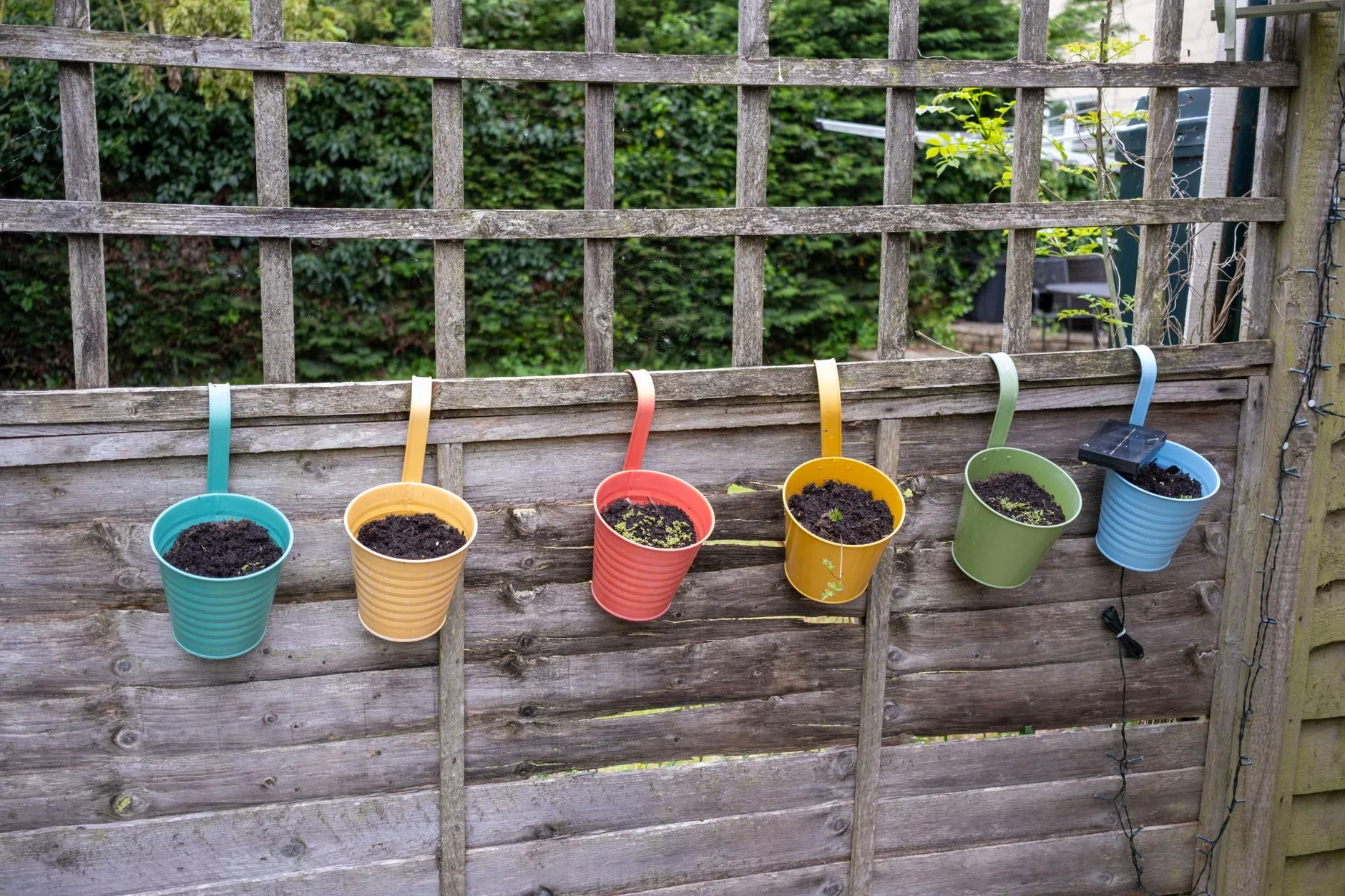
Vertical design is useful, but not every wall needs to become a living wall. The RHS advises using vertical surfaces for climbers and trained fruit in small spaces, and that is a better long-term approach than hanging dozens of thirsty little pots. A proper climber in the biggest container you can fit will usually look more grown-up than ten tiny troughs.
Good boundary moves include:
- Trellis panels: about £18-£45 each at B&Q or Wickes, useful for climbers and privacy.
- Slatted screening: about £45-£120 per panel, smart but less private unless backed with planting.
- Wall-mounted shelves: about £20-£60, best for herbs or small decorative pots near the kitchen.
- One mirror: about £40-£120 for an outdoor-safe garden mirror, useful only if it reflects planting rather than bins.
Do not put mirrors where birds are likely to fly into them, and do not reflect direct sun into seating areas. Small gardens are already full of accidental glare from windows, bifolds and pale paving.
Hide the ugly bits first
Bins, hose reels and plastic storage boxes drag a small design down fast. A timber bin screen is usually £80-£180, depending on size. A slim storage bench is around £70-£200. If you can only afford one upgrade, hide the bins before buying decorative pots. The garden will feel calmer immediately.
Use one clear route and one main level change
Small gardens often fail because every surface tries to do something different. A patch of decking, a curve of gravel, a stepping-stone path, a square of lawn and a tiny patio can make the space feel like a showroom sample board. Pick one main route and one main level change, then stop.
The route should make sense from the house. If you step out of French doors, the first landing zone needs to be clear and level. If the shed is at the back, leave a route that still works when chairs are pulled out. If the sunniest spot is at the far end, make the route invite you there rather than sending you round a furniture obstacle course.
This is where our garden layout planning guide goes deeper. For this article, the key design point is restraint. One obvious line is better than three clever ones.
Keep materials simple
Two hard-landscape materials are usually enough in a compact garden. Porcelain paving plus gravel. Timber decking plus planting beds. Clay pavers plus painted fencing. More than that can look busy.
Typical UK supply-only prices are roughly:
- Budget concrete paving: about £20-£35 per m2.
- Porcelain paving: about £30-£65 per m2 from B&Q, Wickes or specialist paving suppliers.
- Decorative gravel: about £6-£12 per 20kg bag, or cheaper in bulk bags for larger areas.
- Softwood decking boards: often around £4-£9 per linear board depending on length and grade.
Installed prices are much higher because ground prep, waste removal and labour matter. If you are changing levels, drainage or retaining edges, read our new patio cost guide before assuming it is a quick weekend job.
Do levels only where they help
A single raised deck at the back can create a destination. One low step down from the house can separate dining from planting. Raised beds can frame a seating area. But lots of little level changes are irritating, especially with children, older relatives or a tray of drinks.
If you have a sloping garden, do not fight every centimetre. Flatten the place you sit, then let planting absorb the rest. A stepped planter or raised bed can make a slope look intentional without paying to rebuild the whole garden.
Plant in layers, not in scattered pots
Scattered pots are the small-garden trap. One pot by the door, two by the fence, three by the shed and a lonely olive tree in the corner rarely looks designed. Group plants into layers so the eye reads them as one composition.
Think tall, middle and low:
- Tall layer: climbers, small trees, bamboo in contained planters, pleached or trained fruit.
- Middle layer: hydrangeas, hebes, lavender, pittosporum, grasses, roses or evergreen shrubs.
- Low layer: herbs, hardy geraniums, heuchera, thyme, sedum, bulbs and trailing plants.
For a sunny courtyard, I would use one large planter with an olive, bay or multi-stem amelanchier, then underplant with lavender, thyme or ornamental grasses. For shade, use ferns, heuchera, sarcococca and hydrangea rather than trying to force Mediterranean plants into a gloomy side return.
Buy bigger containers than you think
Tiny pots dry out quickly, blow over and make the garden look cluttered. Large containers cost more, but they make plants easier to keep alive. B&Q large plastic plant pots are often around £15-£24 for multi-packs, while bigger decorative planters commonly sit around £25-£80 each. Fibreclay, corten-style and glazed pots can be £80-£200+ for statement sizes.
The RHS small-space planting advice is right about using the biggest pot you can fit for climbers and trained plants. It gives roots more compost, more moisture and a better chance of surviving a hot week while you are away.
Repeat plants
Repetition makes a small garden feel calmer. Three matching planters with the same grass. Two climbers repeated on opposite fences. One colour of geranium threaded through the border. This is not dull; it is what stops compact gardens looking like a garden centre trolley.
If you want a more idea-led list after setting the structure, our small garden ideas article has the broader inspiration piece. This section is the design rule: fewer plant types, repeated well.
Choose furniture and storage that fit the plan
Furniture should be drawn into the design, not squeezed in at the end. The mistake is buying a full outdoor dining set because it looked reasonable in a warehouse aisle, then realising the chairs block the door whenever anyone sits down.
For small UK gardens, I would usually choose one of three setups:
- Two-person bistro: best for balconies, side returns and narrow terraces.
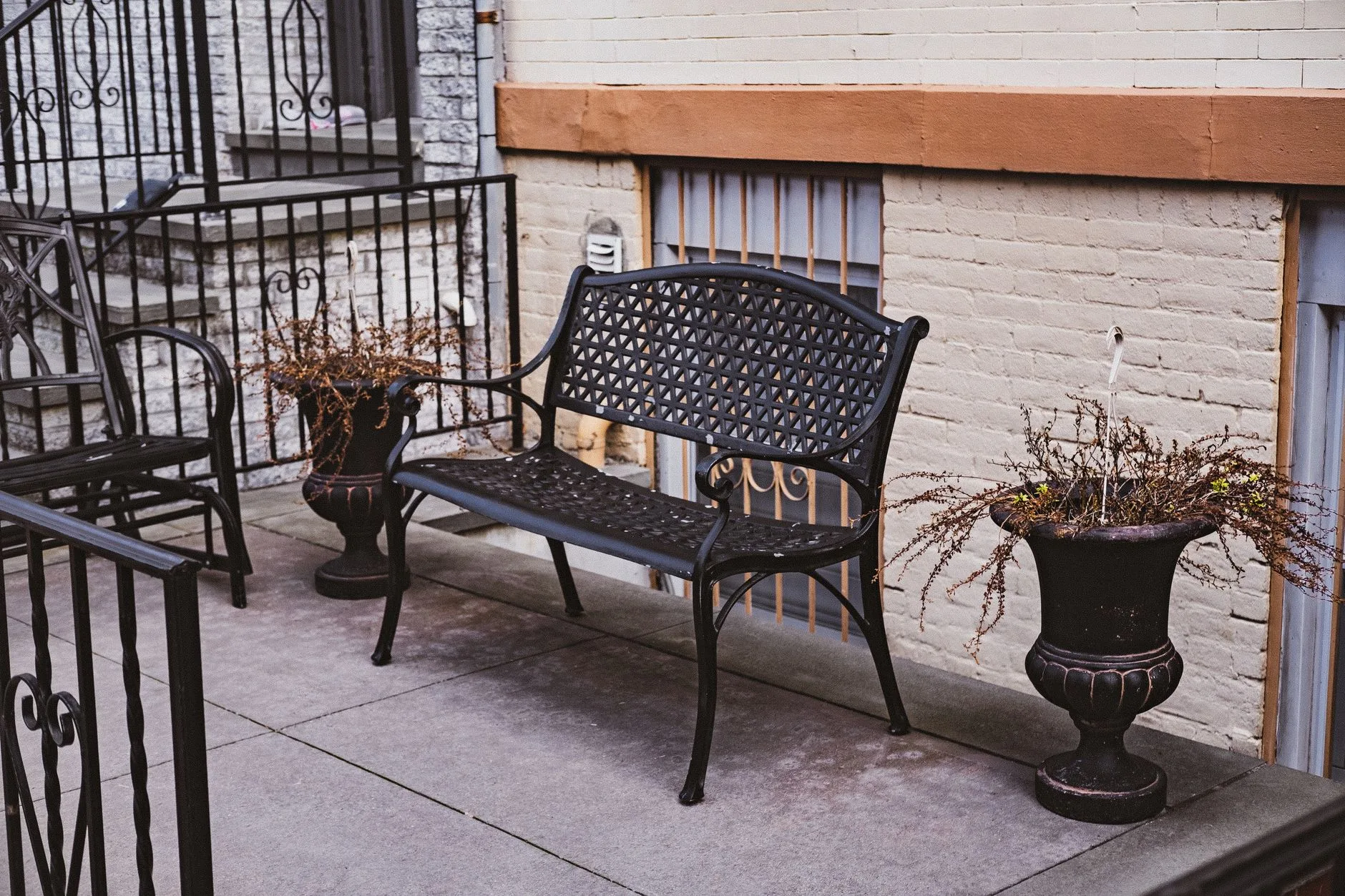
- Bench plus small table: best where seating can sit against a wall or raised bed.
- Compact four-seat dining: best only if the patio is genuinely wide enough for chairs to pull out.
A basic metal bistro set from Argos, B&Q or Amazon UK is usually £60-£150. Better wooden or aluminium two-seaters are around £150-£350. IKEA’s NÄMMARÖ four-seat outdoor dining sets are commonly in the £300-£400 range depending on cushions and configuration, while branded garden furniture from Kettler, Bramblecrest or Maze can jump to £800-£2,000+.
Match the furniture to storage
Cushions need somewhere to go. So do secateurs, children’s toys, compost scoops, barbecue tools and the random bottle of patio cleaner everyone owns. A small storage bench is often better than a separate plastic box because it earns its footprint twice.
Good buys:
- Foldaway bistro chairs: about £25-£70 each, useful when the garden has to flex.
- Storage bench: about £70-£200, best against a fence or wall.
- Slim shed: about £180-£450, worth it if tools currently live in the kitchen.
- Wall hooks and rails: about £10-£40, good for hand tools and watering cans.
If the main purpose is eating outside, use our patio dining set size guide before buying. Measuring chair clearance is dull, but returning a half-built table is worse.
Add lighting, privacy and heat without annoying the neighbours
Evening use is where small gardens can feel brilliant. A few warm lights, a screened seating corner and a comfortable chair can turn a plain patio into the best room in the house from May to September. The trick is keeping it neighbour-friendly.
Use warm white lighting, ideally 2200K-2700K. Cold blue-white garden lights make small spaces feel like a car park. Solar stake lights are cheap, often £15-£30 for a multi-pack, but they can look messy if scattered everywhere. Low-voltage plug-in systems from brands such as Philips Hue, Garden Lights or Techmar can run from about £80 for a starter setup to several hundred pounds for a fuller scheme.
For buying specifics, the garden lighting guide covers product choices. Design-wise, use fewer lights in better places:
- One light by the door: for safe steps and keys.
- Low lights near planting: to pick out texture without flooding the garden.
- A soft table lamp or lantern: for eating and conversation.
- No glare at fence height: your neighbours did not ask for a stadium.
Be careful with fire and heat
Fire pits and barbecues need more thought in compact gardens. London Fire Brigade says not to use a BBQ on a balcony, to place barbecues on level ground and keep them away from sheds, fences and trees. That rules out a surprising number of small-space setups.
If you want heat, an electric patio heater can be safer and cleaner than a fire pit in a tight terrace, though running costs vary with wattage and energy prices. Basic wall-mounted electric heaters are often £60-£150. Better freestanding infrared heaters are around £150-£400. Small wood-burning fire pits can be £40-£200, but they need clearance, supervision, smoke consideration and somewhere safe for cooling ash.
Privacy matters too. A 1.8m fence is not always the answer, and planning rules or neighbour agreements may apply. Often, a 60cm trellis topper, a climber and a small tree placed carefully will feel softer than building a fortress.
Build the design in the right order and budget
Do the permanent, boring work before the pretty work. Drainage, levels, fences, surfaces and storage affect everything else. If those are wrong, new cushions and planters only distract you for a week.
For a small UK garden, a sensible order is:
- Clear and measure. Remove dead pots, broken furniture and anything you are designing around out of guilt.
- Fix boundaries. Repair fences, paint, screen bins and decide where privacy is needed.
- Sort the main surface. Clean, repair, gravel, pave or deck the area that will get used most.
- Place furniture and storage. Confirm it fits before planting around it.
- Add large planting. Trees, climbers, shrubs and big containers go in before small decorative pots.
- Finish with lighting and detail. This is where cushions, lanterns and smaller plants earn their place.
What different budgets can do
At about £250-£500, you can paint fences, buy a bistro set, add a few large pots, improve lighting and screen bins. This is the best value tier if the existing patio or decking is sound.
At £1,000-£2,500, you can replace tired furniture, add better planters, improve storage, bring in an electrician for outdoor power or lighting, and possibly upgrade a small area of paving if the ground is simple.
At £5,000-£12,000+, you are into proper landscaping: new patio, steps, drainage, fencing, raised beds, lighting and planting. In a small garden, that can be transformative, but only if the design is tight. Spending £8,000 on too many materials still looks messy.
The final test is simple. Stand at the back door and name the main idea in one sentence. “A small dining garden with green boundaries.” “A quiet evening courtyard.” “A child-friendly patio with tough planting.” If you cannot say it that simply, the design probably needs editing before it needs more products.
Frequently Asked Questions
What is the best design idea for a small UK garden? Pick one main purpose and design around it. A compact garden feels bigger when the route, furniture, planting and storage all support the same use.
How do I make a small garden look bigger? Use simple materials, repeat plants, keep boundaries calm, avoid oversized furniture and create one clear route. Clutter makes small gardens feel smaller than they are.
What should I buy first for a small garden? Buy or fix the item that solves the biggest visual problem: fence paint, bin screening, a correctly sized table or large planters. Do not start with cushions and ornaments.
Are large pots better than lots of small pots? Usually yes. Large pots hold more compost and water, support healthier plants and look calmer. Small pots are useful for herbs, but too many make a garden feel busy.
How much does a small garden redesign cost in the UK? A light refresh can be £250-£500, a better furniture and planting upgrade might be £1,000-£2,500, and full landscaping can easily reach £5,000-£12,000+.
Can I have a BBQ or fire pit in a small garden? Sometimes, but check clearance, smoke and fire risk. Do not use a BBQ on a balcony, and keep barbecues or fire pits well away from fences, sheds and trees.