Small sheds fail when every tool has to be moved before you can reach the one you need. Good garden tool storage ideas start with access: long-handled tools off the floor, sharp tools away from hands, small kit in visible containers, and the mower or hose still easy to pull out. You do not need a bigger shed. You need fewer piles.
In This Article
- Start With the Shed Layout, Not the Storage Product
- Wall Storage for Long-Handled Tools
- Shelving and Boxes That Actually Fit Small Sheds
- Small Tool Storage: Hand Tools, Twine, Labels and Gloves
- Power Tool and Battery Storage
- Common Small-Shed Storage Mistakes
- A Simple Weekend Setup Plan
- Frequently Asked Questions
Start With the Shed Layout, Not the Storage Product
Buying a rack before sorting the shed is how you end up with a tidy-looking rack and the same annoying mess underneath it. Empty the shed first, even if that means dumping everything on the lawn for an hour. You need to see the floor, the door swing, the wall studs, the damp corners and the items you never use.
Make Three Zones
Small sheds work best when they have simple zones:
- Grab zone: secateurs, gloves, kneeler, trowel, hand fork, labels and twine
- Tall-tool zone: spade, fork, rake, hoe, broom, edger and long-handled shears
- Bulky zone: mower, hose reel, compost scoop, watering can, sacks of feed or grit
If everything has equal priority, nothing is easy to reach. Put the grab zone just inside the door. Put tall tools on the side wall or back wall. Keep bulky kit low and near the door so you are not dragging it past sharp tools.
Measure the Awkward Bits
Before buying anything, measure:
- Door width and how far it opens
- Clear wall height above the mower handle
- Shelf depth that still lets you stand inside
- Space between wall studs or battens
- Damp patches near the floor
Many small sheds are only 6 x 4ft or 7 x 5ft. A 45cm-deep shelving unit can eat the whole walkway. In a tight shed, a 30cm-deep shelf often beats a deeper one because you can still reach the back without kneeling in a bag of compost.
Keep the Floor as Clear as Possible
The floor is for things that must stand on the floor: mower, pressure washer, water butt accessories, heavy compost, maybe a garden shredder. Everything else should be hung, shelved or boxed.
That single rule makes the biggest difference. Once tools are off the floor, sweeping out soil and leaves takes five minutes, not a full archaeological dig.
Wall Storage for Long-Handled Tools
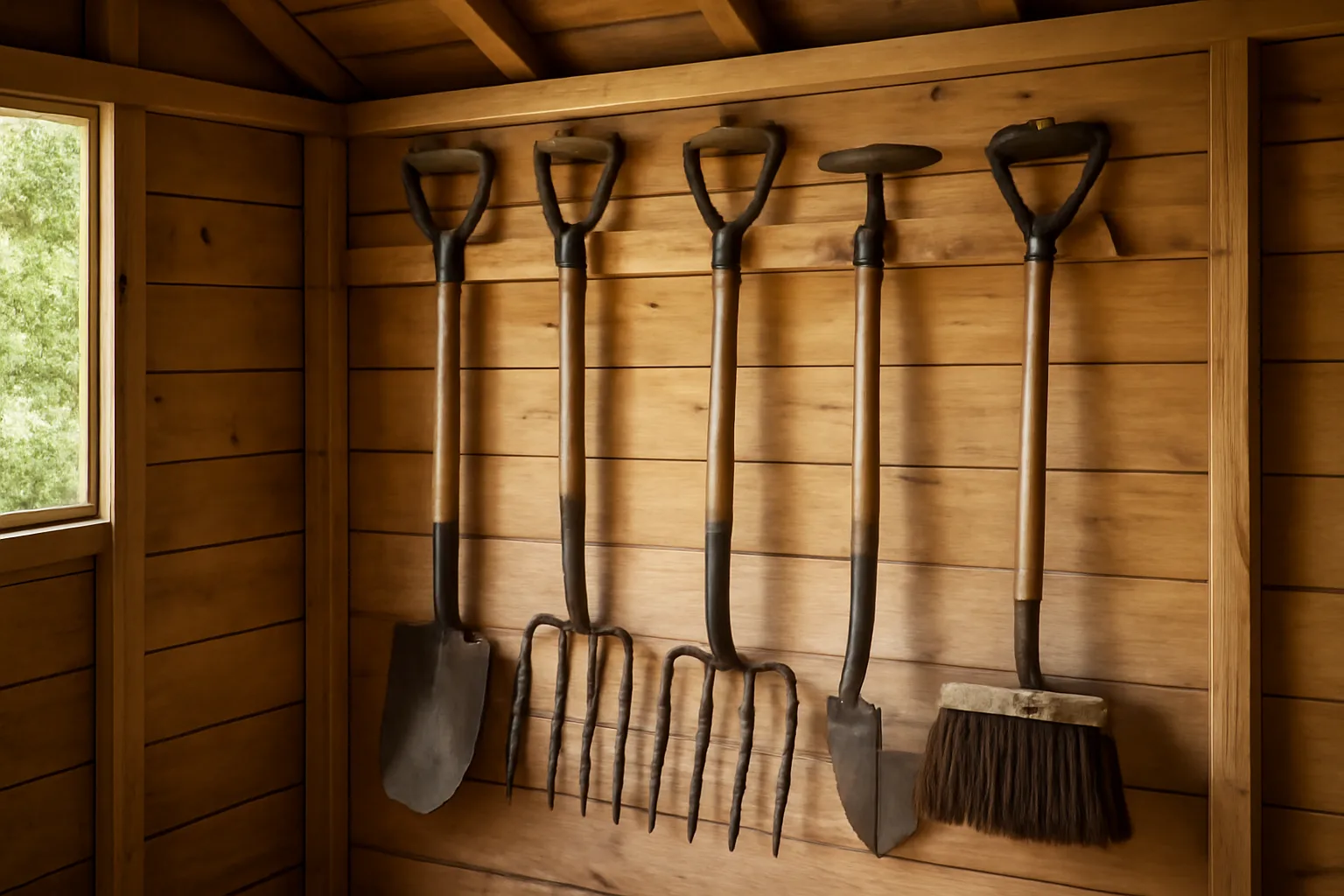
Long-handled tools are the main reason small sheds become impossible. Spades and rakes lean, slide, fall, tangle and block the door. Get them vertical and separated.
The Cheapest Option: Individual Hooks
Screw-in hooks are cheap and flexible. Wickes sells multi-purpose hook packs around £11-£12, and Screwfix/B&Q usually have similar garage hooks under £20. They work well if your shed has timber studs or a solid fixing rail.
Use hooks for:
- Spades and forks hung by the handle hole
- Brooms and rakes held sideways
- Hose nozzles and small hand sprayers
- Folding chairs or kneeling pads
Do not screw heavy hooks into thin feather-edge boards and hope. Add a horizontal timber batten first, then fix hooks into that. A 38 x 63mm treated batten costs roughly £5-£8 from B&Q or Wickes and spreads the load far better.
The Neater Option: Wall-Mounted Tool Racks
A wall-mounted garden tool rack is faster to fit and looks tidier. Budget plastic racks start around £10-£18 on Amazon UK. Metal rail systems are usually £20-£45 from Screwfix, B&Q or Wickes depending on length and hook type.
The best ones have adjustable hooks. Fixed slot racks look neat in photos but can be awkward if your spade, rake and hoe handles are different widths.
After using both, I prefer a rail plus movable hooks for a mixed garden shed. You can shift the fork away from the rake, leave a wider gap for loppers, and add a hook later without drilling ten more holes.
Door Storage: Useful, but Be Careful
The back of the door is tempting. It is also where people overload a flimsy shed. Use the door for light kit only:
- Gloves on a clip
- A small kneeling pad
- Seed labels
- Twine
- Lightweight hand tools
Avoid hanging a heavy fork, axe or hedge trimmer on the door. Door hinges on budget sheds are not designed for that constant twisting load, and a sharp tool swinging behind you is a daft way to save 20cm.
Keep Sharp Edges Facing Inwards
Sharp tools need boring storage. Secateurs should close and lock. Saws need covers. Loppers should hang with blades away from the walkway. If children use the garden, put sharp tools above easy reach or in a lidded box.
This links with our garden power tool safety guide because storage is part of safety, not an afterthought.
Shelving and Boxes That Actually Fit Small Sheds
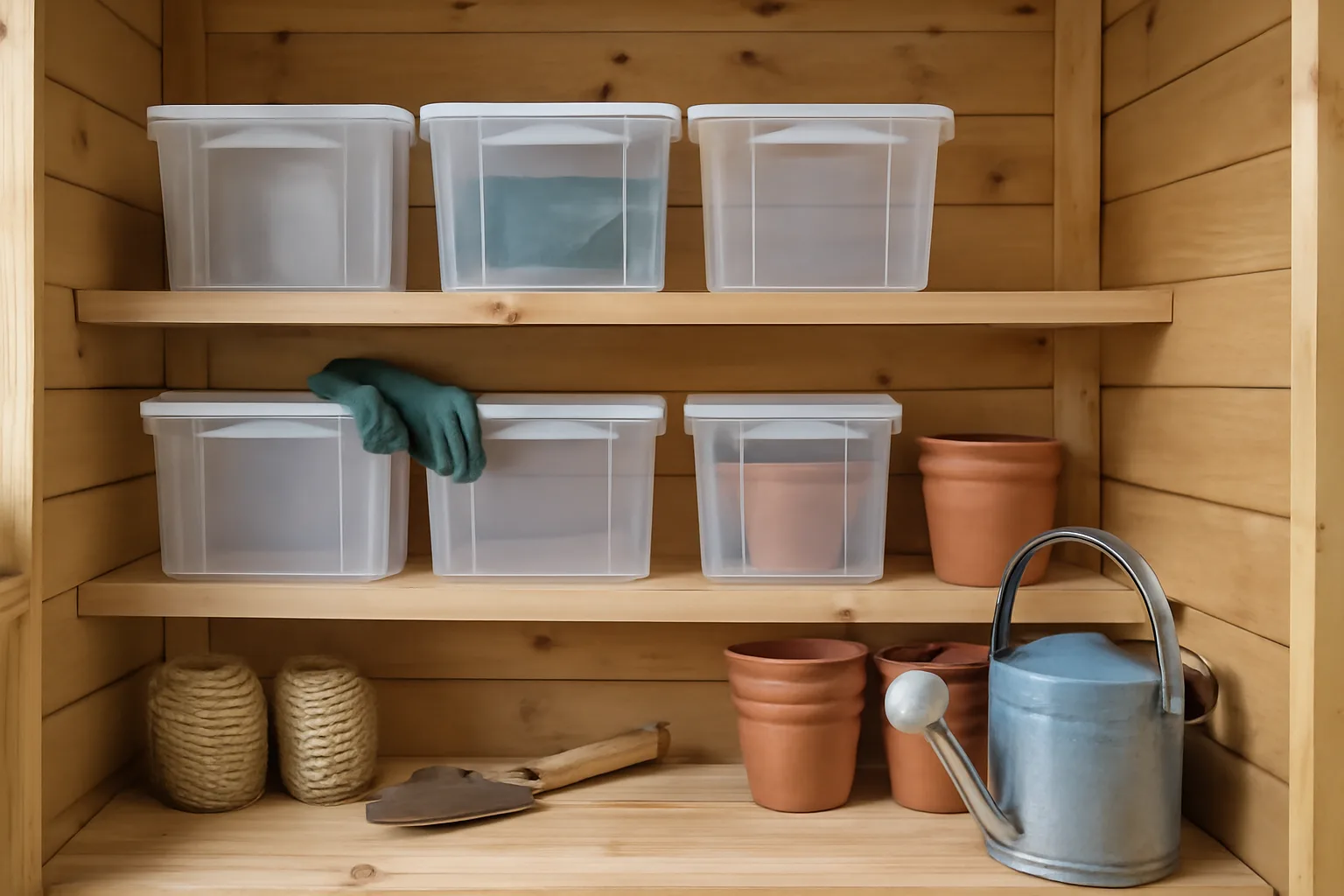
Shelving is brilliant in a small shed until it becomes a place for random damp bags and half-empty bottles. The trick is shallow shelves, clear boxes and ruthless categories.
Shallow Shelving Beats Deep Shelving
Look for shelves around 30-40cm deep. B&Q and Wickes garage shelving starts around £18-£35 for basic plastic or galvanised units, while heavier metal racking can run £50-£100. For a small shed, the cheaper shallow unit is often the better buy.
Use shelving for:
- Plant food and lawn feed
- Pots and trays
- Hand tools in shallow tubs
- Hose fittings and connectors
- Pest netting and fleece
- Cleaning brushes and cloths
Put heavy items low. Put light seasonal kit high. Keep liquids in a tray so leaks do not soak into the shelf or floor.
Clear Boxes Save Time
Opaque boxes look tidy for about three days. Then you forget what is inside and start opening every lid. Clear lidded boxes cost roughly £4-£12 each from B&Q, Dunelm, The Range or Amazon UK, depending on size.
Label them anyway. A strip of masking tape is enough:
- Seeds and labels
- Hose fittings
- Plant ties
- Pots and modules
- Sprayer parts
- Winter fleece
Small boxes are better than one huge box. A 64L box filled with random garden bits is just a portable junk drawer.
Outside Storage Boxes Can Protect Shed Space
If the shed is tiny, move non-sharp, weather-tolerant bulky items outside. A Keter 270L storage box is around £32-£45 at B&Q or Argos, depending on model and offer. It is fine for cushions, spare pots, watering attachments, fleece or kids’ garden toys.
I would not store expensive power tools outside in a plastic box. It is too easy to force and more exposed to temperature swings. Use it to free shed space, not to hold your best kit.
Keep Chemicals Separate
Garden chemicals, slug pellets, weedkiller and concentrated feeds need their own secure spot, ideally high, labelled and out of reach. The RHS gives sensible guidance on storing and disposing of garden chemicals safely, including not keeping made-up diluted solutions.
In a small shed, use a lidded crate or lockable mini cabinet for these. Keep them away from seeds, gloves, hand tools and anything children might grab.
Small Tool Storage: Hand Tools, Twine, Labels and Gloves
Small items cause more daily irritation than big tools. A spade is obvious. A missing dibber, roll of twine or pair of gloves can waste ten minutes before you have even started.
Build a Grab Tray
Set up one shallow tray near the door for the things you use most:
- Secateurs
- Gloves
- Hand fork
- Trowel
- Twine
- Plant labels
- Pencil or marker
- Kneeler clips
A basic plastic caddy is about £5-£12 from B&Q, Wilko-style discount shops, Amazon UK or garden centres. If you already have an old washing-up bowl, use that first. Pretty storage is less useful than storage you actually put things back into.
Use a Pegboard Only if the Shed Stays Dry
Pegboard looks great on Pinterest and can work well in a dry shed. In a damp timber shed, cheap hardboard pegboard can swell and sag. Metal pegboard is better but usually costs £25-£60 once you add hooks.
For hand tools, I prefer a small rail or a plywood board with hooks. It is less photogenic, but it survives a British winter better.
Magnetic Strips Are Good for Small Metal Tools
A magnetic tool strip can hold snips, dibbers, small hand forks, scissors and pruning knives. Expect to pay £8-£20 depending on length. Fit it above a shelf rather than over the walkway, so dropped tools land safely.
Do not use one for heavy loppers or anything with a weak metal contact point. If it slides off, it will land blade-first exactly where your foot was five seconds earlier.
Clean Before Storing
Soil holds moisture against metal, and wet wooden handles age badly. The RHS advice on cleaning hand tools is worth following because clean tools last longer and reduce the risk of spreading plant disease.
Keep an old brush, rag and small bottle of oil in the shed. Wipe mud off before tools go back on the rack. This one habit saves more money than any storage box.
For sharpening and blade care, link your storage routine to our guide to sharpening garden tools at home so the shed reset becomes maintenance, not just tidying.
Power Tool and Battery Storage
Cordless garden tools need more thought than hand tools. The tool body, battery, charger, blade guard and extension lead all need a home.
Store Batteries Indoors if the Shed Gets Damp or Freezing
Battery packs hate extremes. If your shed is damp, uninsulated or freezing in winter, take lithium-ion batteries indoors and store them somewhere dry. The tool body can stay in the shed, but the battery should not sit for months in a cold, wet corner.
Use a small labelled box indoors for:
- Mower battery
- Strimmer battery
- Hedge trimmer battery
- Charger
- Spare blade key or safety guard
If you run one battery platform, keep all chargers together. If you mix brands, label them. Nobody enjoys playing “which black charger belongs to which black battery” in November.
Wall Hooks for Tools, Shelf for Chargers
Cordless strimmers and hedge trimmers are awkward on shelves. Hang the tool body horizontally on two hooks or vertically from a solid rail if the handle shape allows it.
Chargers should sit on a shelf, not dangle from a socket. If you have power in the shed, keep charging away from wet compost, fuel, chemicals and loose bags. If you do not have power, charge indoors and return the tool only once the battery is removed.
Our cordless garden tools guide covers the bigger buying decision, but storage is where cordless systems either become easy or annoying.
Keep Manuals and Blade Guards Together
Blade guards vanish because they are light, awkward and never look important until you need to store the tool safely. Put guards, allen keys and manuals in one clear box labelled “Power tool spares”.
This is also the place for spare strimmer line, chainsaw oil, mower blades and safety glasses. If you maintain a chainsaw, keep that gear with the saw and follow the safety routine in our chainsaw maintenance guide.
Common Small-Shed Storage Mistakes
Most small-shed storage problems are caused by trying to make the shed do too many jobs. A shed is not a loft, garage, greenhouse, workshop and toy cupboard all at once.
Buying Freestanding Racks That Eat the Floor
Freestanding garden tool racks can work in garages. In small sheds, many are too bulky. A £15-£25 plastic rack looks cheap, but if it takes the only clear corner, it may make access worse.
Use wall-mounted storage first. Buy freestanding only if you cannot fix to the walls.
Storing Wet Tools
Wet tools turn a tidy rack into a rust nursery. Knock off soil, brush down metal heads, and let tools dry if they are soaked. A small rubber mat or gravel tray under the tool rack catches drips without ruining the shed floor.
Blocking the Mower
If you use the mower weekly, it needs the easiest path. Do not put the mower behind bags of compost or under a shelf that catches the handle every time.
The same applies to a hose reel in summer. If it is used often, it belongs near the door. If it is seasonal, it can move to the back.
Keeping Broken Tools
Small sheds punish sentimentality. A cracked plastic rake, blunt secateurs you hate, and three half-working spray bottles are not “spares”. They are clutter with handles.
Use a hard rule: if it is broken and you will not repair it this month, it leaves the shed. If it is a duplicate and you always choose the better one, the worse one goes.
Hanging Too Much Too High
High shelves are useful for light, seasonal kit. They are not good for sharp or heavy tools. Anything that needs two hands, a step stool and a prayer should not live above shoulder height.
Keep weight low, sharp tools controlled, and daily tools between waist and eye level.
A Simple Weekend Setup Plan
You can improve a small shed in one weekend without building a workshop wall.
Saturday Morning: Empty and Sort
Pull everything out. Make four piles:
- Keep in shed: used regularly and belongs outside
- Move elsewhere: batteries, paperwork, delicate kit, children’s toys
- Repair or clean: useful but not ready to store
- Remove: broken, duplicated, empty, expired or mystery items
Sweep the floor before anything goes back. Check for leaks, rot, damp cardboard and mouse damage.
Saturday Afternoon: Fit the Wall System
Fit one solid batten or rail for long-handled tools. Add hooks with enough space between tools that you can remove one without lifting three others.
Budget roughly:
- Basic hook pack: £10-£15
- Timber batten and screws: £8-£15
- Adjustable rail system: £20-£45
- Small shelf or crate set: £15-£35
If you only buy one thing, buy the wall rail or hook system. It gives the biggest space return.
Sunday Morning: Box and Label
Sort small kit into clear boxes. Keep labels boring and obvious. “Hose fittings” beats “Water stuff”. Put the most-used box at chest height and seasonal boxes higher.
If you grow in containers, link this setup with our growing herbs in pots guide because pots, grit, labels and hand tools will be in daily use through spring and summer.
Sunday Afternoon: Test the Route
Before calling it done, test the awkward jobs:
- Pull the mower out and put it back. If it catches, change the layout now.
- Grab secateurs, gloves and twine. They should take seconds to find.
- Remove the rake without moving the fork. If not, widen the hook spacing.
- Open every box you expect to use weekly. If lids are annoying, use open tubs for daily kit.
The best small-shed setup feels slightly boring. That is the point. You open the door, take the tool, do the job, put it back, and close the door without negotiating with a collapsing pile of rakes.
Frequently Asked Questions
What is the best way to store garden tools in a small shed? Use wall-mounted hooks or rails for long-handled tools, shallow shelving for boxes, and a grab tray near the door for gloves, secateurs, twine and labels. Keeping the floor clear matters more than buying matching storage.
Are pegboards good for garden sheds? Pegboards can work in dry sheds, but cheap hardboard boards may swell in damp timber sheds. A timber rail with hooks or a small plywood board with screw-in hooks is often tougher.
How much does small-shed tool storage cost? A useful setup can cost £25-£60: around £10-£15 for hooks, £8-£15 for timber and screws, and £10-£30 for clear boxes or shallow shelving. Rail systems can push that closer to £80.
Should garden tools be stored upright or hanging? Hanging is usually better for long-handled tools because it keeps sharp heads off the floor and stops tools sliding into each other. If tools stand upright, separate them in a rack so they do not topple.
Can I store cordless tool batteries in the shed? Only if the shed stays dry and avoids freezing or high summer heat. In many UK sheds, it is safer to store lithium-ion batteries and chargers indoors, with the tool body kept in the shed.
How do I stop garden tools rusting in a shed? Brush soil off after use, dry wet tools before hanging them, wipe metal parts with light oil, and keep tools off damp floors. Good storage helps, but cleaning before storage is the real habit.