Keeping a chainsaw safe is mostly about small checks done before the chain ever touches wood. A clean bar, sharp chain, working brake and fresh oil matter more than raw power, especially if the saw spends most of the year in a UK shed. This chainsaw maintenance safety guide keeps the focus on home garden jobs: logs, branches, storm debris and the point where you should stop and call a tree surgeon.
In This Article
- Chainsaw Maintenance Safety Guide: What to Check First
- The Kit Worth Owning Before You Start
- Cleaning the Bar, Chain and Sprocket Area
- Chain Tension, Sharpening and When to Replace It
- Oil, Fuel and Battery Checks
- Safety Features and PPE You Should Not Skip
- Storage, Servicing and Costs
- Jobs That Are Not Worth the Risk
- Frequently Asked Questions
Chainsaw Maintenance Safety Guide: What to Check First
A chainsaw that starts easily can still be unsafe. The chain can be blunt, the brake can be sticky, the bar groove can be packed with oily dust, or the chain can be loose enough to derail under load. I would rather spend ten dull minutes checking those things than discover the problem halfway through a cut.
The first rule is simple: do maintenance with the saw fully off. For a petrol saw, remove the spark plug cap before working near the chain. For a cordless saw, remove the battery. For a corded electric saw, unplug it and keep the cable away from the bench. The chain does not care that you were “only checking something”.
The Two-Minute Check
Use this quick pre-use routine before each garden session:
- Chain brake: push the front hand guard forward and confirm the chain locks. Pull it back and check it releases cleanly.
- Chain tension: the chain should sit snugly in the bar groove but still pull round by gloved hand when the brake is off.
- Chain sharpness: a sharp chain makes chips. Fine dust usually means blunt cutters or too much pressure.
- Bar oil: the oil tank should be topped up before cutting. Running dry ruins bars and chains quickly.
- Loose parts: check bar nuts, chain catcher, handles, battery latch or fuel cap. Anything loose gets fixed before use.
- Work area: clear pets, children, loose branches, trip hazards and anything under tension.
The HSE chainsaw operator guidance is aimed at work situations, but the core point carries over to home use: chainsaws can cause severe injuries, so training, protective clothing and controlled working methods matter. If a job feels bigger than garden maintenance, it probably is.
The Kit Worth Owning Before You Start
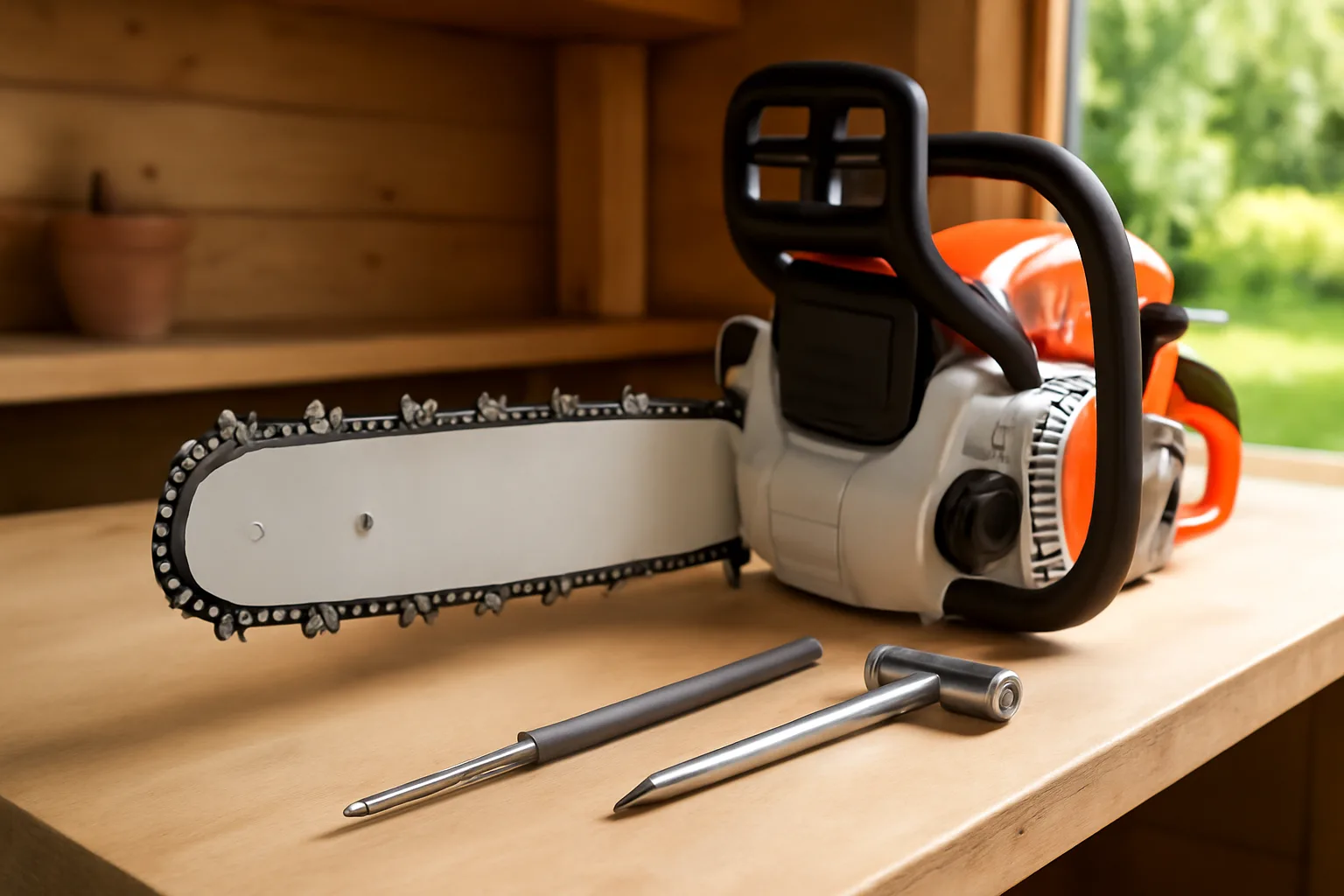
You do not need a professional workshop to maintain a garden chainsaw, but you do need the right small tools. The cheap mistake is buying the saw and no maintenance kit, then forcing it through timber with a blunt chain because there is no file in the shed.
Basic Home Maintenance Kit
For most domestic chainsaws, a sensible UK maintenance kit looks like this:
- Round chain file and guide: usually £6-£15 from Screwfix, Amazon UK or garden machinery dealers. Match the file diameter to the chain pitch.
- Depth gauge tool and flat file: about £8-£18. Useful once the cutters have been sharpened several times.
- Scrench or bar spanner: often supplied with the saw; replacements cost around £5-£12.
- Stiff brush and rag: cheap but important for cleaning packed oil and sawdust from the sprocket cover.
- Chainsaw bar oil: roughly £6-£12 per litre, or £18-£30 for a 5-litre bottle. Do not substitute engine oil.
- Spare chain: usually £12-£30 for common domestic sizes. Keep one sharp spare rather than trying to rescue a destroyed chain mid-job.
- Replacement bar: often £20-£45 for 30-40cm domestic bars, depending on brand and fit.
Stihl, Husqvarna, Oregon and Makita all sell decent files, chains and oil, but the key is compatibility rather than the badge. Check the numbers stamped on the bar or printed in the manual: bar length, chain pitch, gauge and drive-link count. Guessing from “looks about right” is how people buy the wrong chain twice.
If you already own other garden tools, link this routine with your broader shed maintenance. A sharp pruning saw or pair of loppers often removes the need to reach for a chainsaw at all, and our secateurs, loppers and pruning saws comparison is worth checking before using a powered saw for every branch.
Cleaning the Bar, Chain and Sprocket Area
Most home chainsaw problems start as dirt. Fresh sawdust mixes with chain oil and forms a sticky paste around the drive sprocket, bar groove and oil hole. Leave it there and the chain runs hotter, oil flow drops, and the saw starts cutting in a curve.
Clean the saw after use, not three months later when the paste has hardened. Let the saw cool, isolate the power, put on gloves and remove the sprocket cover. Lift off the bar and chain if the manual allows it; on smaller electric saws this is usually a quick job.
Cleaning Order
Work through the cleaning in this order:
- Brush out the sprocket cover. Remove oily chips, bark and dust from every corner. A cheap paintbrush works better than a cloth here.
- Clean the bar groove. Use a bar groove cleaner, old plastic scraper or the end of a cable tie. Avoid gouging the bar with a screwdriver.
- Clear the oil hole. Find the small oil feed hole in the bar and make sure it is open. Blocked oiling is a fast route to a cooked chain.
- Check the bar rails. Look for burrs, uneven wear or blue heat marks. A badly worn bar will not hold the chain properly.
- Wipe the chain. Remove resin and grit. If it is caked in sap, use a manufacturer-approved cleaner rather than petrol in a washing-up bowl.
After cleaning, flip the bar before refitting if your model allows it. That evens out rail wear over time. I keep a permanent marker dot on one side of the bar cover so I can remember which way it was last fitted; not clever, just less annoying than trying to remember after tea.
If you are cleaning garden tools as a wider job, the RHS advice on cleaning garden tools is a useful reminder that clean tools work better and reduce the spread of plant problems. A chainsaw is more demanding than a trowel, but the habit is the same: clean, dry, oil where required, store properly.
Chain Tension, Sharpening and When to Replace It
Chain tension is one of the easiest checks to get wrong. Too loose and the chain can derail. Too tight and it overheats, stretches and wears the bar. The right tension is snug, not strained.
As a rule of thumb, with the brake off and the saw isolated, you should be able to pull the chain slightly away from the underside of the bar, but the drive links should not fully leave the groove. The chain should move around the bar by gloved hand without binding. New chains stretch during early use, so recheck tension after the first few cuts.
Sharpening depends on the chain, but the practical signs are easy to spot. A sharp chain pulls itself into the timber and throws clean chips. A blunt chain makes dust, smokes, needs pushing, or cuts to one side. If you hit soil, stone, wire, nails or paving, assume the chain is blunt. Soil is brutal on cutters.
Filing Without Making the Chain Worse
For basic filing:
- Lock the saw safely. Isolate it, engage the chain brake where helpful, and secure the bar so it cannot wobble.
- Use the correct round file. The wrong diameter changes the cutter shape and makes the saw bite badly.
- Follow the marked angle. Most chains show a top-plate guide line. Keep each stroke smooth and consistent.
- Count your strokes. File each cutter the same number of times unless one side is damaged. Uneven filing causes curved cuts.
- Check depth gauges. After several sharpenings, use a depth gauge tool and flat file. Over-low rakers can make the chain grabby.
A basic file kit is fine for occasional home use. If the chain has hit metal, lost teeth or been sharpened unevenly for months, pay for a professional sharpen or replace it. Many garden machinery shops charge roughly £8-£15 to sharpen a chain. That is cheap compared with fighting a bad chain for an afternoon.
Replace the chain if cutters are cracked, tie straps are damaged, drive links are bent, or the witness marks show there is no safe sharpening life left. Keep the old chain only if it is still serviceable. A box of “might be useful” chains is just a box of future confusion.
Oil, Fuel and Battery Checks
Bar oil is not optional. It reduces friction between the chain and bar, carries heat away and helps the chain run smoothly. If your saw has an automatic oiler, do not assume it is working. Fill the oil tank, run the saw briefly as the manual describes, and look for a light oil line on clean cardboard or pale timber. No oil mark means stop and investigate.
Expect oil use to roughly track fuel or battery use. On many saws, a tank of bar oil lasts about as long as a tank of petrol. If the oil level barely moves, the oiler may be blocked. If it empties all over the shelf, the saw may have a storage leak; some domestic saws seep oil slowly, so store them on cardboard or in a tray.
Petrol and Battery Differences
Petrol saws need extra care:
- Use the correct two-stroke mix: many modern saws use 50:1, but follow your manual. A 1-litre bottle of two-stroke oil is often £8-£18.
- Avoid stale fuel: old petrol can make starting poor and running rough. If the saw will sit unused, drain it or use alkylate fuel if the manufacturer approves it.
- Clean the air filter: a blocked filter makes the saw run badly and can increase fuel use.
- Check the spark plug: a replacement plug is usually £4-£8 and can cure some starting problems.
Cordless chainsaws are easier, but not maintenance-free. Keep batteries dry, charge them indoors at normal room temperature, and do not store them flat for months. A spare 4Ah or 5Ah battery can cost £50-£120 depending on the brand, so battery care is not a small detail. If you are weighing up cordless tools generally, our cordless garden tools guide covers where battery kit makes sense in UK gardens.
Safety Features and PPE You Should Not Skip
Maintenance is not only about making the saw cut well. It is about making sure the saw stops, guards and protects you when something goes wrong.
Check the chain brake every session. With the saw off, it should engage positively and hold the chain. With the saw running, follow the manual test rather than improvising. Also check the throttle lockout, stop switch, rear hand guard, chain catcher and anti-vibration mounts. If any safety part is missing, cracked or unreliable, the saw is out of service.
Realistic PPE Costs
PPE feels expensive until you price the injury it is trying to prevent. For ground-level domestic work, budget roughly:
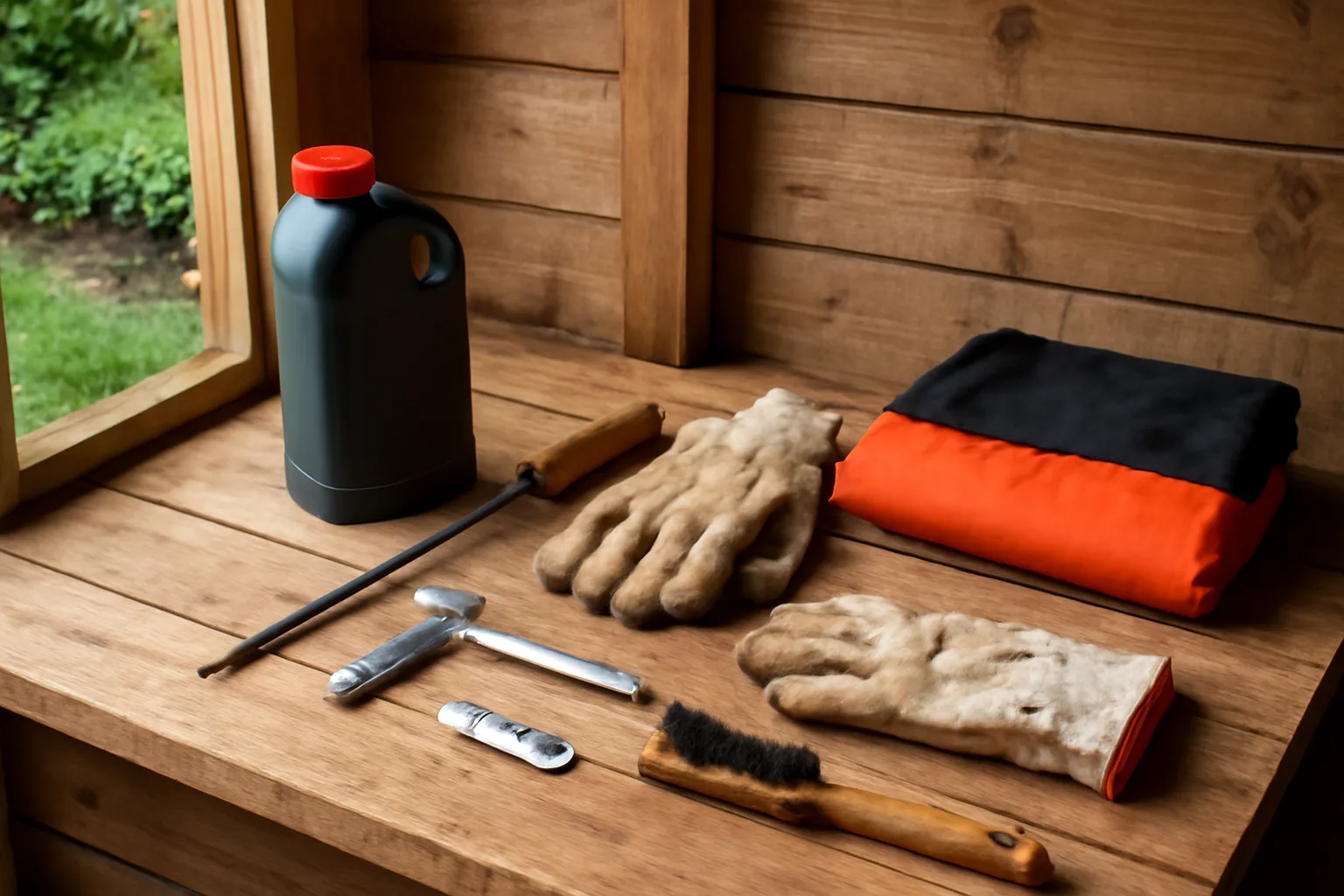
- Chainsaw gloves: £20-£45, with protection on the correct hand depending on the design.
- Helmet with visor and ear defenders: £25-£70. Replace damaged helmets and check the manufacturer lifespan.
- Chainsaw trousers or chaps: £70-£180. Type A front protection is common for ground work; check suitability before buying.
- Protective boots: £80-£180 for chainsaw-rated boots. Steel toe caps alone are not the same thing.
- Eye and hearing protection: £8-£30 if not built into the helmet system.
The HSE’s chainsaw PPE guidance gives a useful breakdown of protective clothing standards for chainsaw work. It is written for work settings, so a homeowner is not buying everything for climbing operations, but it is still a good benchmark for what proper protection looks like.
I would not use a chainsaw in trainers, shorts or ordinary gardening gloves. That sounds obvious, but summer garden jobs are exactly when people get casual. The branch will still wait while you put the right kit on.
Storage, Servicing and Costs
The best storage place is dry, locked and boring. Clean the saw, let it cool, fit the bar cover, remove the battery or make the petrol saw safe, and keep it away from children. Do not leave a chainsaw on a damp shed floor under a leaking roof. Rusty chains and gummy oil are usually storage problems pretending to be saw problems.
For a petrol saw you only use a few times a year, end-of-season storage matters. Drain stale fuel if the manual recommends it, run the carburettor dry only if the manufacturer says to, clean the filter, top up or empty oil as advised, and keep the chain lightly oiled. For battery saws, store batteries separately and away from frost or direct heat.
What Servicing Usually Costs
Professional servicing is worth it if the saw is hard to start, idles badly, leaks badly, cuts crooked after a new chain, or has any brake issue. Typical UK garden machinery servicing might cost:
- Basic inspection and tune-up: about £40-£70 for a small domestic petrol saw.
- Chain sharpening: about £8-£15 per chain.
- New chain fitted: usually £12-£30 for the chain plus labour if you do not fit it yourself.
- Replacement bar: about £20-£45 for many homeowner saws.
- Carburettor or fuel-line work: often £30-£80 depending on parts and labour.
If the saw is a £90 own-brand electric model and needs major repair, replacement may be more sensible. If it is a £300-£700 Stihl, Husqvarna, Makita or Echo saw, servicing is usually worth considering. Keep receipts and model details in the box with the manual; future you will be less irritated.
For other powered garden kit, the same logic applies. Our hedge trimmer guide and leaf blower comparison both come back to the same point: a tool that is clean, sharp and matched to the job is safer than one being forced.
Jobs That Are Not Worth the Risk
A well-maintained chainsaw does not make every job a DIY job. It only means the saw is less likely to cause trouble during jobs that are already sensible for your skill level.
Stop Before These Jobs
Do not tackle trees, branches or logs if they are:
- Above shoulder height: overhead chainsaw work is a professional job, not a ladder-and-hope job.
- Near power lines, roofs, roads or greenhouses: the cost of a tree surgeon is lower than the cost of getting this wrong.
- Under tension: bent branches and storm-damaged limbs can spring or split unpredictably.
- Too large for the bar: forcing a small saw through big timber invites kickback and binding.
- Part of a protected tree: check Tree Preservation Orders and conservation-area rules before cutting significant trees.
- Beyond your footing: slopes, wet grass, loose logs and awkward reaches make good maintenance less useful.
For small garden pruning, a pruning saw or loppers may be slower but safer. For bulky branch waste, a shredder can be more useful after the cutting is done; our garden shredder buying guide explains what domestic shredders can and cannot handle.
If you need a tree taken down, a crown reduced, storm damage cleared or limbs removed near a boundary, hire someone qualified and insured. Ask what waste removal costs, whether stump grinding is included, and whether they are happy to leave logs if you want firewood. That conversation is much easier than explaining to your insurer why there is a branch through the neighbour’s fence.
The bottom line: maintain the saw, respect the limits, and do not let a sharp chain talk you into a bad job.
Frequently Asked Questions
How often should I maintain a chainsaw? Do a quick safety check before every use, clean the bar and chain area after each session, and sharpen the chain whenever it starts making dust instead of chips. Petrol saws also need periodic air filter, spark plug and fuel checks.
What is the most important chainsaw maintenance task? Chain condition is the big one. A sharp, correctly tensioned and well-oiled chain cuts cleanly and reduces strain on the saw. The chain brake and other safety features are just as important before you start cutting.
Can I use normal engine oil as chainsaw bar oil? No. Use proper chainsaw bar and chain oil, usually about £6-£12 per litre in the UK. It is designed to cling to the bar and chain; engine oil is the wrong product and can make a mess of the saw and garden.
How much does it cost to sharpen a chainsaw chain? Many UK garden machinery shops charge roughly £8-£15 per chain. A home file kit costs about £6-£20, but you need the correct file size and a steady technique.
Why does my chainsaw cut in a curve? The usual causes are uneven sharpening, a worn bar, incorrect chain tension or damage on one side of the chain. Clean the bar groove, check the rails, fit a known sharp chain and see whether the problem remains.
Should a homeowner use a chainsaw on a ladder? No. If the work needs a ladder, climbing, overhead cutting or awkward reaching, it is time to hire a qualified tree surgeon. A maintained saw is not a substitute for safe positioning.