Dividing and propagating perennials is an essential skill for every UK gardener, enabling you to rejuvenate tired borders, multiply your favourite plants, and keep your garden flourishing year after year. This divide propagate perennials guide covers everything you need to know: from the science behind division, to the best timing, tools, aftercare, and common mistakes to avoid. Whether you’re working with classic cottage garden favourites or more unusual species, this guide will help you confidently divide and propagate perennials for lasting garden success.
In This Article.
- Why Dividing Perennials Works
- Divide Propagate Perennials Guide: Best Timing
- Tools, Soil and Preparation
- Step-by-Step Division Method
- Replanting, Watering and Aftercare
- Which Perennials Divide Well
- Plants to Leave Alone or Treat Carefully
- Common Division Mistakes
- Frequently Asked Questions
Why Dividing Perennials Works
Perennials are plants that return year after year, but many clump-forming types become congested over time. Dividing them offers two main benefits:
- Healthier plants: Removing crowded growth improves air circulation and nutrient uptake.
- More plants: You can quickly expand your garden or share plants with friends and neighbours.
Older clumps often flower less or develop bare patches in the centre. Division gives them a new lease of life. According to the RHS dividing perennials advice, regular division encourages vigorous growth and prolongs the lifespan of many species.
How Division Helps Border Design
Dividing perennials isn’t just about plant health. It’s an opportunity to rearrange borders, fill gaps, or experiment with new colour combinations. If you’ve read our guide on Best Low-Maintenance Plants for UK Gardens, you’ll notice many of those plants benefit from periodic division.
The Science Behind Division
When you divide a perennial, you’re essentially creating new, independent plants from a single parent. Each division contains roots and shoots capable of growing on their own. This process mimics how many perennials spread naturally in the wild, but with your guidance, you can control where and how they grow in your garden.
Divide Propagate Perennials Guide: Best Timing
Timing is crucial for successful division. The best period depends on the plant’s growth and flowering habits.
Spring vs Autumn Division
- Spring (March to May): Ideal for summer and autumn-flowering perennials. The soil is warming up, and plants are entering active growth.
- Autumn (September to early November): Best for spring and early summer-flowering perennials. The soil remains warm, giving roots time to establish before winter.
I usually opt for autumn division, especially in milder regions, as the rainfall helps new divisions settle in. However, in colder areas or with tender species, spring might be safer.
Weather and Soil Conditions
- Avoid dividing during drought or waterlogged periods.
- Overly wet soil can damage roots; very dry soil makes lifting difficult.
For broader seasonal soil and bed preparation, see How to Prepare Your Garden for Spring.
Signs Your Perennials Need Dividing
- Reduced flowering or smaller blooms
- Dead or bare patches in the centre of the clump
- Plants flopping or losing vigour
- Roots visible above the soil surface
If you notice any of these signs, it’s time to plan your division.
Tools, Soil and Preparation
Preparation makes the process smoother and reduces stress for your plants.
Essential Tools
- Garden fork or spade (a border fork is gentler on roots)
- Sharp knife or old bread knife (for tough roots)
- Secateurs (for trimming)
- Buckets or trays (to hold divisions)
- Watering can with a rose attachment
- Labels and permanent marker for new plants
Avoid using blunt tools, as tearing roots can slow recovery.
Preparing the Area
- Water the plant thoroughly the day before dividing.
- Clear weeds and debris from the area.
- Prepare planting holes for new divisions, enriching with compost.
- If replanting into a border, loosen the soil and add organic matter.
If you’re planting in a shady part of the garden, our article on Shade-Loving Plants for UK Gardens: What Thrives in Dark Corners has helpful companion suggestions.
Soil Matters
Healthy, well-drained soil gives new divisions the best start. Heavy clay can be improved with organic matter or grit—see our clay soil improvement guide above for detailed tips.
Hygiene and Disease Prevention
- Clean tools before and after use to prevent spreading disease.
- Remove any diseased or dead material before dividing.
- Disinfect pots and trays for potted divisions.
Step-by-Step Division Method
Follow these steps for successful division and propagation.
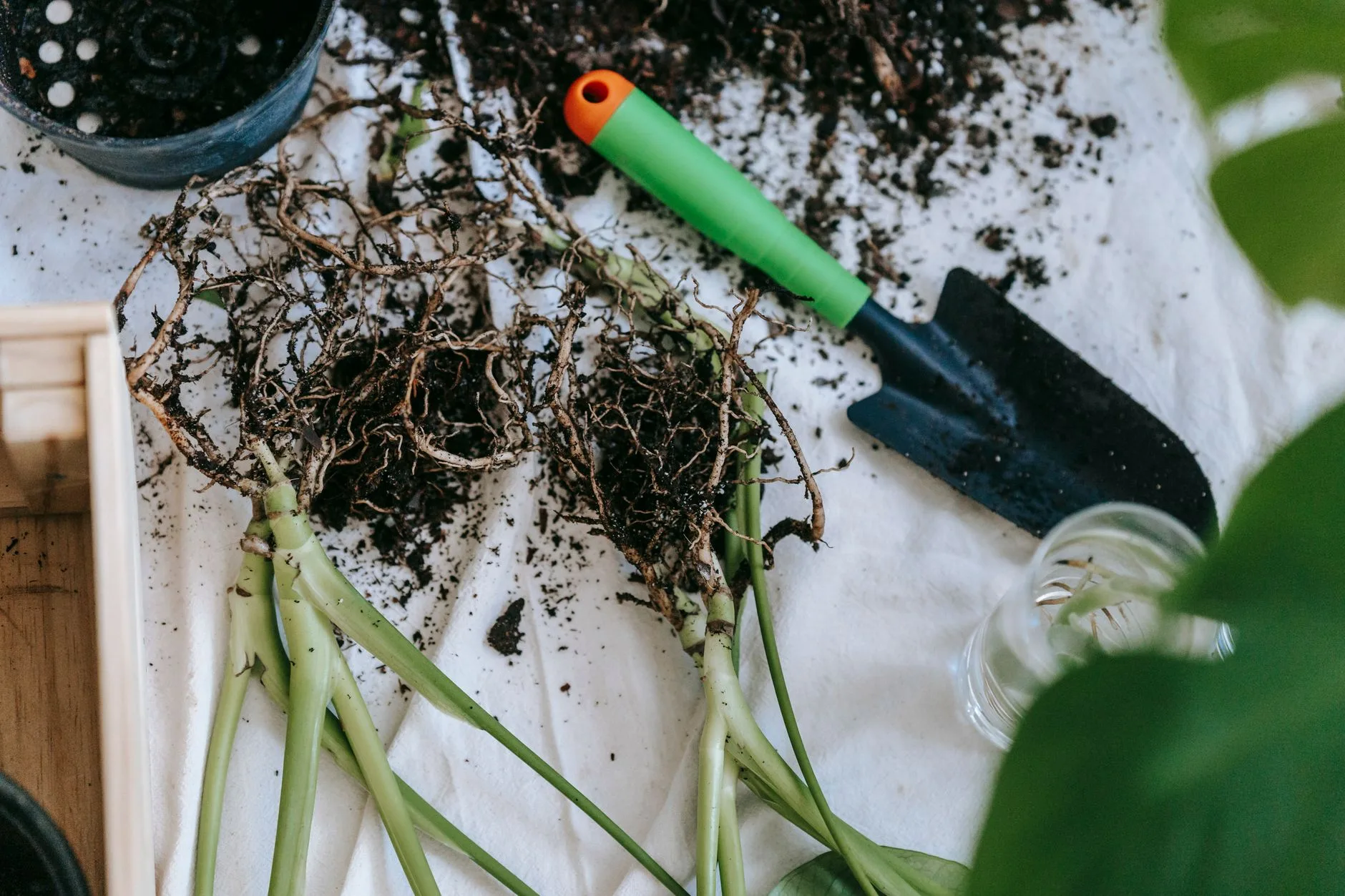
- Lift the Plant:
- Insert a fork around the clump, working outwards to avoid damaging the roots.
- Gently lift the whole plant, keeping as much root as possible.
- Shake Off Soil:
- Shake or wash off excess soil to reveal the root structure.
- Divide the Clump:
- For loose-rooted plants (like daylilies), tease apart by hand.
- For tough or woody roots (like hostas), cut with a sharp knife or saw.
- Each division should have several healthy shoots and a good root system.
- Trim and Tidy:
- Remove any dead or diseased growth.
- Shorten top growth to reduce water loss.
- Replant Immediately:
- Place divisions in their new positions or pots straight away.
Tips for Difficult Plants
Some perennials, such as ornamental grasses, require more force. Use two garden forks back-to-back to prise apart very dense clumps. For fleshy-rooted plants, like peonies, extra care is needed to avoid snapping brittle roots.
Propagating in Pots
If you’re short on border space, divisions can be grown on in pots. Use a free-draining compost, keep them moist, and plant out when established.
Dividing Large Clumps
- For very large or overgrown clumps, divide into several smaller sections.
- Discard the oldest, woody centre if it shows little growth.
- Replant only the healthiest, most vigorous outer sections.
Replanting, Watering and Aftercare
How you care for divisions after planting is just as important as the division itself.
Planting Divisions
- Plant at the same depth as the original plant.
- Firm the soil gently around roots to remove air pockets.
- Space divisions to allow for future growth.
Watering
- Water thoroughly after planting.
- Keep soil consistently moist (but not soggy) for the first few weeks.
- Mulch with compost or leaf mould to retain moisture and suppress weeds.
For planting choices that need less constant attention in dry spells, see How to Design a Low-Maintenance Garden in the UK.
Protecting Young Divisions
- Shade from strong midday sun if needed.
- Use fleece or cloches to protect from unexpected late frosts. See How to Protect Plants from Frost.
Ongoing Care
- Remove any flowers in the first season to focus energy on root growth.
- Feed lightly with a balanced fertiliser in spring.
- Check regularly for pests and diseases.
Labelling and Record Keeping
- Use weatherproof labels and a permanent marker.
- Record the date and variety to track plant ages and performance.
Which Perennials Divide Well
Many of the UK’s favourite garden perennials respond well to division. Here’s a selection that are particularly reliable:
- Geranium (cranesbill)
- Hosta
- Daylily (Hemerocallis)
- Astilbe
- Sedum (Hylotelephium)
- Phlox
- Japanese anemone
- Rudbeckia
- Iris (bearded and Siberian)
- Asters
- Heuchera
- Achillea
Special Mention: Grasses and Ferns
Ornamental grasses and many hardy ferns are also excellent candidates. Divide grasses in spring as they start to show new growth. Ferns prefer division just as their fronds begin to unfurl.
Plants for Shady Borders
Some shade-lovers, like pulmonaria and epimedium, divide well and are perfect for darker corners. For more inspiration, see Shade-Loving Plants for UK Gardens: What Thrives in Dark Corners.
Unusual Perennials That Divide Well
- Brunnera
- Bergenia
- Echinacea
- Monarda
Plants to Leave Alone or Treat Carefully
Not all perennials thrive on regular division. Some resent root disturbance or require a gentler touch.
- Peonies: Only divide if truly necessary, and only in autumn.
- Oriental poppies: Can be divided in late summer, but often sulk if roots are disturbed.
- Lavender and woody herbs: Better propagated from cuttings than division.
- Dicentra (bleeding heart): Fragile roots; divide only when clumps are large and only in early spring.
- Delphiniums: Can be short-lived if divided too often.
Division Warning Signs
If a plant declines or fails to flower after division, it may be one that dislikes root disturbance. The most common mistake is dividing peonies or poppies too frequently, which usually results in poor regrowth.
For propagation advice on trickier species, always check the RHS plant propagation advice.
Common Division Mistakes
Even experienced gardeners can slip up when dividing perennials. Here are some pitfalls to avoid:
- Dividing at the wrong time (mid-winter or high summer)
- Letting roots dry out during the process
- Planting divisions too deeply or too shallowly
- Not watering in well
- Dividing plants that don’t respond well to this method
Top Tips to Avoid Problems
- Prepare everything before you start.
- Only divide healthy, vigorous plants.
- Keep roots moist at all times.
- Replant or pot up divisions promptly.
- Label new plants, especially if dividing several varieties.
Always err on the side of caution and divide a small section first if you’re unsure how a plant will respond.
Dividing in Challenging Conditions
- In heavy clay, lift and divide when the soil is just moist, not saturated.
- In sandy soils, water thoroughly before and after dividing to prevent roots from drying out.
Dividing Rare or Heritage Plants
- Take extra care with heritage or rare varieties. Consider potting up divisions and growing them on in a sheltered spot before planting out.
- Use sterile tools and compost to avoid disease.
Propagating for Plant Sales or Swaps
- Pot up divisions in clean containers with fresh compost.
- Label clearly with variety and date.
- Grow on until well-rooted before offering for sale or swap.
Wilting or Poor Growth After Division
- Ensure divisions are kept moist and shaded during recovery.
- Check for root damage or rot.
- Remove any flowers or buds to direct energy to root growth.
Pests and Diseases
- Watch for slugs and snails around new divisions, especially hostas and delphiniums.
- Remove any affected leaves promptly.
- Use organic slug deterrents if needed.
Slow Establishment
- Some perennials take longer to recover from division. Be patient and provide consistent care.
- Avoid overfeeding or overwatering, which can stress new plants.
When to Give Up
- If a division fails to thrive after a full growing season, it may be best to replace it with a fresh plant or try again with a different method.
For wildlife-friendly plots, check clumps carefully before lifting, especially in autumn and early spring. Move any sheltering insects or amphibians gently to a safe spot nearby before you replant.
Frequently Asked Questions
Q1: How often should I divide perennials?
Most perennials benefit from division every 3–5 years, but some may need it more or less often. Watch for signs like reduced flowering or dead patches in the centre.
Q2: Can I divide perennials in summer?
It’s best avoided, as summer heat and dry soil can stress plants. Stick to spring or autumn for best results.
Q3: What should I do if divisions wilt after planting?
Wilting is common in the first few days. Keep them shaded and well-watered. If they don’t recover, check for root damage or rot.
Q4: Can I divide perennials growing in containers?
Yes, container-grown perennials can be divided just like border plants. Use fresh compost and water well after replanting.
Q5: Should I feed new divisions straight away?
Wait a few weeks before feeding, allowing roots to establish. Use a balanced fertiliser in early spring.
Q6: What’s the best way to label new divisions?
Use weatherproof labels and a permanent marker. Add the date and variety to keep track of plant ages.